 TikTok Shop Southeast Asia cross-border e-commerce
The Southeast Asian consumer market has continued to show vitality in the past year, among which the cross-border food category has shown particularly impressive growth, standing shoulder to shoulder with high-growth tracks such as health products and perfumes, becoming one of the core incremental sources for TikTok Shop's cross-border e-commerce in Southeast Asia..
Platform data shows that the growth rate of the cross-border food category in Southeast Asia has reached 211.9%. Behind the rapid growth is not only the concentrated release of user consumption demand but also the proof of the increasingly mature food consumption market and content e-commerce ecosystem in Southeast Asia..
The current growth of the food track has been realized as real business opportunities in the form of platform hot sales lists, daily product sales, and stable conversion in live streaming rooms.
Leading food merchants firmly occupy the top positions in category sales, fully verifying the long-term operational value of the track.
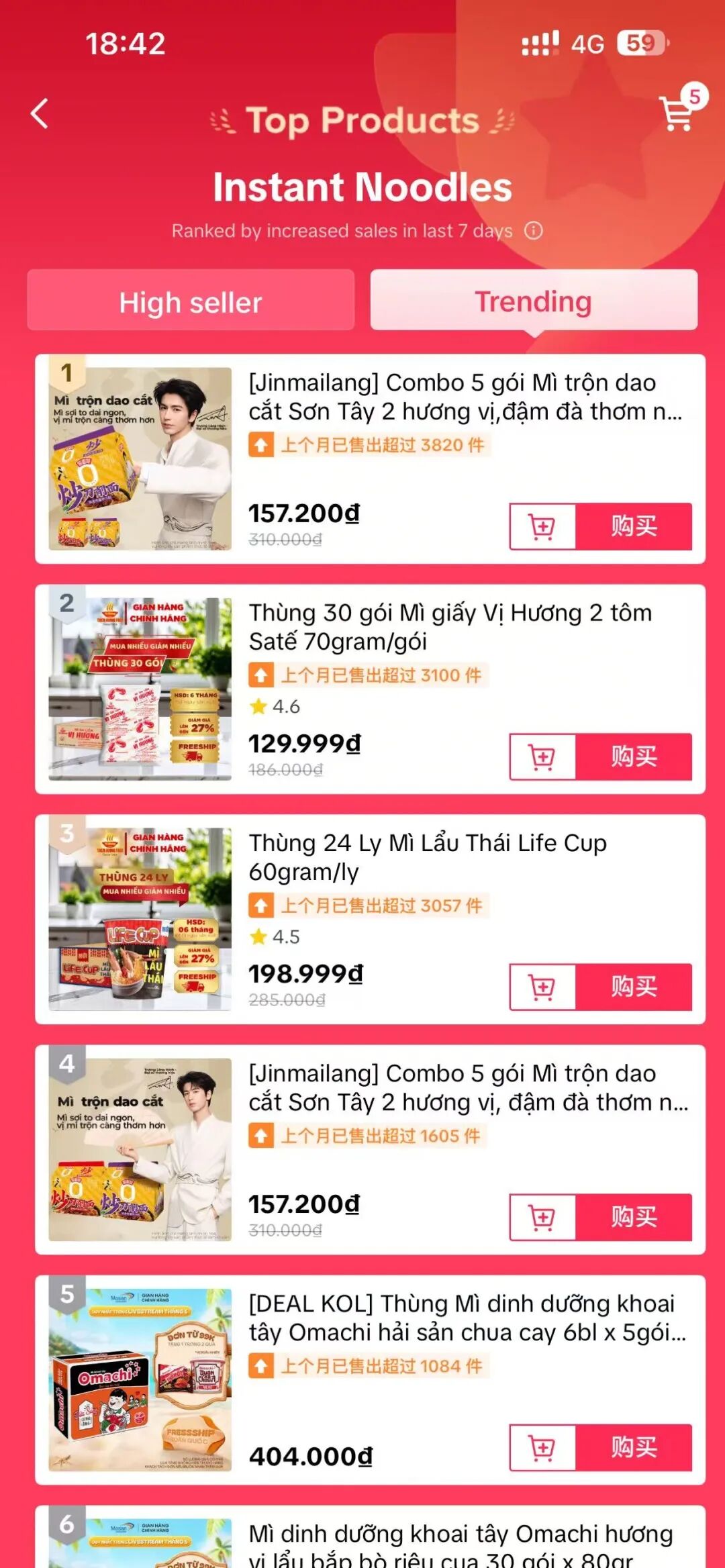
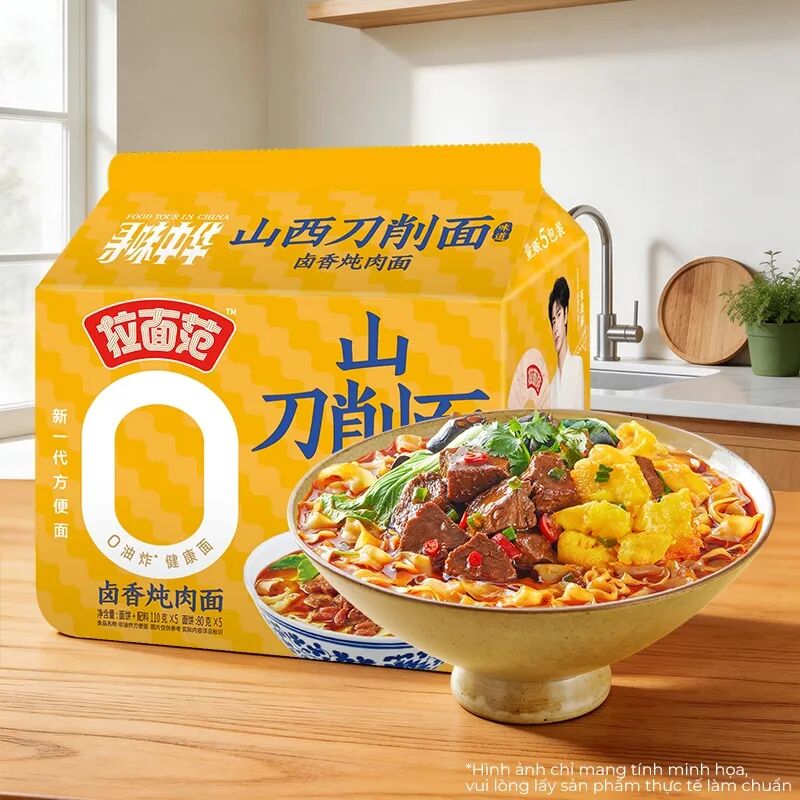
Subcategories such as convenience foods continue to produce hot-selling products. Brands like Jinmailang and Sanzhu Songshu have verified this trend on the platform, and market demand and transaction potential are being released.
The logic of this growth is clear and traceable:
Southeast Asian users' demand for food that is highly convenient, rich in categories, and cost-effective continues to rise. The advantage of content e-commerce in scenario-based planting further shortens the conversion link of "new variety planting, user ordering, and repurchase retention," greatly improving the category transaction efficiency. For cross-border merchants, the Southeast Asian food track has been upgraded from an optional category to an opportunity track worth focusing on..


Food is a typical high-frequency, essential, and highly repurchasing category. As long as the product selection direction and price range match local consumption preferences, and the delivery experience is stable, there is an opportunity to quickly build loyal users and form normalized repurchases.
At the same time, the food category has a rich variety of goods and updates quickly, covering instant food, snacks, beverages, and specialty flavor foods, which can adapt to different consumption scenarios, price ranges, and customer needs. Merchants can quickly screen potential single items through the fast-paced new product launch and product testing rhythm, and iteratively optimize the product structure.

Food is a category that is highly suitable for content e-commerce scenarios, with scene感感、体验感、分享感built-in, it is easy to intuitively display product selling points through short videos and live streaming, and quickly establish user consumption trust.
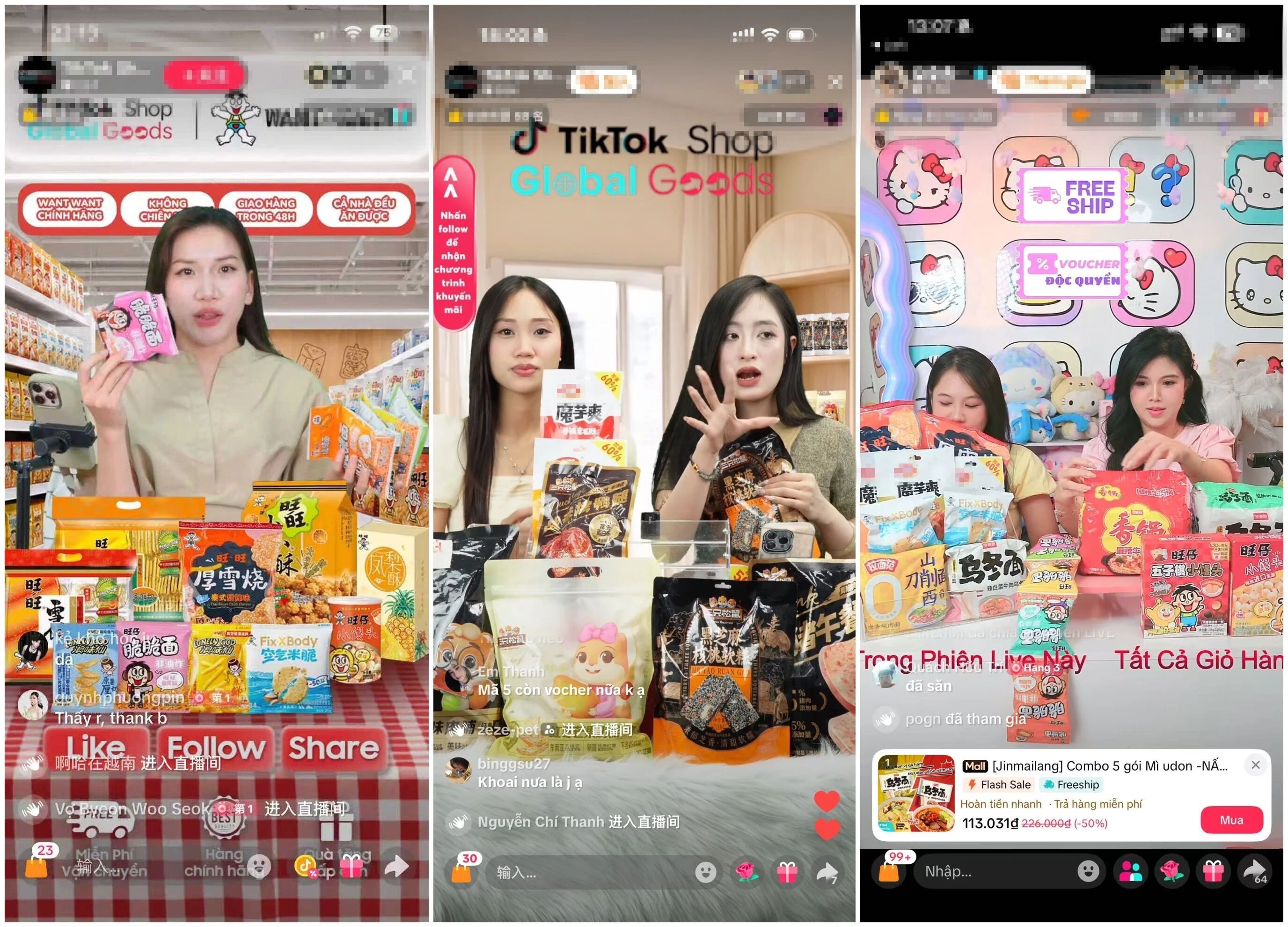
Whether it's brewing drinks, instant meals, or casual snack combinations, you can quickly stimulate users to place orders through product testing, taste evaluation, scenario-based eating display, welfare promotion gameplay.
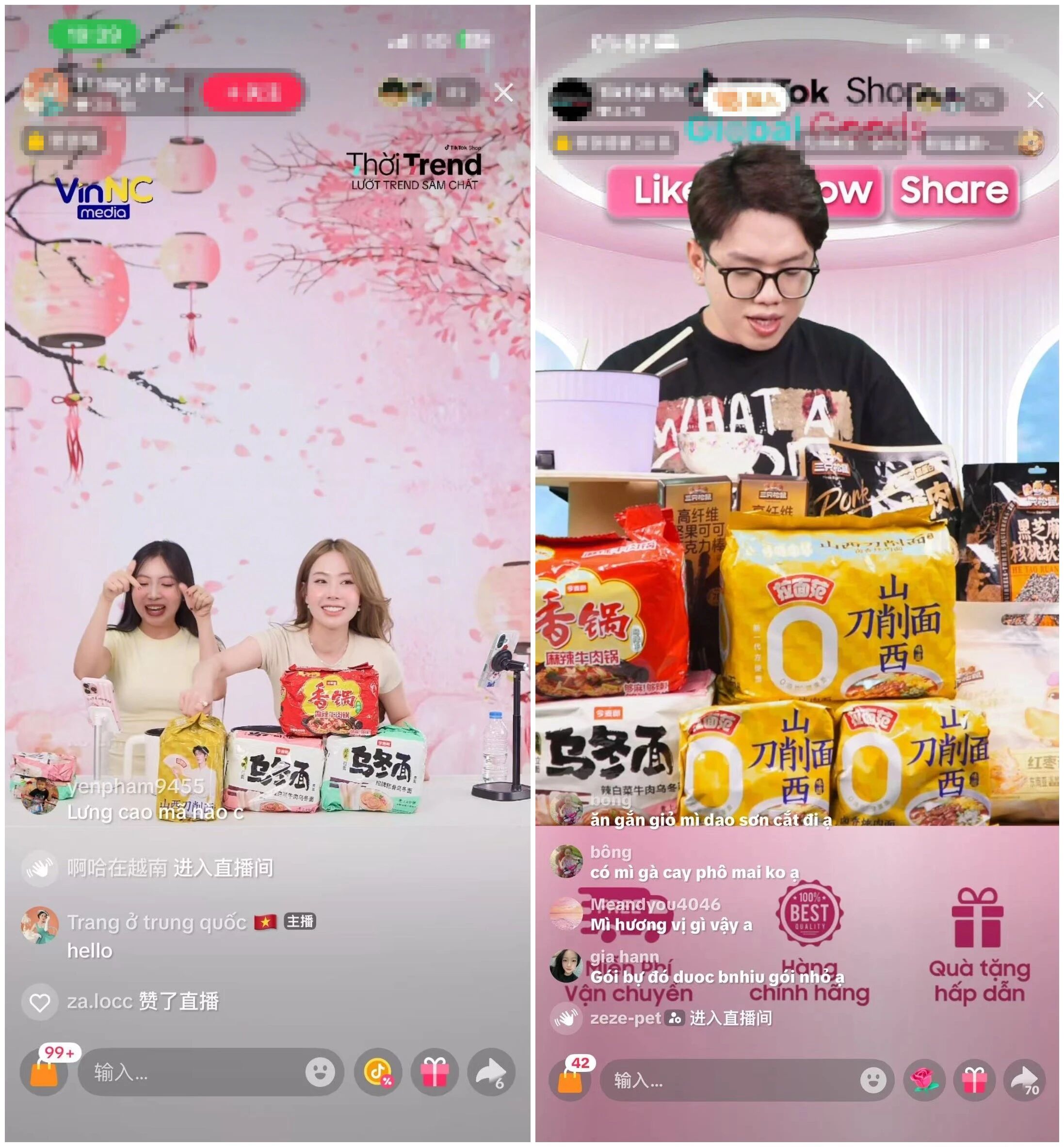
Live streaming scenes can intuitively amplify the advantages of taste, specifications, and combinations, and instantly leverages order conversion.

While the food category has achieved rapid growth, TikTok Shop's cross-border e-commerce platform supply ecosystem and cross-border performance system in Southeast Asia are also becoming more complete. For example, Jinmailang has taken advantage of the high growth rate of this category to strengthen its investment in the TikTok Shop cross-border e-commerce market in Southeast Asia and has accumulated a large number of repeat customers in the local market.
For cross-border merchants laying out in Southeast Asia, entering the market ahead of time at the current stage can quickly seize user awareness, seize the growth window period of channels, and take the lead in establishing category competitive advantages.

In the multi-country markets of Southeast Asia, Vietnam, with its active consumer demand, continuously penetrating online consumption habits, and continuously optimized cross-border performance links, has become the preferred market for food merchants to lay out in Southeast Asia.
Among them, the mature implementation of the Guangxi border warehouse (covering Vietnam) delivery model has become the key to food merchants to deeply cultivate the Vietnam market and break through business bottlenecks.

The core operating logic of the border warehouse is that merchants pre-stock goods at the port warehouse on the China-Vietnam border, and the warehouse uniformly completes packaging, labeling, customs clearance, and final delivery connection. This model solves the pain points of food cross-border operation in terms of timeliness, stock preparation, cost, and market coverage, comprehensively improving store operation efficiency.
One-sentence summary of key advantages:
Stock preparation at domestic ports, fast performance delivery, low-risk product testing, flexible coverage of multiple markets, highly adaptable to the operating characteristics of the food category with short validity period, high iteration, and fast product testing.

After merchants stock their goods in the Guangxi Pingxiang border warehouse, the overall performance time for Vietnam orders can be compressed to 4-7 days, which is 1-3 days faster than the traditional cross-border direct mail model. This model can directly save logistics time for merchants in the southeastern coastal industrial belt.
For the food category, logistics timeliness directly affects user consumption experience and repurchase willingness. A faster delivery rhythm can not only improve user satisfaction and reduce after-sales problems but also help merchants stabilize traffic and improve conversion in scenarios such as celebrity sales, daily live streaming, and platform promotions.

The food category has a fast SKU update and a short product validity period. The traditional overseas warehouse mass stock model is prone to operational risks such as product selection errors, slow sales, inventory backlog, and product expiration.
However, the border warehouse is fully stocked at domestic ports, with extremely high flexibility. Merchants can adopt a lightweight model of small batch testing, on-demand replenishment, and dynamic product replacement, iteratively optimizing the product plate according to real sales data in the Vietnam market. Low-cost trial and error during the new product test phase, rapid volume increase for hot-selling products, perfectly adapts to the food category's demand for high-frequency new product launches and rapid iteration, effectively avoiding the risk of inventory backlog and expiration losses.

The border warehouse model supports the same set of product plates to simultaneously cover Vietnam and Thailand, the two core markets, effectively helping cross-border merchants significantly reduce inventory costs and storage pressure across regions. At the same time, it helps merchants build a "domestic warehouse-border warehouse-overseas warehouse" three-level refined inventory system and gradually build a stable and efficient supply capacity for Southeast Asian products.

Currently, the platform has introduced officially certified service providers to provide standardized performance management for the entire border warehouse chain, making the whole process of first-mile transportation, customs clearance, warehousing, and final delivery more stable and standardized.
The overall performance cost is comparable to traditional certified overseas warehouses, with good cost advantages. At the same time, merchants can flexibly choose the form of import and export declaration according to business needs, further expanding the operating space.

The Southeast Asian food market has long bid farewell to the early trial stage, and the core issue for merchants has shifted from "can it be done" to "how to do it more steadily