 TikTok Shop Southeast Asia cross-border e-commerce
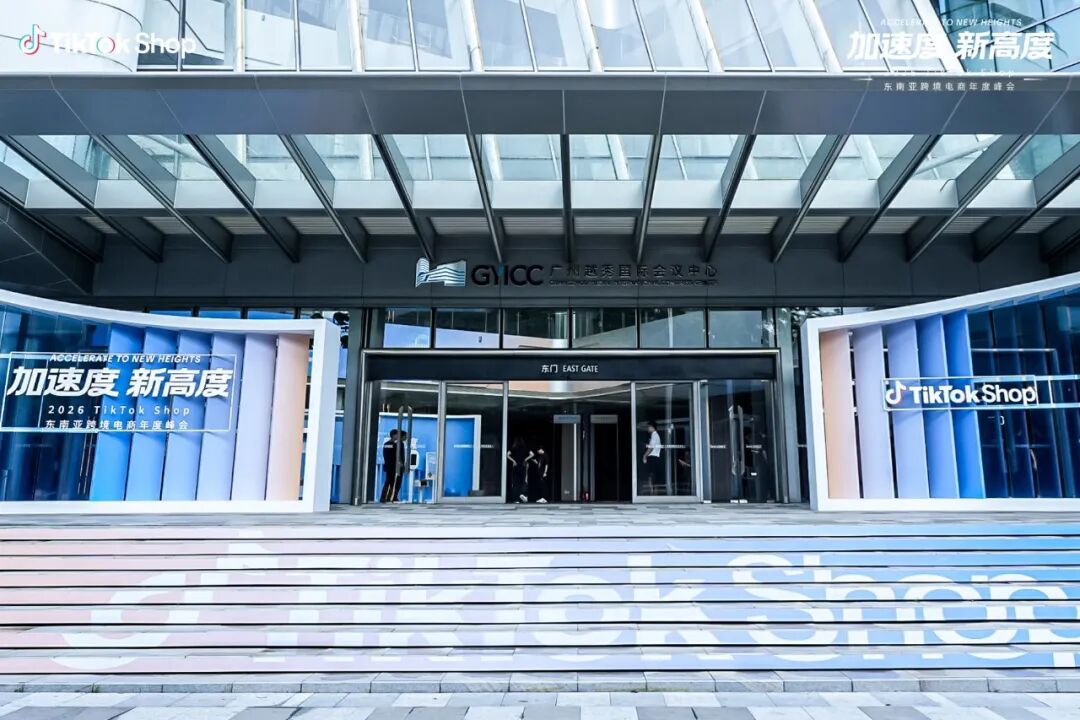
On May 22, 2026, the 2026 TikTok Shop Southeast Asia Cross-Border E-commerce Annual Summit with the theme of "Acceleration to New Heights" was successfully concluded in Guangzhou. The summit brought together core team members of the platform, industry experts, and more than 1,300 merchant representatives from all over the country. The live broadcast attracted more than 2.5 million merchants to watch simultaneously, witnessing the comprehensive leap of TikTok Shop Southeast Asia Cross-Border E-commerce from "scale expansion" to "high-quality all-round growth".
TikTok Shop's head of Southeast Asia cross-border e-commerce, Xu Mengqi, broke down the three major growth laws of cross-border merchants and new opportunities in the Southeast Asian market based on platform data at the summit, and released a lightweight operation strategy plan for cross-border merchants, helping all cross-border merchants bid farewell to complicated operations and achieve efficient quality improvement and volume increase in Southeast Asian business.

TikTok Shop Southeast Asia Cross-Border E-commerce Head Xu Mengqi

In 2025, TikTok Shop's Southeast Asia cross-border e-commerce GMV increased by 125% year-on-year, with continuous growth throughout the year and record-breaking quarterly growth rates. The explosive power of major promotional events was particularly astonishing: GMV during the 6.6, Double 11, and Double 12 promotions increased by 123%, 230%, and 270% respectively. The content-driven transaction model continued to be verified, with GMV of short videos during Double 12 increasing by 257%, GMV of short videos during this year's Ramadan promotion increasing by 128%, and GMV of live streaming sales increasing by 104%. The explosive power of content-driven transactions continues to be released.
The core advantage of domestic merchants is no longer low-price distribution. Data shows that the average order value of high-quality overseas merchants has increased by 1.2 times in two years, and the order cycle for new merchants has been shortened by 15 days. Currently, over 40% of Southeast Asian cross-border merchants come from the domestic e-commerce track. With a mature supply chain system and refined operational capabilities, they fill local consumption gaps, break away from inventory congestion, and open up new incremental markets.
Multi-market layout and normalized self-produced content output are the cores to widen the growth gap among merchants. In 2025, the number of merchants operating in two or more Southeast Asian countries increased by 70% year-on-year, with an average annual GMV growth rate of 109%, far exceeding that of single-market operators. At the same time, the scale of high-quality self-produced content and influencer cooperation on the platform continued to double, and the number of influencers with millions of dollars in sales increased by 2.3 times. Multi-market content operation has become the standard approach for high-level merchants.

The total market growth is far from peaking. According to IMF forecasts, ASEAN's economic growth rate will continue to lead the world in 2026. Industry reports show that the overall scale of e-commerce in Southeast Asia exceeded 157.6 billion US dollars in 2025, but the e-commerce penetration rate was only 11%, which still has more than twice the growth space compared to the domestic market. At the same time, consumption growth is extending from core cities to new areas such as the outer islands of the Philippines and East Malaysia. The platform will increase resource investment in these areas this year to help merchants seize the first-mover advantage.
Under consumption upgrading, category gaps await to be filled. The per capita GDP of the five Southeast Asian countries is continuously rising. TikTok Shop Southeast Asia cross-border e-commerce data shows that the GMV of massage devices increased by more than 10 times, and the average order value increased by 57% in three months; the GMV of hairdressing and personal care electrical appliances increased by 222%; the GMV of health products increased by 262%; the GMV of pet supplies increased by 235%. Even for daily necessities such as clothing and basic skin care, all have achieved growth of more than 126%. Southeast Asian consumers are shifting from "meeting basic needs" to "pursuing quality life", and a large number of category gaps and brand opportunities await domestic merchants to fill.
Content e-commerce has become the mainstream. According to predictions by authoritative industry organizations, the market coverage of content e-commerce in Southeast Asia will reach 85% of the overall e-commerce market in 2026. Content e-commerce platforms have become the core consumption scene for Southeast Asian users. The consumption path from "watching short videos" to "being influenced" to "placing orders immediately" has become the mainstream. And this is exactly the area where domestic merchants excel. Moving to Southeast Asia is the most effective growth engine.

In 2026, three core strategies have been newly upgraded, focusing on "lowering thresholds, improving efficiency, and stabilizing operations", making cross-border business lighter, more standardized, and more certain.
Strategy 1: Increase support for Chinese brands going overseas, accelerating the rooting of good products in Southeast Asia. The platform will continue to increase support for high-quality domestic products and emerging brands, optimize the incentive system for merchants to join, and reduce the difficulty of new brands' cold start. It will also open up high-order potential categories such as luxury goods and jewelry, and broaden the growth track for merchants. At the same time, it will iterate the whole chain system of brand access, logistics performance, quality control and after-sales service to create a complete operating ecosystem for Chinese brands in Southeast Asia.
Strategy 2: Improve efficiency in all areas of operation, making merchants' operations simpler. In response to the pain points of merchants' complicated operations and low efficiency in multiple countries, the platform will achieve two-way communication between product inventory and content. The mutual communication of sales volume evaluation in multiple countries has been launched, which can directly help improve conversion. Several efficiency-increasing features will be launched soon, including one-click product placement in five countries, intelligent pricing, shared inventory in multiple countries, mutual communication of customer service in multiple stores, and a unified data backend, solving the problems of repeated operations in multiple markets and cross-border product placement; at the same time, short video AI translation, live streaming real-time translation in small languages, and cross-regional content distribution capabilities will be launched to further reduce the cost of cross-border content operation.
Strategy 3: Accelerate platform infrastructure upgrades, allowing merchants to operate with peace of mind and ensuring long-term stable business. The platform will continue to optimize business rules and create a better operating environment. At the same time, it will iterate the cross-border performance link, improve export tax exemption and refund, large-item direct mail, and border warehouse supporting services to achieve logistics cost reduction and speed increase. By optimizing the after-sales return and exchange system, it will improve local consumers' trust and repurchase rate, achieving long-term stable business growth.

At the summit, four benchmark brands, Lefant, Colorkey, Bodiary Nordic Diary, and Silk Fly, shared their practical experience in going overseas. From driving category to the top with technological innovation to localizing mature domestic operation experience; from the brand transformation of white labels to the breakthrough of traditional domestic brands in new markets.
The sharing of several merchant representatives pointed to the same consensus: Southeast Asia is still the preferred market for domestic merchants going overseas. The key to success in the Southeast Asian market lies in closely following the strategic rhythm of TikTok Shop Southeast Asia cross-border e-commerce, delving into local consumer needs, and adhering to long-term business operations.


At the summit, around the full-cycle needs of merchants from entry to long-term operation, covering new starters, daily operations, and advanced breakthroughs in all scenarios, with policies, tools, courses, and resources supporting multiple dimensions to solve merchants' stage-specific operational problems.
On the policy side, new merchant entry support policies have been implemented, reducing the threshold for new merchants to go overseas through exposure incentives, commission reductions, and other benefits. The "TikTok Shop 2026 Southeast Asia Cross-Border Operation White Paper 2.0" released at the same time breaks down market trends and profit models, providing standardized starting solutions for beginners.

On the practical side, the heads of five core businesses focused on merchants' real pain points, breaking down the new starter volume formula, new gameplay for the 2026 66 promotion, and tips for using intelligent operation tools, while interpreting store governance guarantees and cross-border logistics upgrade plans, outputting operational methods that can be directly implemented.

The summit also offered specialized training in two sessions. The new merchant session focused on basic issues such as cold start, low traffic, and few orders; the mature merchant session focused on high-order conversion, multi-country coordinated operations, and category refinement tactics, precisely breaking through growth bottlenecks at different stages.
At the same time, the summit empowered online and offline. Offline, there were one-on-one Q&A and ecological resource docking areas, where the platform team and ecological service providers docked on-site to solve problems; online, the "Official Manager as Guest" series of live broadcasts was launched, continuously outputting dry goods, and official managers answered questions in real-time about entry, product selection, and operations, allowing merchants to accurately obtain growth solutions suitable for themselves.
From the model verification in 2025 to the strategic upgrade in 2026, TikTok Shop Southeast Asia cross-border e-commerce has built a set of "low threshold, high efficiency, and high certainty" channels for Chinese brands to go overseas. When content e-commerce becomes mainstream and consumption upgrading erupts comprehensively, going overseas to Southeast Asia has become a must-have option, and TikTok Shop Southeast Asia cross-border e-commerce is making this path wider, more stable, and more certain.
As Mengqi said at the end of the summit: "In the future, we will use the most practical policies, the strongest support, and the most complete services to bring good domestic products to every corner of Southeast Asia together with all merchants."