
 Cross-border information
In recent days, many sellers have received red flags in Seller Central, with a blunt reason: duplicate ASIN creation, violating listing policies.
Some sellers ask: I changed the ASIN images, SKU, and packaging—why is it duplicate?My first point is: these exact changes are the evidence Amazon uses to catch you. Amazon judges your physical goods, not your copy! Many sellers still think “duplicate” means text similarity—different titles, bullets, or main image angles mean two separate listings. That mistakes Amazon’s catalog for a content platform. But sellers should know that Amazon’s catalog is essentially a product database: one entry corresponds to one real-world item. That is the foundation of its inventory, reviews, and supply chain. Creating a new listing inserts a record into this database. What a database fears most is flagged data. So the judgment is never at the copy level. If brand, model, MPN, UPC, or core specs match, it hits directly; the system doesn’t need to read your text. Image matching now checks composition, physical appearance, and size ratio. Cropping, brightness, filters, or background changes mean little before image features—identical products are identical. Similar copy and category nodes are only supporting evidence, not primary evidence. One more major issue: variations. Colors, sizes, and specs of the same product should be parent-child variations. Splitting them into separate ASINs looks to the system like one product occupying multiple slots. Conversely, forcing unrelated variations is also a violation. Sellers do this to occupy more positions and gain more review entries—exactly what the platform wants to purge in this round. Penalties are tiered. First offense: red warning plus ASIN removal or forced merge, affecting Account Health. Worse cases: restriction on creating ASINs, then suspension if not corrected. Repeated violations with no correction lead to removal of selling privileges and fund holds. What really hurts is the note: violation records are not automatically removed; they remain in the account file for 180 days. This means penalties are cumulative, not per single violation. Your first offense may cost only one listing, but the record will be pulled up in every review over the next six months. By your third offense, the penalty baseline is no longer zero. Cross-border selling has a long-standing misconception: treating violation costs as one-time expenses. Lost listing? Create another. Dead account? Buy a new one. If output exceeds loss, do it. That math worked during the traffic dividend era because accounts, listings, and time were all cheap. Now all three are expensive—especially time. Those who have done it know how long it takes for a listing to gain weight from zero. The gray-area era is truly over. Refreshing listings, swapping UPCs to wash negative reviews, farming reviews across multiple ASINs, splitting variations to occupy slots—these tactics all share one thing: betting the platform’s detection cannot keep up. Over the past decade, much of cross-border profit came from rule gaps—platform rules lagged behind technology, and the gap was profit. Now that gap is being closed by cross-matching and image recognition. From title character limits, AI content labeling, and DV verification expansion to this duplicate ASIN sweep, the trend is clear: Amazon is raising catalog data quality while clearing out sellers who profit from dirty data. I have seen too many sellers with strong operations and good product selection ultimately fall on compliance. Compliance usually generates no revenue, so it is always the lowest priority. When it starts to cost you, one time is enough to pay for a long time. Before listing, search the catalog and confirm no duplicates before creating. Put different specs of the same product into parent-child variations. Use legitimate UPCs. Enroll in Brand Registry if applicable. These steps are not exciting, but they determine how long your account survives. Many sellers now use AI to create listings and assets while stepping into catalog compliance pitfalls. The premise of AI efficiency is keeping platform rules as the baseline. If you want to systematically master Amazon catalog compliance, correctly implement AI tools, and combine AI Agent applications, platform risk control, and real-world cases to avoid new pitfalls, you can make tools truly empower your account.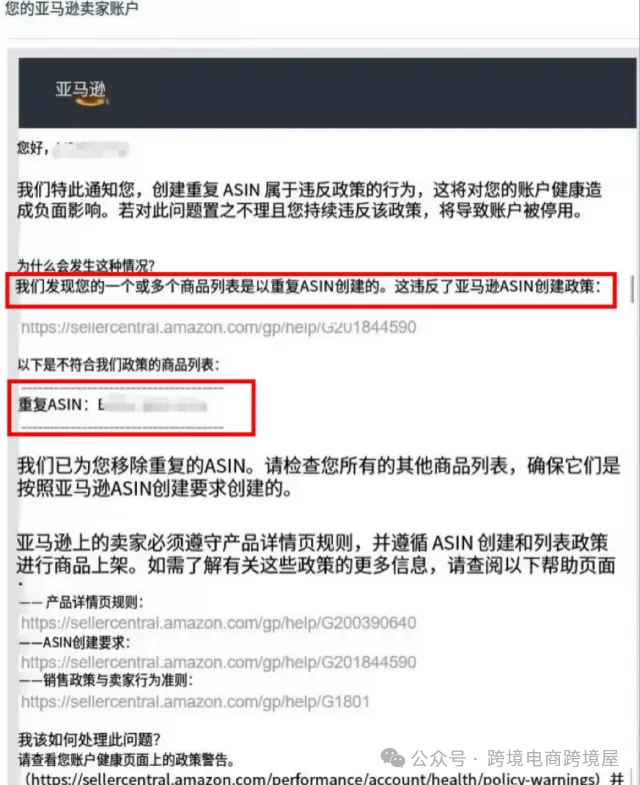
Source: Cross-border E-commerce Cross-Border House