
 Cross-border information
At 4 p.m. yesterday afternoon,Amazon Black Fridaybegan!
This is the first Amazon major promotion stretched to 12 days, and many sellers were full of expectations, after all, this is the last event worth looking forward to this year.
However,nearly a day after the promotion officially began, most Amazon sellers have collectively fallen into silence and frustration.
Countless sellers refreshed their backend frantically, nearly wearing out the F5 key, but orders remained scarce all day. Many small and medium sellers even saw zero orders.
Cross-border e-commerce communities and seller forums also erupted, with screens full of complaints and groans.
A veteran seller admitted helplessly: “In previous years, during the Black Friday warm-up period, we had a stable 200-plus orders per day. This year, orders have plunged sharply to only 30-40 per day. Rankings are stable, with no negative reviews or violations. Discounts are maxed out and ads are burning money, with ACOS soaring to 40%-50%. Money is being lost heavily, while orders barely move.”
Even more bizarre, many sellers encountered the strangest Black Friday market ever: competitor price wars are severe; lowering prices means pure losses, while slightly raising prices immediately kills traffic.
Even hot-selling listings with topBSRrankings, which used to see sales double during peak season, still hold their rankings this year, but orders have been cut in half.
Countless sellers are stuck in a dilemma: stopping ads means no exposure and no traffic, while continuing ads means burning money and losing capital—just running alongside with nothing to show!
What should have been a lively Black Friday sale has turned into an “ordeal scene” for many Amazon sellers.
But in reality, the weak orders are not caused by individual operational mistakes; the entire U.S. consumer market is genuinely cooling.
According to the latest industry survey released by the National Retail Federation (NRF) on November 19: during this year’s Thanksgiving-to-Cyber Monday shopping period, only 182.7 million consumers are expected to shop, a decrease of 4.2 million compared with 186.9 million last year.
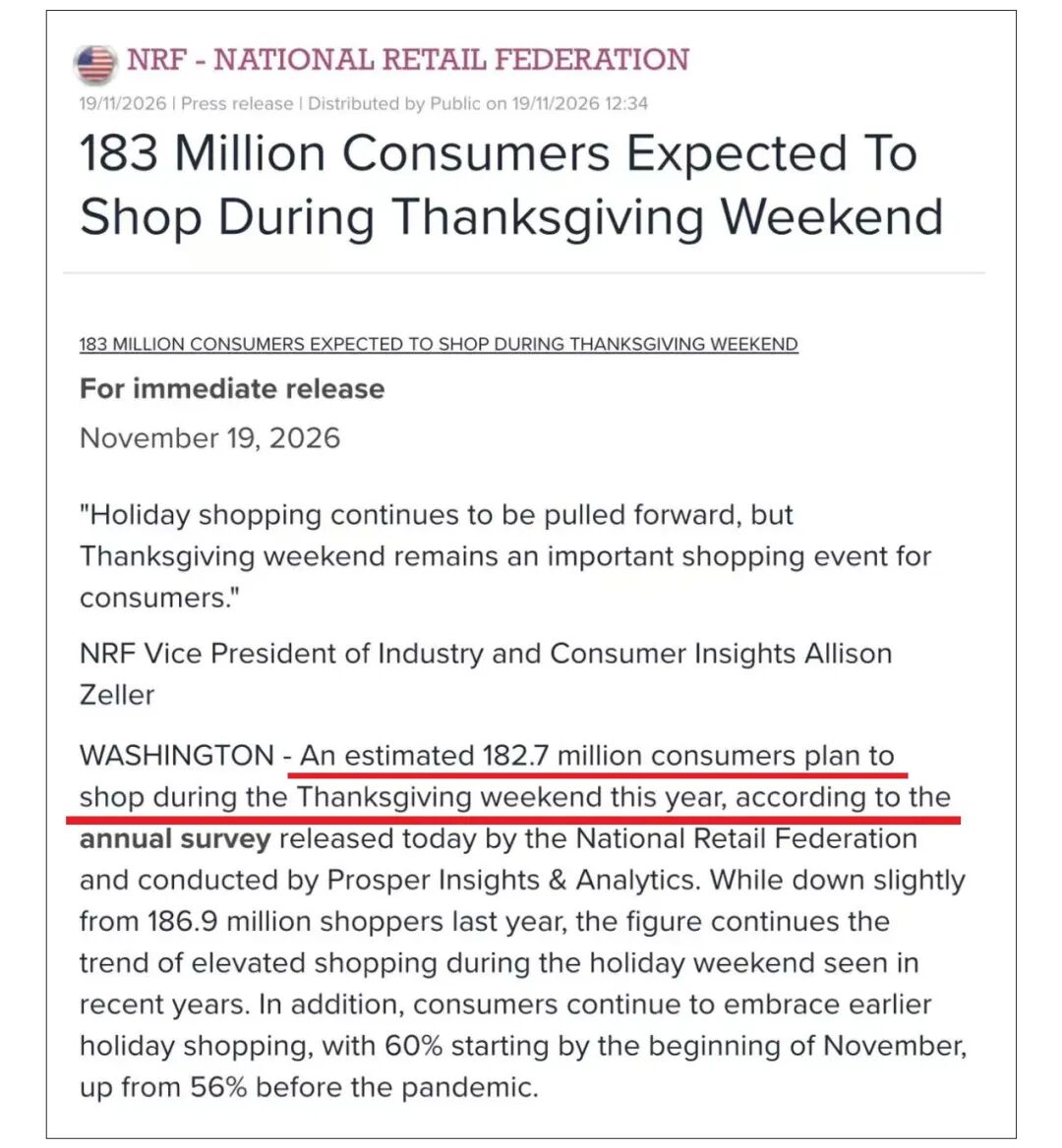
(Screenshot of the latest survey report by the National Retail Federation)
Looking at detailed data, only 126 million consumers are expected to shop on Black Friday itself, compared with more than 130 million last year, marking a clear year-on-year decline in participation.
Meanwhile, survey data shows:60% of consumers finished holiday shopping as early as early November, severely pulling forward and exhausting peak-season demand. The explosive orders originally concentrated on Black Friday andCyber Mondayhave been spread across the whole month of November.
In addition, only 48% of consumers were attracted by Black Friday discounts. Consumers are becoming more rational and no longer blindly chase sales, which is a core reason why the concentrated order surge disappeared and seller orders remain weak this year.
At the same time, many sellers who had long seen through the weak market and high operating costs voluntarily gave up cutthroat competition and withdrew from the Black Friday battle this year.
First,cutting inventory by half has become an industry-wide phenomenon.
This year, most sellers no longer blindly bet on peak-season demand. Inventory levels are only 60%-70% of previous years, and conservative sellers cut them to 30%-40%. They have completely moved away from the previous large-scale stock-up model, streamlined redundant SKUs, and focused limited funds on a few stably profitable key listings.
A Shenzhen seller of small household items revealed: in previous years, he stocked 1.2 times estimated sales for Black Friday to avoid stockouts. This year, he only wants to avoid overstocking and prepared just 50% of estimated sales. Last year, he stocked 28 products and 18,600 units in overseas warehouses; this year, only 24 products and 8,400 units remain, cutting inventory in half.
Several Yiwu inventory-based sellers also scaled down: last year 41 products were prepared for Black Friday, but this year only 33 remain, and total warehouse inbound volume is only 35% of last year. They adopted a conservative approach of “small-batch trial orders, then air-freight replenishment when sales recover.”
Second, sellers’ promotion enrollment shifted from “all-in” to “selective.”
In previous Black Fridays, sellers enrolled in every lightning deal and store promotion even at a loss, just to protect rankings.
This year, the trend has completely reversed. Many sellers only enroll a few high-margin listings in promotions and simply skip Black Friday deals for most regular listings.
Many sellers, after enrolling in lightning deals, are hesitating about whether to cancel because they expect weak sales and fear losses from overstocking.
After last year’s painful lesson of overstocking for Black Friday and spending more than half a year clearing inventory, sellers have fully woken up this year.
For small and medium sellers, this year’s Black Friday is no longer a time to “boost sales and make profits,” but a survival period where “losing less is earning.”
Cutthroat promotions inevitably lose money, while hands-off operations bring no orders; being stuck between these choices has become the norm.
How are your orders today?
Feel free to discuss!
Source: Cross-border E-commerce Seller Hub