
 Amazon Global Store opening
Order volumes have surged, and returns have risen accordingly. Many sellers have calculated this account:
Product value $50, originally earning $10 per order, but when customers return:
Refund processing fee$1.5
Re-evaluation and repackaging$1.5
Relabeling and re-storage$1
If returned to the overseas warehouse for reprocessing, there are alsoreverse logistics fees and handling fees...
Even if the product is in good condition for resale,commission, delivery fees, and promotion costs have to be paid again,and the original $10 profit is almost completely lost. If the product is damaged during the return process and becomes unsellable, the entire order turns into a net loss!
So the question arises—
If returns are not cost-effective, is there a way to reduce return losses?
The answer is yes: two sets of solutions, explained clearly today
First Strategy
Amazon Partial Refund and Returnless Resolution—sellers refund part of the money to consumers, who keep the product, eliminating the return process and repackaging costs.
Second Strategy
Amazon Logistics Grade and Resell Plan—targets unsellable products, remarketing them at a discounted price to increase secondary income.
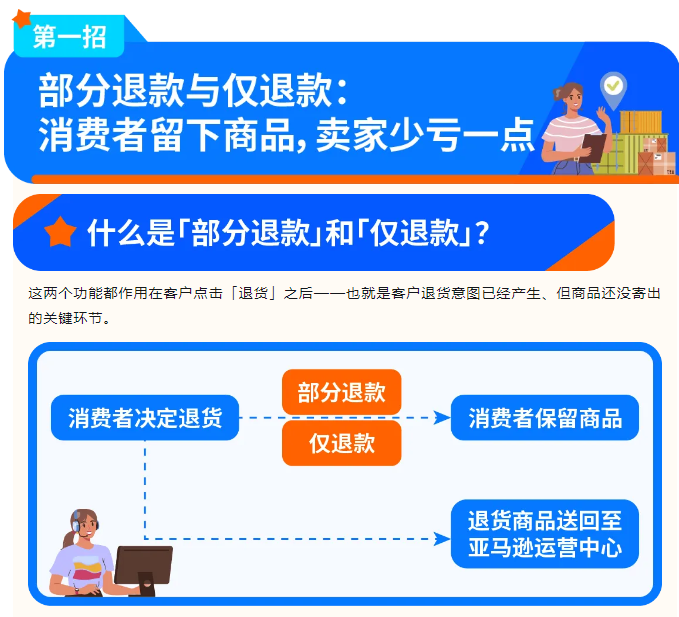
During the return process, the system pops up two alternative options:
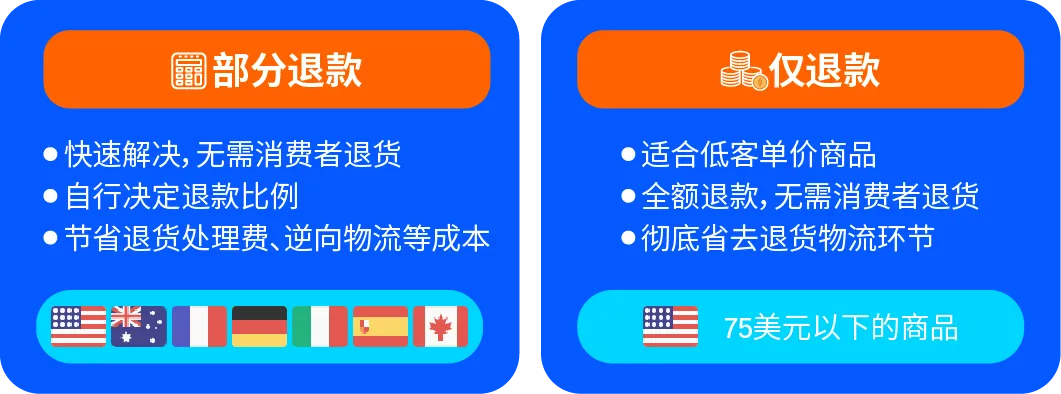
Partial Refund
Compensate the customer partially, and the customer keeps the product without sending it back. Suitable for cases where the outer packaging is damaged or there are minor flaws but it does not affect use.
Returnless Resolution
Full refund directly, and the product does not need to be sent back. Suitable for low-value products—sometimes the reverse shipping cost is more expensive than the product itself.

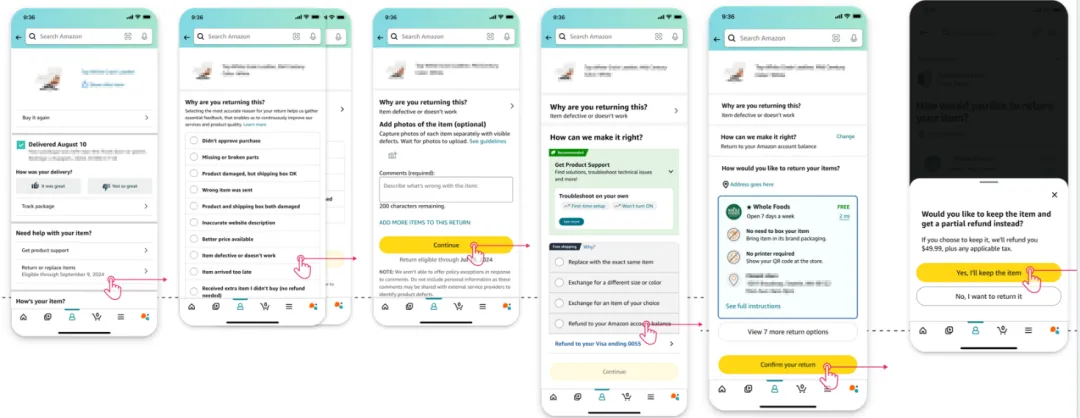
As shown, the "Partial Refund" prompt appears in the sixth step of the return process for consumers.

Partial refunds and returnless resolutions are disabled by default and need to be manually enabled.
Seller platform path:
Step 1Log in to the seller platform→Settings (Settings)→Fulfillment by Amazon
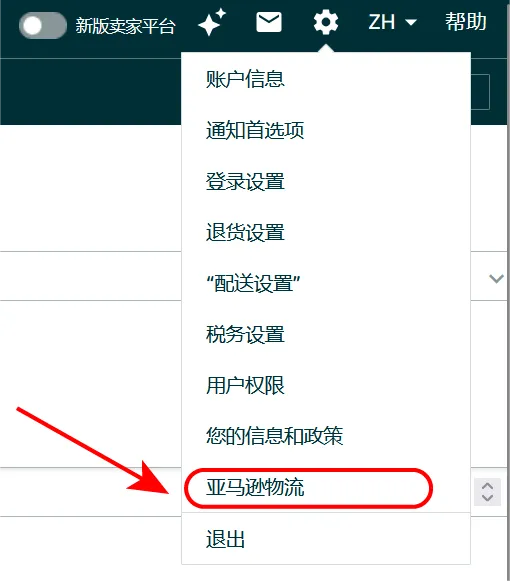
Step 2Find "FBA Return Evaluation and Ownership Settings"→Click Edit next to "Partial Refund"

Step 3Select a configuration
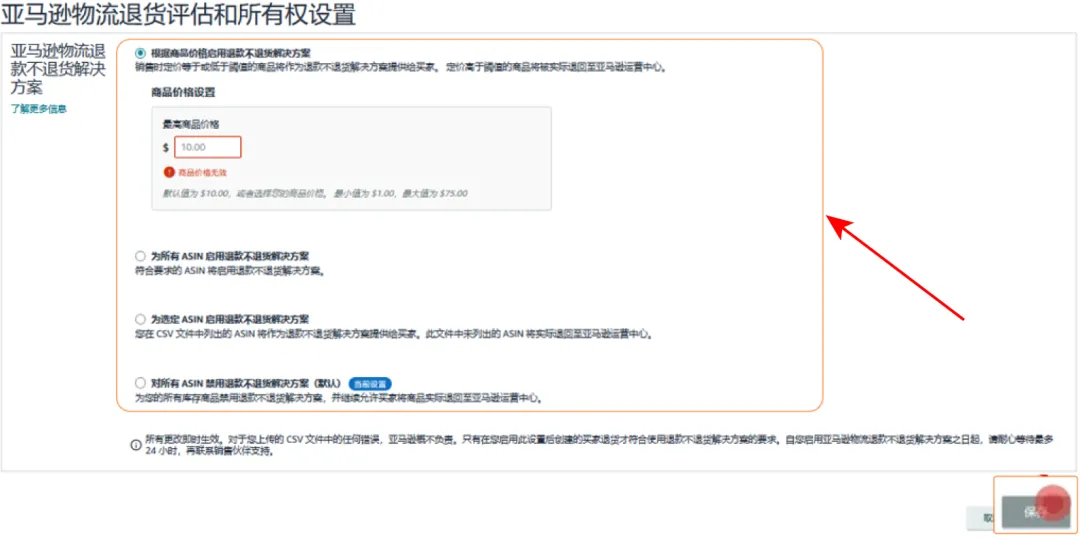
◉Enable for all ASINs (set a unified discount percentage)
◉Enable only for selected ASINs (upload CSV, set discount rates for each ASIN individually)
◉[For Returnless Resolution] Set the product price that triggers the feature (can set a threshold between $0–$75, below which it directly refunds)
◉Disable for all ASINs (default)
Step 4Click "Save" to take effect immediately
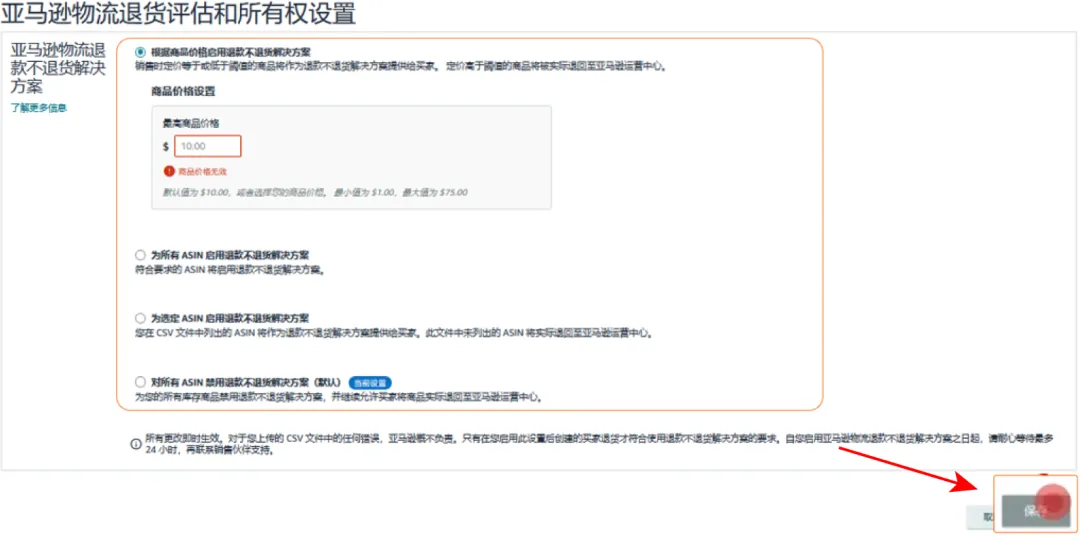
Tip:It is recommended that new sellers enable partial refunds at the beginning of their business, especially for categories with fragile packaging and many SKUs. Proactive measures save more than remedial actions.

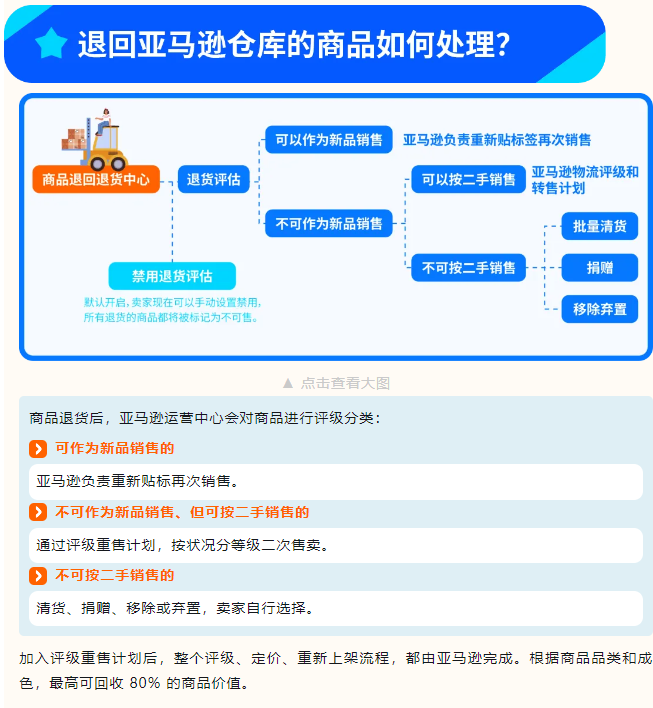
The first two strategies mainly prevent "returned physical goods from being shipped back to the warehouse," but in reality, some orders will indeed be returned to the operation center. At this point, sellers face a dilemma:
Return to domestic? High reverse logistics costs, complex customs clearance
Discard as is? All initial costs are wasted
Sell second-hand themselves?
Team energy cannot keep up, and pricing standards are difficult to unify
The Amazon Grade and Resell Plan was created for this scenario.
Applicable Sites
US, UK, Germany, France, Italy, Spain
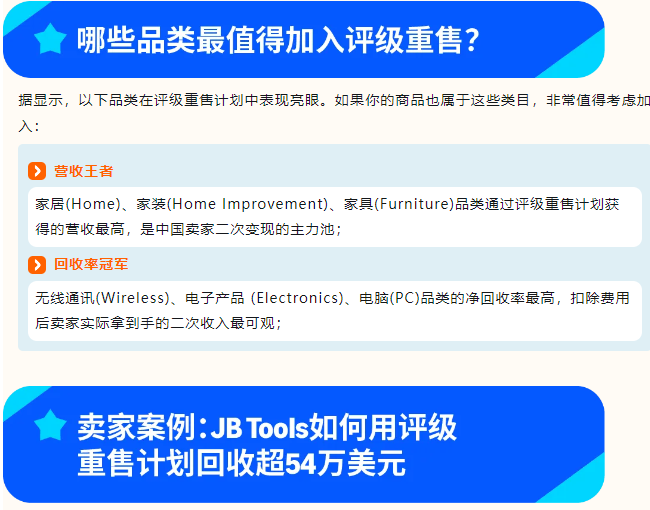
JB Tools, an American power tool brand, has been on Amazon since 2009, accumulating a group of loyal customers with "ultimate service + high cost-performance ratio." However, with business expansion, the pressure of return management has increased.
Pain point: Handling returns themselves, cost out of control
JB Tools cooperates with hundreds of suppliers, return policies vary, and most suppliers are unwilling to accept returns. The team can only check, grade, price, and relist each item themselves, sometimes even having to "sell at a few cents each" to clear warehouse space. During the 2021–2022 pandemic, return volume surged, and manpower, space, and judgment standards were all in emergency.
"Checking returns involves a lot of subjective judgment—you have to look at supplier policies, product status, and quality. It's really hard to train a senior warehouse employee who can make these judgments."
—JB Tools founder Jason Petta
Turning point: After joining the Grade and Resell Plan
Initially,JB Tools was also worried about the accuracy of Amazon's grading and whether it could prevent fraud. After understanding the inspection process, the team decided to give it a try, and the effect was immediate: returned goods no longer returned to their own warehouse, no need to train grading employees, no need to manually create second-hand listings—value was recycled, but operational burdens were eliminated.
"For the same product, one employee said it was worth$50, another said $80. No one is an appraisal expert, and the judgment differences are too great. Amazon's grading is very consistent."
—Jason Petta
Data results:7,137 items
Net recovery:$545,640
After joining the Grade and Resell Plan,JB Tools' returned goods were divided into four grades (similar to new/very good/good/fair), and Amazon relisted them:
A total of7,137 returned items were successfully resold
Accumulated net recovery amount$545,640 (about RMB 4 million)
Net recovery rate about79%—for every $100 of original price goods, about $79 is actually recovered
Zero manual operation, zero secondary processing cost throughout the process
"I highly recommend it. The goods don't need to be sent back, selling tools can recover70%–80% of the original price, and the experience is very stable. Just not having to handle returns yourself is already worth it."—Jason Petta
Multiple SKUs, diverse suppliers, tight overseas warehouse manpower—this is almost the common situation for every Chinese seller going global. The value of the Grade and Resell Plan lies not only in "how much money is recovered," but also in completely outsourcing the troublesome matters that occupy space, manpower, and decision-making costs to Amazon.

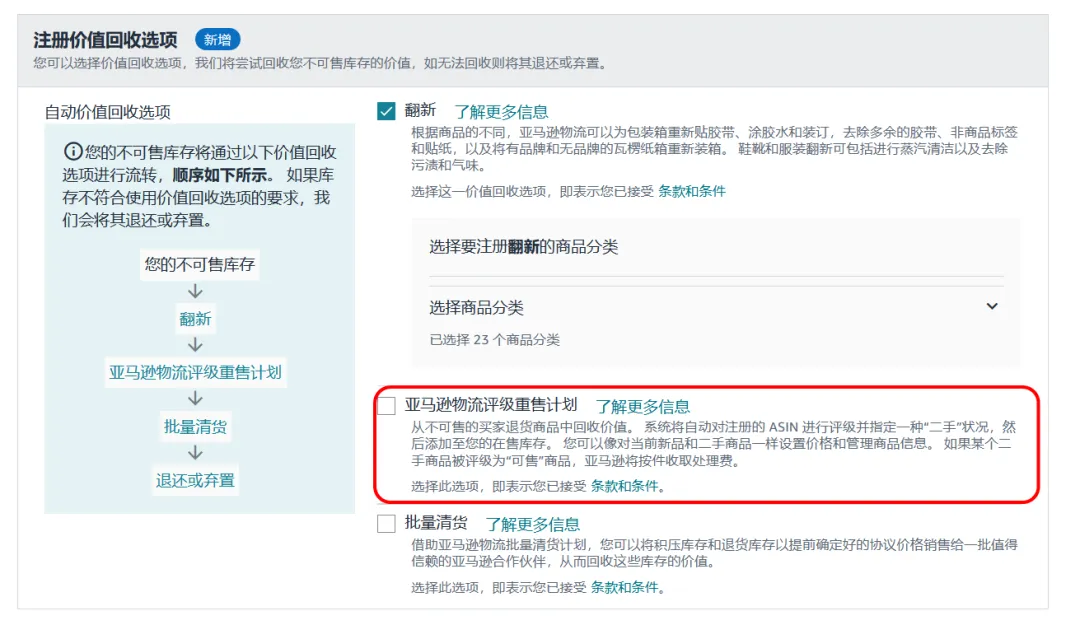
Step 1In the "Settings" menu, click on Amazon Logistics, find "Automatic Settings for Unsellable Items" on the "Amazon Logistics Settings" page, click "Edit," and then find "Register Value Recovery Options" inAmazon Logistics Grade and Resell Plan.
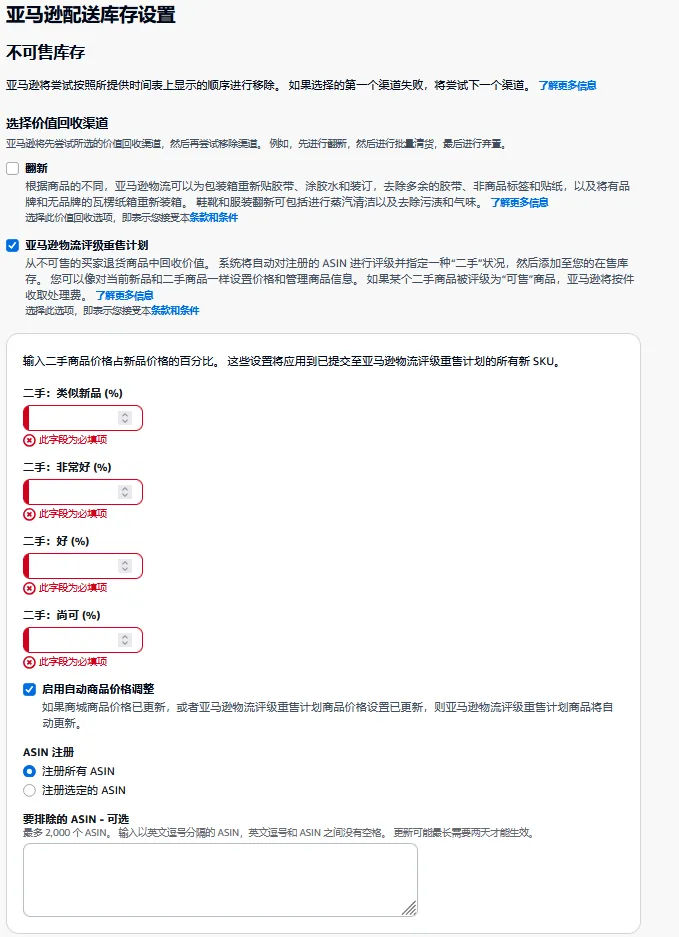
Step 2Set the percentage discount according to the condition of each product, please choose Set Product Price(these discounts can be updated at any time).
Note: If you want to exclude certainASINs from the plan, you can go to Enter the ASINs to Excludeto perform this operation. Click "Update" at the bottom of the page to save the seller's settings (only after clicking "Update" will buyer returns automatically enter the "Amazon Logistics Grade and Resell Plan").
Combined Strategy: Use Both Strategies Together
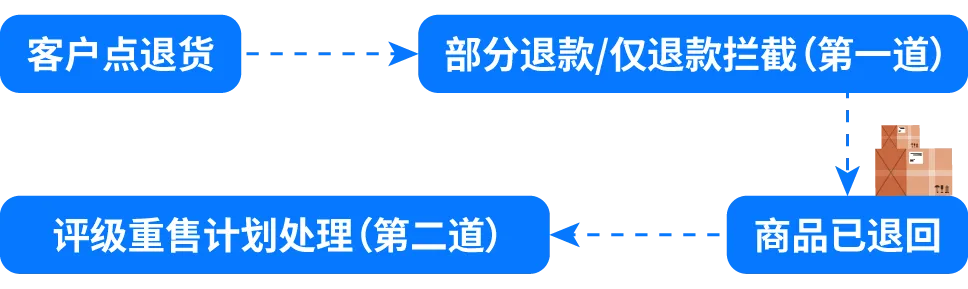
These two strategies are not an either-or, but two lines of defense—
The first line of defense (partial refund and returnless resolution)
Block returns at the moment the customer clicks return, retaining the product and order.
The second line of defense (grade and resell)
For products that are actually returned to the warehouse, let them be monetized a second time instead of becoming inventory waste.
Returns are an unavoidable cost black hole for sellers, but not an unsolvable problem. Partial refunds and returnless resolutions help you intercept returns at the front end, and the grade and resell plan helps you monetize them a second time at the back end—two lines of defense, front and back, can turn returns from "pure loss" into "manageable business links."
How are you currently handling return goods? Have you encountered any pitfalls?Welcome to leave a message and exchange in the comments section~