
 Xiao Huangyin said across borders
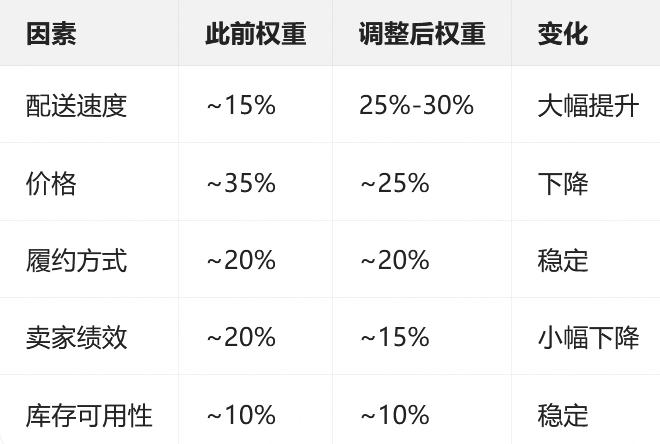
Amazon’s Buy Box allocation rules have been overhauled from a two-stage filtering (“qualify first, then compete”) to a single-stage model where all eligible offers directly enter a comprehensive weighted ranking. Performance metrics are no longer go/no-go thresholds but become negative scoring factors in the ranking. Delivery speed weight has surged to 25–30%, overtaking price as the key factor.
I. Core Mechanism Change: From “Two-Stage Filtering” to “Pure Ranking Model”
· Old mechanism (two-stage gatekeeping): Stage 1 enforced hard performance thresholds (ODR, late shipment rate, cancellation rate, etc.)—failure meant automatic disqualification, regardless of price or speed. Stage 2 let qualifying sellers compete on price, delivery speed, and service quality.
· New mechanism (single-stage ranking): The performance threshold is eliminated. All offers for active listings automatically enter the candidate pool with no manual action needed. Metrics like return rate, ODR, and customer complaints shift from eligibility filters to direct inputs in the scoring formula, weighted alongside price and delivery speed.
II. Algorithm Weight Adjustment: Delivery Speed Now Outweighs Price
By late 2025, Amazon quietly adjusted Buy Box algorithm weights: delivery speed weight rose from ~15% to 25–30%, while price weight dropped from ~35% to ~25%. Price tolerance widened from 1% to 2–3%, meaning a seller with next-day delivery can win even at a slightly higher price against lower-priced standard-delivery competitors.
III. Rollout Timeline
· July 20, 2026: First launched in five European countries (DE/FR/IT/ES) and the UK marketplace.
· By end of 2026: Full rollout to all global marketplaces including Japan.
IV. Impact on Sellers
Winners
· New & small/medium sellers: Can compete immediately upon listing; cold-start periods shorten dramatically as there is no qualification gate blocking them due to lack of historical data.
· FBM (Fulfilled by Merchant) sellers: Gain equal footing with FBA sellers and are no longer inherently excluded.
· Exclusive/brand sellers: As sole offer, occasional performance hiccups no longer cause the entire listing’s Buy Box to disappear.
Under Pressure
· Established FBA sellers: The competition pool shifts from “qualifier-based” to “open audition,” flooding in cheap rival offers. Whether FBA sellers can maintain the 5–7% premium they previously enjoyed over FBM sellers (as of July 2026) is a big question.
· Low-performance sellers: They can enter the pool, but severely subpar metrics may directly trigger account review or suspension, losing the previous buffer where “bad performance only meant losing the Buy Box.”
V. Seller Action Items
· Tightly control core metrics: ODR, late shipment rate, and on-time delivery rate remain critical negative factors in the ranking formula—do not let them slip.
· Prioritize FBA: With delivery speed heavily weighted, FBA’s Prime advantage is amplified. FBM sellers should enable Premium Shipping or apply for Seller Fulfilled Prime.
· Recalculate pricing strategy: With price tolerance widened to 2–3%, reassess your repricing boundaries and monitor competitor moves on shared ASINs.
· Watch rollout progress: Keep checking backend updates across marketplaces, and refine your supply chain and pricing strategies in advance.
The essence of this restructuring is not the removal of barriers, but their relocation—from “qualification check” to “ranking competition.” Entry becomes easier, but holding the Buy Box becomes harder.
After the new Buy Box logic takes effect, sellers must adjust their operational strategies. Looking back at Amazon’s policy tightening over the years, the core logic has never changed: everything tilts toward buyer experience. From continuous Prime upgrades to stricter return policies and now the fundamental Buy Box redesign, the platform is essentially pushing sellers to invest time and cost in products and operations. Adjust your direction early to secure your place under the new rules.