 Cross-border information
Recently, the most discussed topic in the cross-border community is undoubtedly the 'Seizure Notice' suddenly issued by US Customs.
The US Customs and Border Protection (CBP) recently announced a 1559-page 'Notice of Intent to Seize and Confiscate', with more than 40,000 seized items involved, affecting a large number of Amazon sellers.
What worries sellers the most is that if these shipments are not successfully appealed within 30 days, they will be directly confiscated and disposed of by US Customs.
The following is the original text of this seizure and confiscation notice:
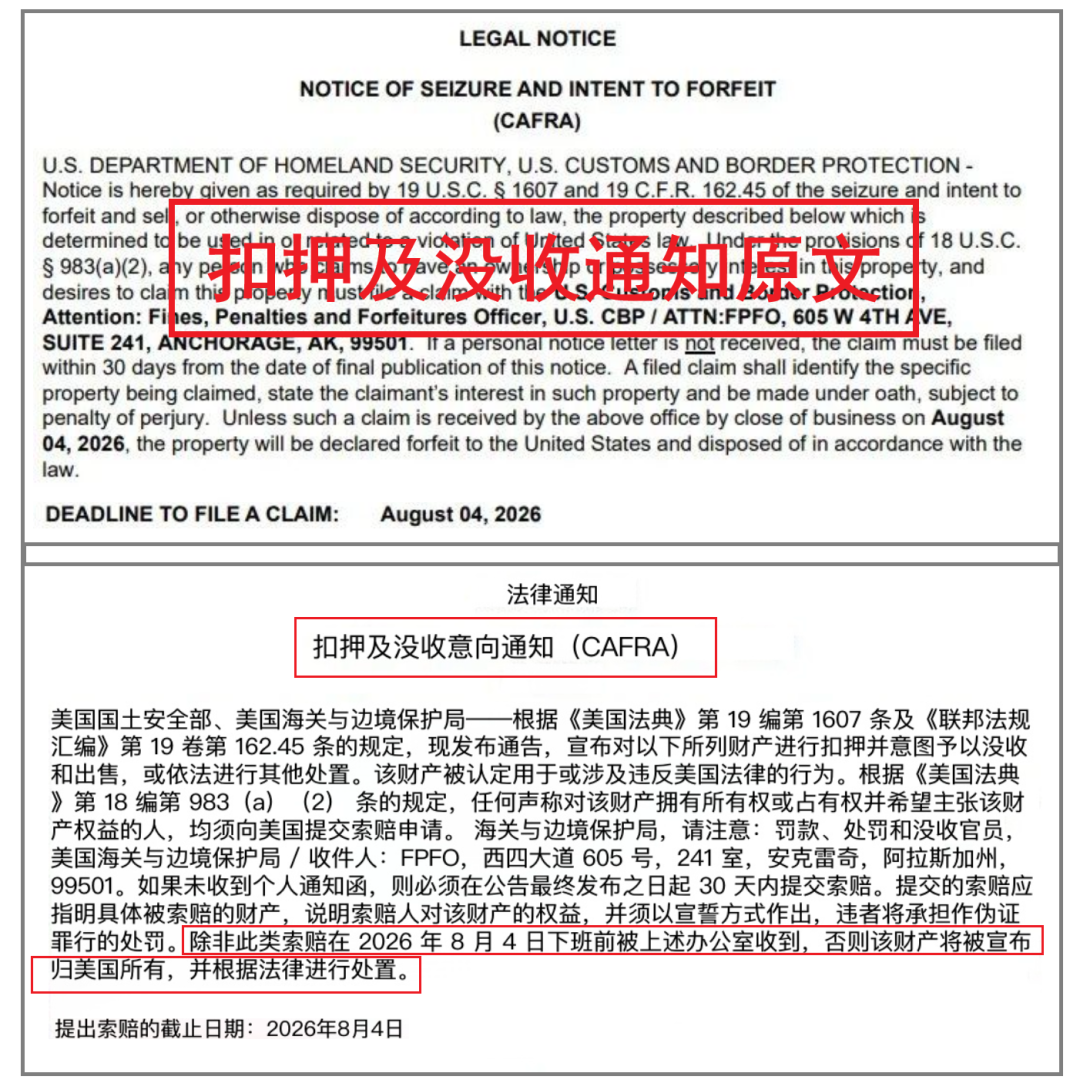
According to data released by US Customs, this large-scale seizure has formed two core disaster areas:
1. Intellectual property infringement
2. Lack of consumer product safety certification
The first major disaster area, namely 'Intellectual property infringement', is mainlyconcentrated at the Anchorage air freight port, which is the core hub for Chinese cross-border small packages entering North America.
US Customs relies on the brand intellectual property filing database and Amazon front-end Listingimage database cross-comparison to intercept a large number of counterfeit sportswear, fake luxury accessories and World Cup event-related counterfeit products.
Among these products, even if the value of a single item is less than $100, or only a few sample packages are intercepted, as long as there are similar infringement characteristics in trademarks and patterns, they will be directly seized without distinction of the value of goods for lighter treatment.
Many Amazon small and medium-sized sellers who bet on World Cup peripherals and affordable trendy accessories have just completed Prime Daystocking and encountered package interception, completely interrupting their peak sales plan.
The second major disaster area, namely 'Lack of consumer product safety certification', is mainlyconcentrated in the Los Angeles and Long Beach sea ports.
The goods seized at the port are mainly maternal and infant, toys, and small household electronics, with the core violation being the lack of compliant CPC children's product certificates, or the certificate holder information does not match the customs importer.
According to Amazon's previous notice, on July 8, 2026,CPSCelectronic certificate declaration new regulations will be implemented, at which time paper certificates will completely lose their customs clearance effectiveness. Customs has launched a pre-check in advance this time, and a large number of baby walkers, charging toys, and children's storage furniture were detained because they did not complete electronic filing and lacked battery safety test reports.
According to the US Customs enforcement process, all sellers of seized goods have a 30-day statutory appeal window. If the complete evidence materials are not submitted and the defense process is not completed after the deadline, the goods will be uniformly destroyed or publicly auctioned by the customs.
At that time, sellers will not only be unable to recover any value of the goods, but the involved parties will also be included in the customs high-risk blacklist, and the subsequent inspection rate of all goods of the seller will be directly increased to more than 80%, and may face long-term customs clearance obstacles.
The entry of 40,000 items into the confiscation process is essentially a landmark event for US Customs to shift from 'post-punishment' to 'pre-control', and it also sounds the compliance alarm for all cross-border sellers who are deeply cultivating the US market.
In the short term, sellers need to immediately complete inventory self-inspection, remove all styles with infringement disputes, organize a full set of electronic certification files for maternal and infant and children's products, and verify that the certificate importer information is unified with the customs clearance subject information.
In the long run, the extensive operation model of simply low-price stocking, applying third-party qualifications, and vague trademark design has become unsustainable.
With the continuous upgrade of the US Customs digital inspection system and the full implementation of new consumer product safety regulations,compliant operation, complete intellectual property filing, and standardized product certification will become the rigid threshold for Amazon US site sellers to continue operating.
Sellers who continue to ignore customs compliance, product compliance, and intellectual property compliance will face the dual losses of losing both goods and finances and store restrictions.
Source: Cross-border Sellers Concentration Camp