 Amazon Global Store opening

Many sellers do not know whether their storage configuration fees are too high. The simplest method is to check two key data points:
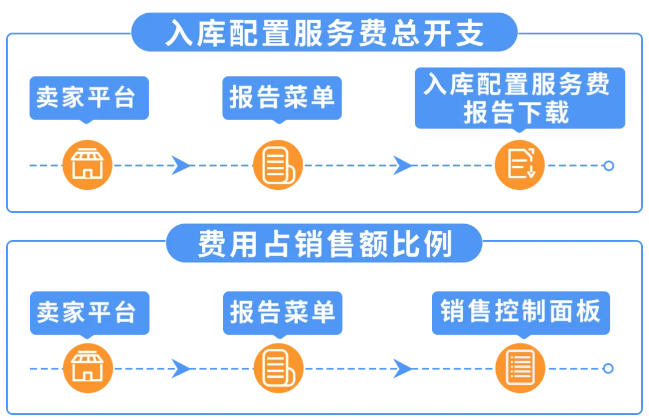
Diagnostic Criteria:
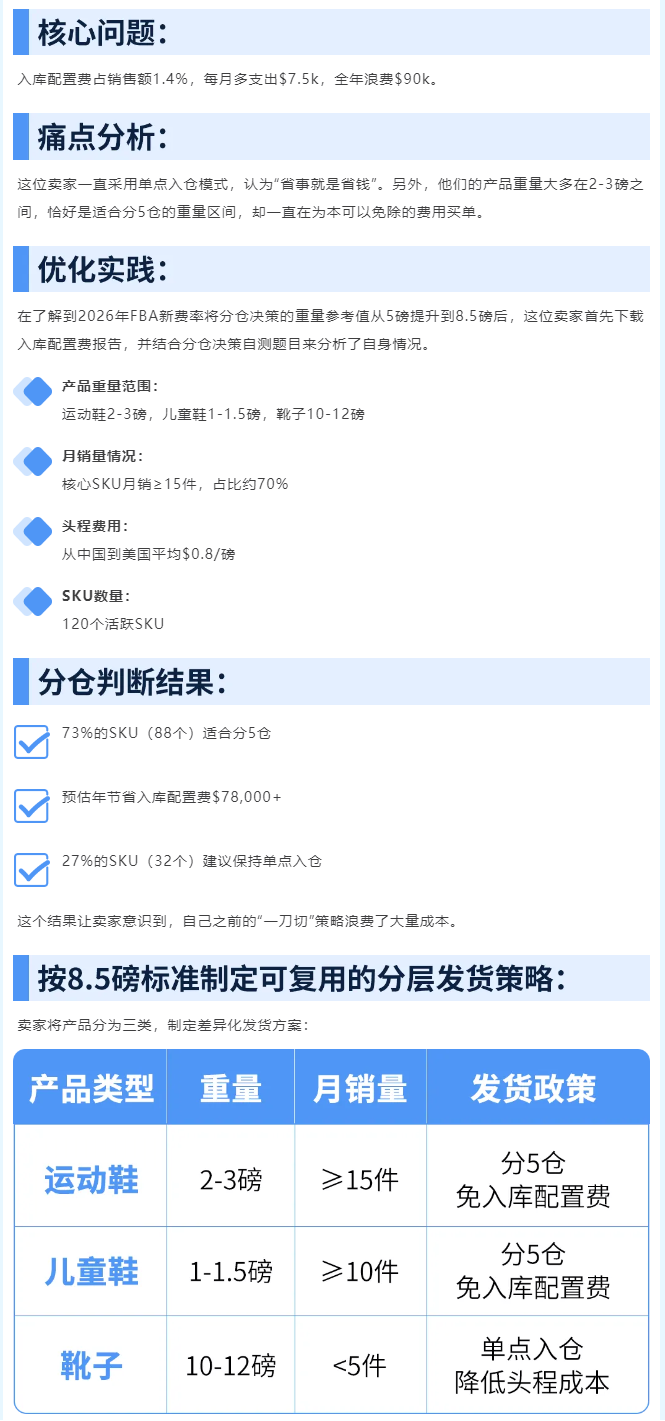
If your storage configuration fee accounts for more than 0.5% of your sales, or if there is an abnormal increase (such as from 1.1% to 1.8%), it is urgent that you optimize.

Amazon offers two storage methods:
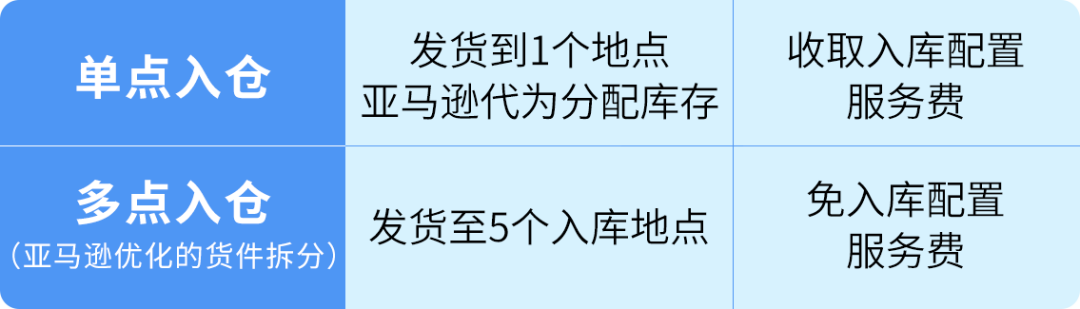

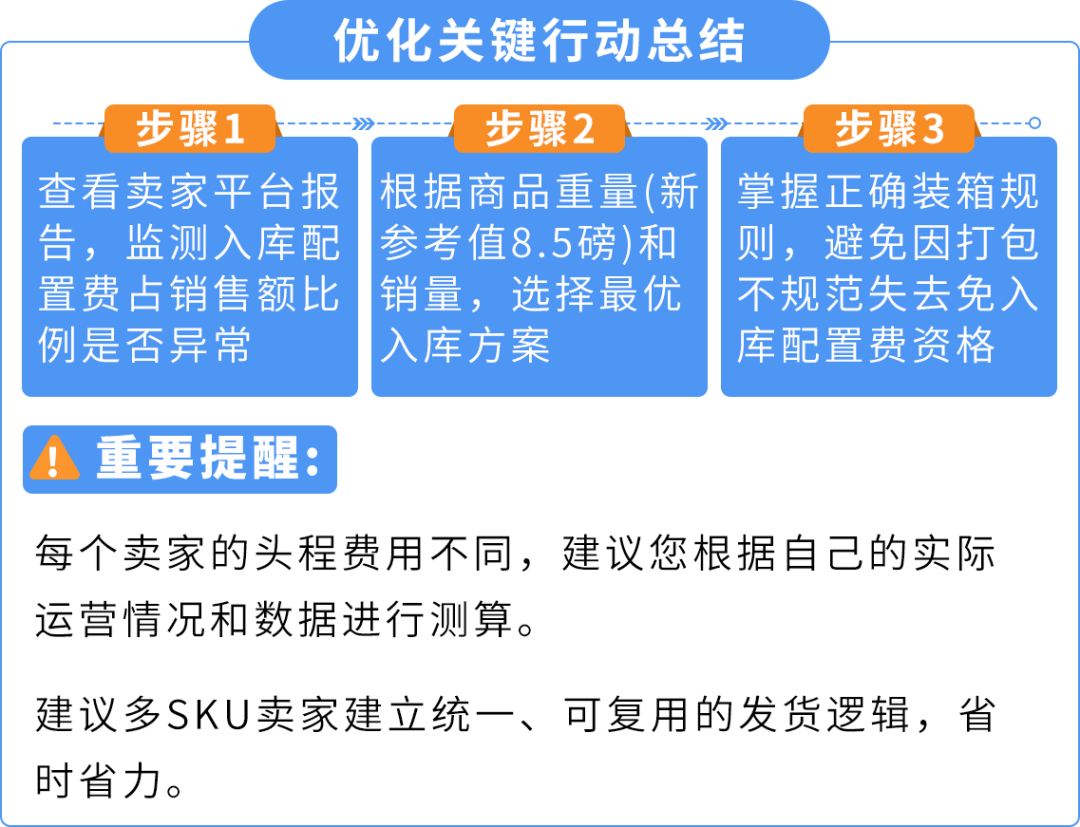
New Reference Value for 2026: 8.5 Pounds
According to the latest rates for 2026, Amazon has updated the weight reference values for its warehouse allocation decisions:
(1)Light Cargo(<8.5 pounds):
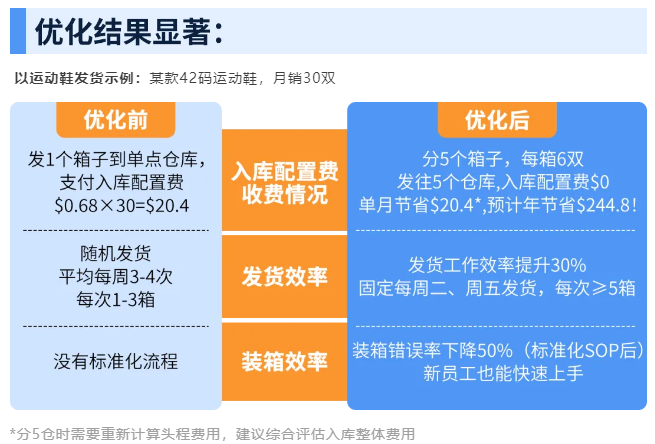
Distributing across 5 warehouses is more cost-effective and can eliminate storage configuration fees.
(2)Heavy Cargo (>8.5 pounds):
Single-point storage might be more economical; comprehensive calculation of headhaul costs is required.
(3)Proportion of Storage Configuration Service Fees to Sales
(4)Product Weight Distribution
(5)Monthly Sales Volume per SKU
(6)Operational Team Execution

After selecting "Amazon-Optimized Shipment Splitting," the packing rules are crucial; otherwise, you cannot enjoy free storage configuration fees.

(1)Equal Distribution per SKU:
Each SKU must be evenly distributed across 5 boxes, with the same quantity in each.
(2)Mixed Packing Across SKUs:
When packing different SKUs together, the type and quantity of SKUs in each box must be identical.

Method 1: Pack First, Then Allocate Warehouses (Suitable for Send to Amazon)
Steps for Packing Multiple SKUs:
(1Distribute SKU1 evenly across boxes 1-5
(2If the box is not full, distribute SKU2 evenly across boxes 1-5
(3If the box is full, distribute the remaining quantity of SKU2 evenly across boxes 6-10
Method 2: Allocate Warehouses First, Then Pack (Suitable for API/ERP)
Use the New Version of Delivery InboundAPI "Pack Later" (Pack Later) Function
(1Only ≥5 items of each product are required to qualify for "Amazon-Optimized Shipment Splitting"
(2The system automatically generates a warehouse allocation plan; sellers can wait for the system to allocate warehouses before packing as needed.

Finally, what sellers worry most about is "complex packing operations leading to errors," so they choose to use Amazon's new API "Pack Later" function:
(1Call FBA Inbound V2024-03-20 API through the ERP system
(2When creating a shipment,只需提交SKU和数量,无需提前规划装箱
(3The system automatically determines whether it meets the qualifications for "Amazon-Optimized Shipment Splitting"
(4API returns a warehouse allocation plan, indicating which warehouses each SKU needs to be sent to
If you have any questions about Amazon, you can use the link ( https://wsurl.cc/wg4chn ) or scan the code to contact the official customer development manager: