 Yijia Overseas
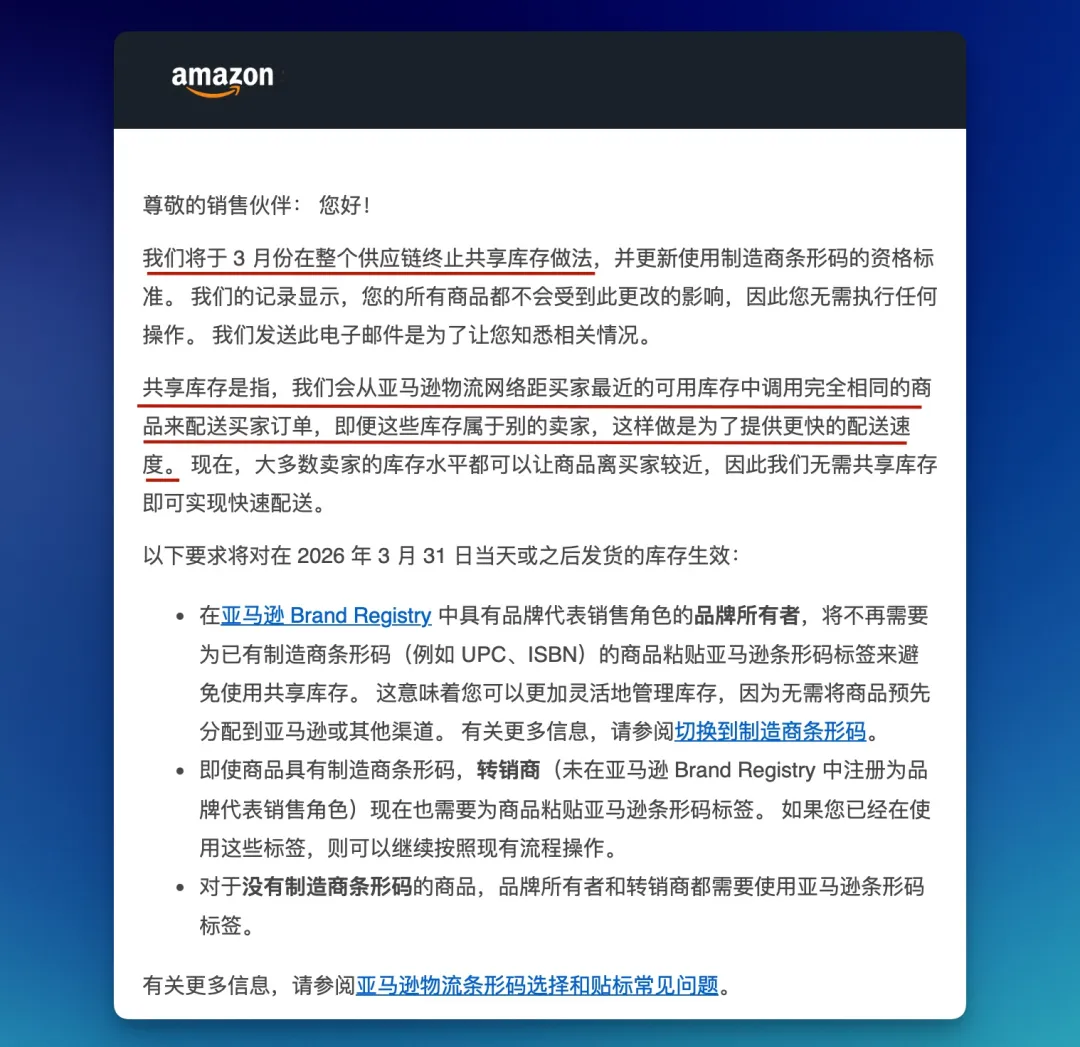
Recently, Amazon officially announced that the long-standing "Shared Inventory Mechanism" will be completely canceled as of March 31, 2026.
1. What is Shared Inventory?
The so-called Shared Inventory is an inventory management method within Amazon's FBA system. When multiple sellers sell the same product, Amazon will pool these products with the same UPC/ISBN/manufacturer barcode into one inventory pool and then ship according to the inventory closest to the buyer.
This model seems to improve delivery efficiency and shorten the delivery distance on the surface. Sellers do not need to label additionally, and inventory can be stored together. But in fact:
1. The same inventory does not distinguish specific seller sources;
2. Buyers may receive inventory from other sellers when they get the products;
3. Responsibilities such as reviews, returns, and bad reviews may also be forcibly attributed to you;
2. Why Cancel Shared Inventory?
The official reasons given by Amazon mainly include:
1. Most Sellers Have Good Inventory Levels: Now sellers have more sufficient inventory, which can better ensure fast delivery without relying on the shared pool.
2. Improve Product Authenticity and Seller Responsibility Attribution: Shared inventory increases the risk of counterfeit goods, defective products, and expired products, and sellers have difficulty controlling quality and after-sales systems.
3. Reduce Risk Disputes and Unfair Complaints: From the perspective of consumer experience and brand protection, canceling shared inventory can clearly define responsibility boundaries.
3. What Impacts Will There Be?
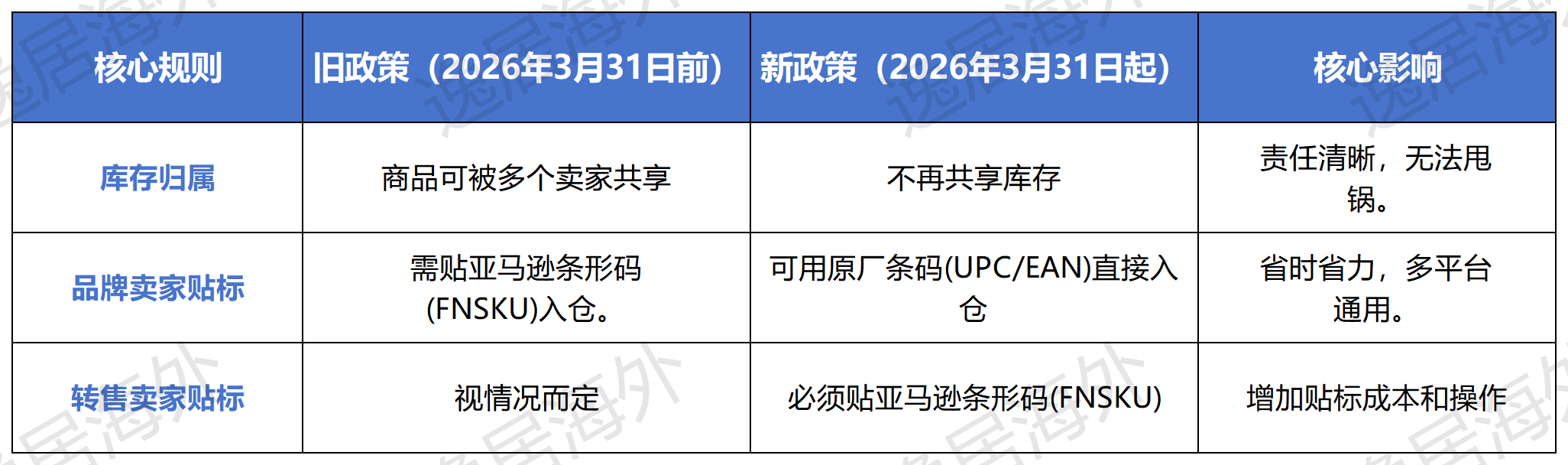
With the termination of the Shared Inventory function, Amazon has also updated the usage standards of product barcodes. Whether the adjusted products need to be labeled with Amazon barcodes mainly depends on the seller's brand identity and whether the product has a manufacturer barcode.
1. For sellers who have completed brand registration and registered as brand representatives on Amazon, if the product itself already has a manufacturer barcode such as UPC or EAN, there will be no need to additionally attach an Amazon FNSKU label, and the original factory barcode can be used directly for warehousing.
2. For resellers or followers who are not registered as brand representatives, they must attach an Amazon-exclusive FNSKU label to each product, even if the product itself has a UPC code.
3. Products without manufacturer barcodes, whether brand sellers or resellers, need to be labeled with Amazon barcodes.
4. How Should Sellers Respond?
1. Each Inventory Must Be Tracked Independently
The cancellation of Shared Inventory means that FBA will no longer ship the same products from different sellers in the same inventory pool. In the past, buyers may have received goods from any seller in the shared pool, but in the future, orders can only be shipped from your own inventory.
3. Sort Out the Labeling Process in Advance
All sellers need to comprehensively evaluate their dependence on the Shared Inventory function and count the quantity and sales volume of related products. Non-brand sellers should prepare Amazon barcodes in advance for all shipments planned after March 31, 2026.
Ensure that all new goods meet the warehousing requirements to avoid situations where they cannot be stored.
3. Less Risk of Defective Goods Being Mixed
In the past, in Shared Inventory, counterfeit goods, damaged products, and expired inventory might be automatically allocated to buyers by the system. Even if it was not your goods, it might affect your reviews and return rate.
After canceling Shared Inventory, buyers will receive the real inventory of the corresponding seller, and it will be easier to attribute responsibilities for returns and bad reviews, reducing the chances of brand image infringement.
Finally:
Amazon's suspension of Shared Inventory, although sellers may face pressures such as increased labeling costs and inventory planning adjustments in the short term, in the long run, this can not only avoid unnecessary operational risks but also allow brand sellers to obtain a fairer competitive environment.
The above is the content sharing brought to you by Yiju Overseas. Feel free to leave a message and discuss in the comments section at any time!