 Echotik data
On last year’s Double 11, a dark horse broke into the top 10 of TikTok Shop’s Southeast Asia cross-border sales ranking.

Surrounded by big 3C brands, fast-fashion hits, and consumer electronics — a ceramic pot shipped from China was wedged right into the middle.
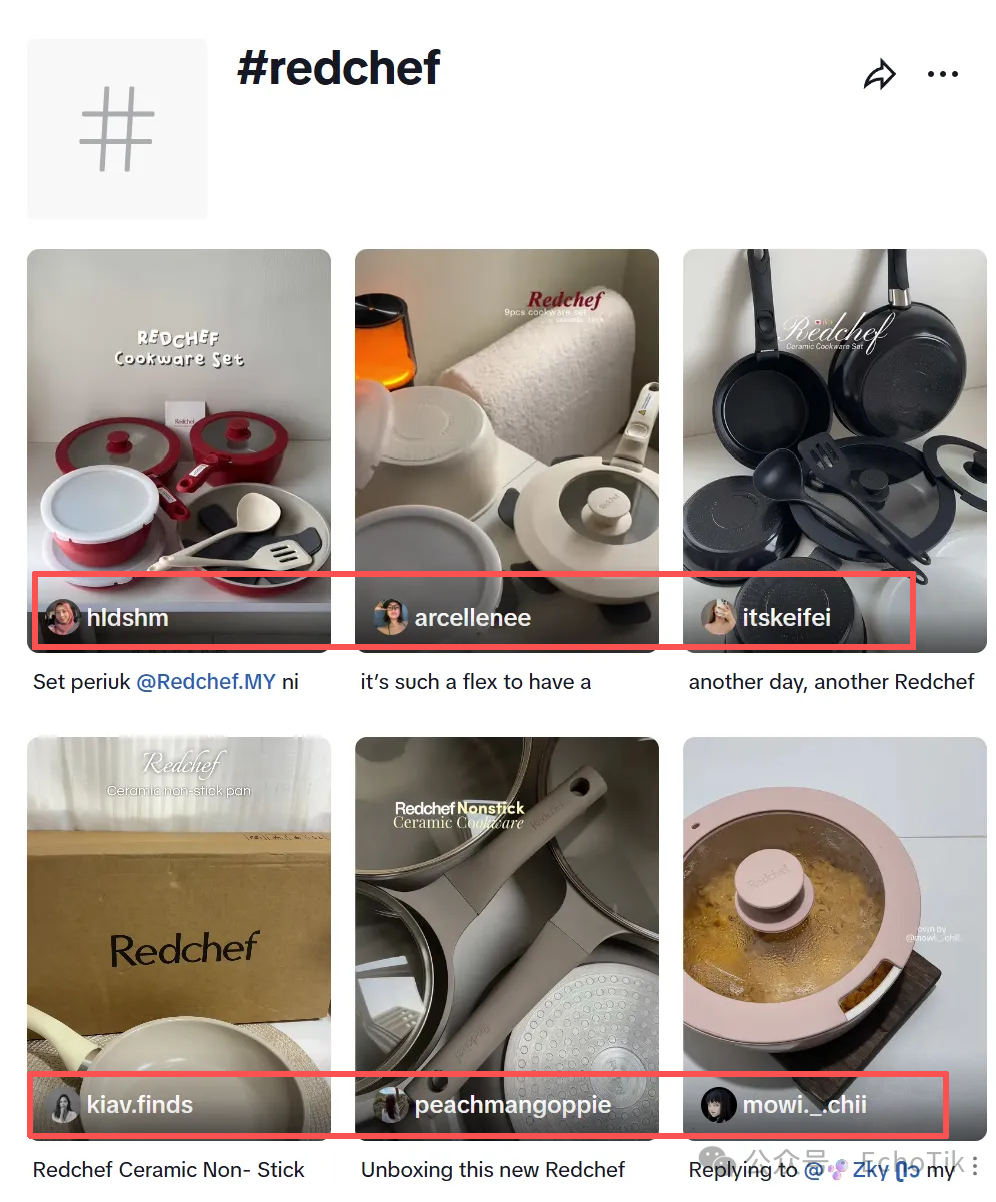
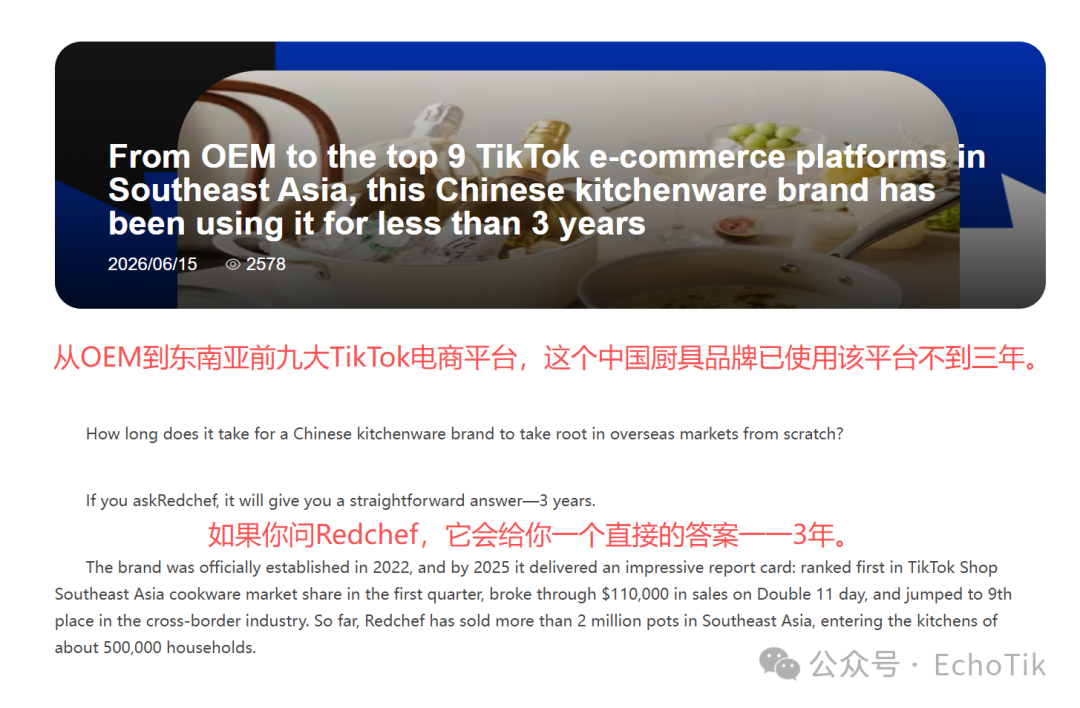
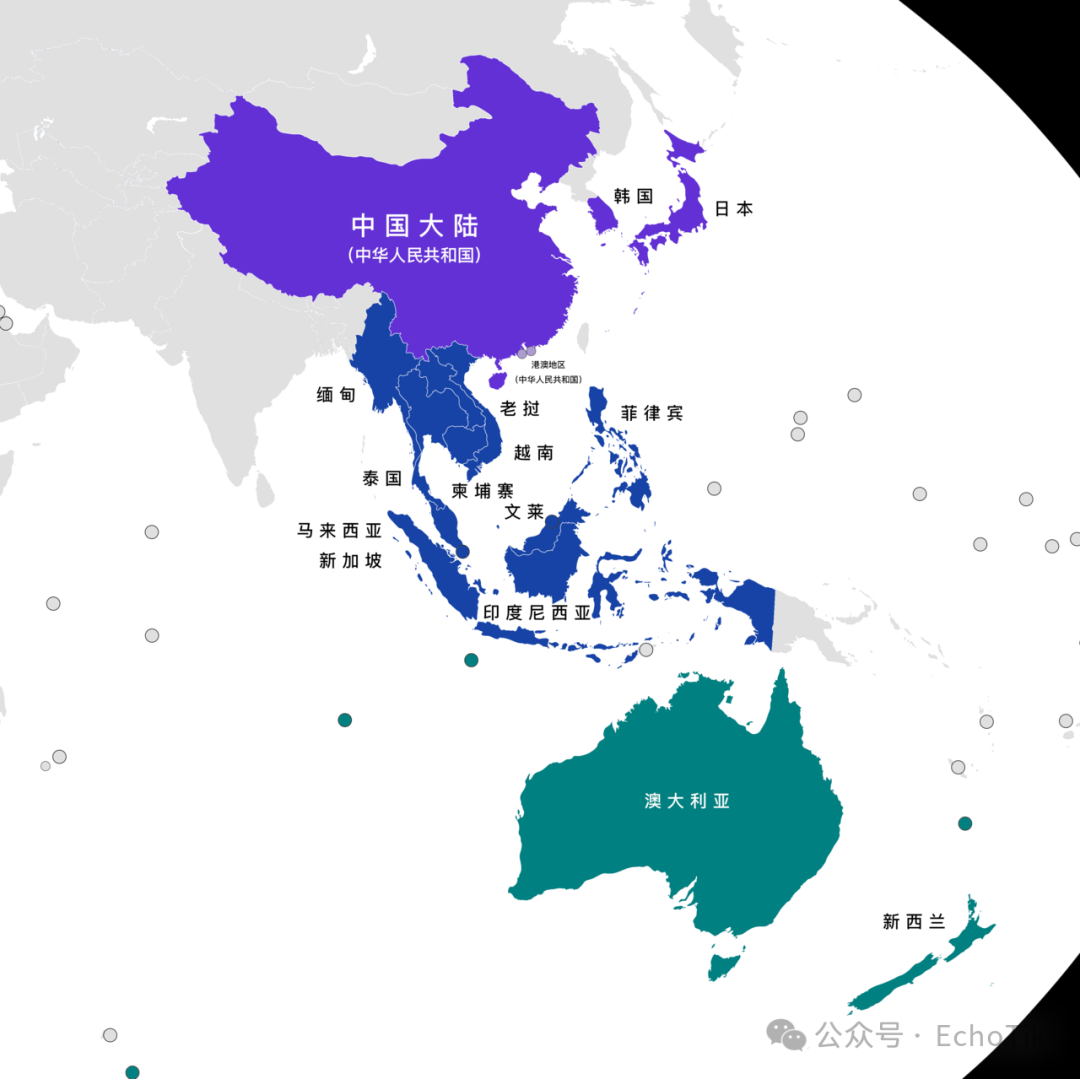
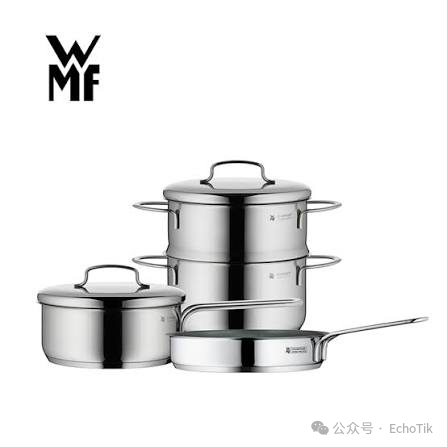
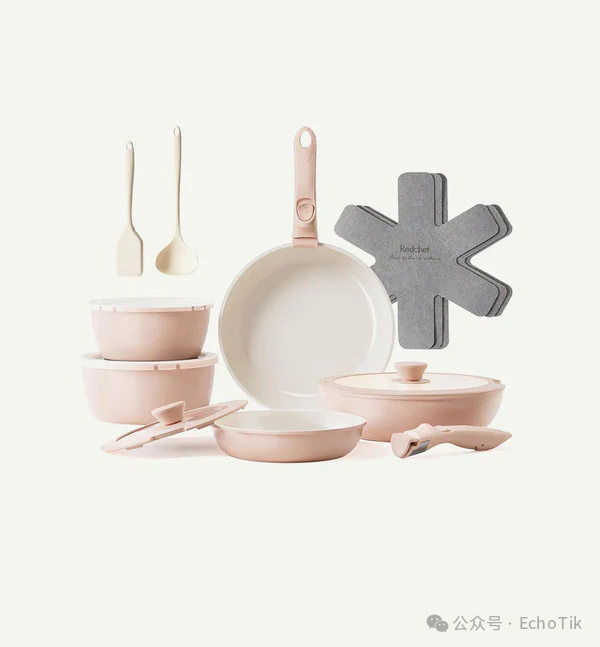
That day, it sold $110,000, ranking 9th across all cross-border categories. The brand is Redchef, founded only in 2022, when almost no one in China had heard of it. Three years later, Redchef is already among the top nine cookware brands on TikTok Shop Southeast Asia, having sold 2 million pots and entered about 500,000 kitchens. Deconstructing Redchef’s breakout case The first window: RCEP opened a gap for cost repricing. RCEP stands for the Regional Comprehensive Economic Partnership, with member countries including China and over 20 regions in total. Put three figures together to see its scale — the member countries’ population, economic output, and total trade each account for about 30% of the global total, making it the world’s largest free trade area at the time. For cross-border sellers, RCEP’s most direct meaning comes down to one line: over 90% of goods trade within the region will gradually achieve zero tariffs. In 2022, when RCEP came into effect, Redchef just launched its brand. The agreement slashed the import tariff on Chinese stainless steel cookware from 15% to 5% for Southeast Asian countries. The same pot, same quality, suddenly gained significant repricing space in the Southeast Asian market. The second window: a large gap existed in the Southeast Asian kitchenware market. According to Cognitive Market Research, the Southeast Asian kitchenware market was about $18 billion in 2025, with a CAGR of 10.4%, nearly double the global average. But at that time, the market was fragmented: The high end featured European and American brands like WMF, with prices typically 3-5 times that of Redchef The low end consisted of local heritage brands like Thailand’s Techno and Malaysia’s Yee Lee, focusing on stainless steel, traditional materials, and slow design iteration The mid-to-high-end space of “attractive design, healthy coating, affordability” was almost empty. Redchef cut right in. Technically, its ceramic coating wear resistance test reached 15,000 cycles — three times the national standard of 5,000. In design, it took a lightweight + high-aesthetic route, achieving something European and American brands couldn’t: affordable, yet not looking like it’s affordable. The third window: TikTok Shop users and this pot’s product logic fit perfectly. Southeast Asia is TikTok’s largest advertising audience market globally; TikTok Shop’s local e-commerce share has climbed to 16-17%. As the platform expands and users align with the category — Redchef just needed to catch the wave. What it did right: breaking a pot down into a four-step rhythm Step one: Short videos answer “who you are.” Redchef didn’t pile on specs or shout selling points. The first batch of videos all showed team members cooking local dishes with their ceramic pot — Indonesian nasi goreng, Malaysian bak kut teh, Vietnamese pho. Not a single technical selling point was mentioned. But users didn’t need to be educated; after watching, they had already formed a product judgment. Step two: Native-language livestreams build trust in four countries.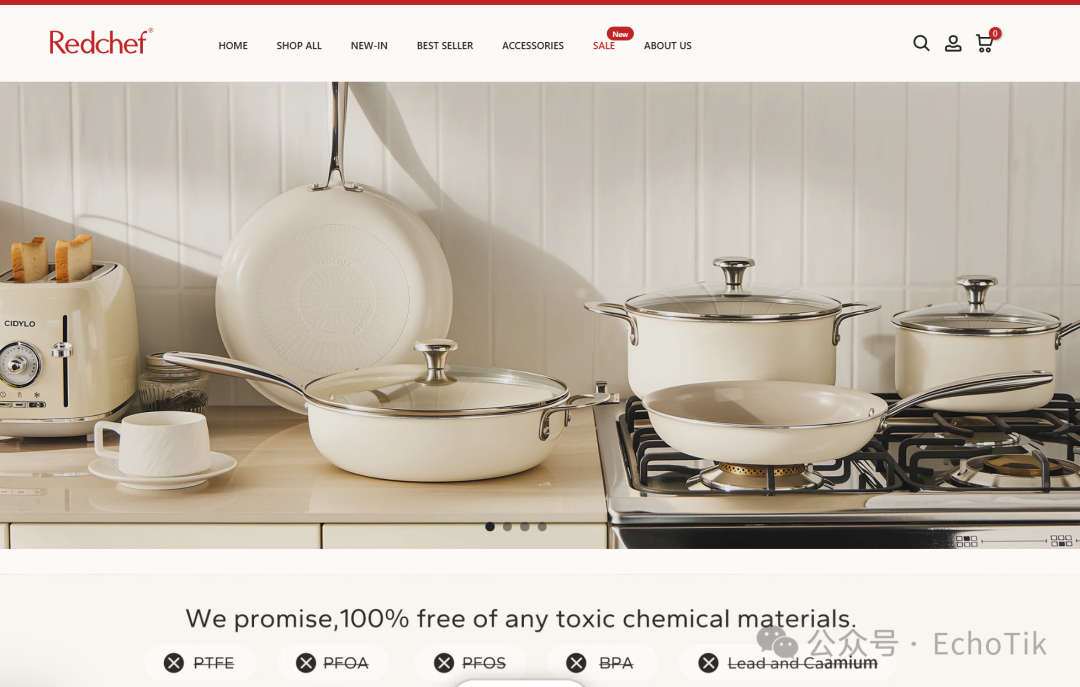

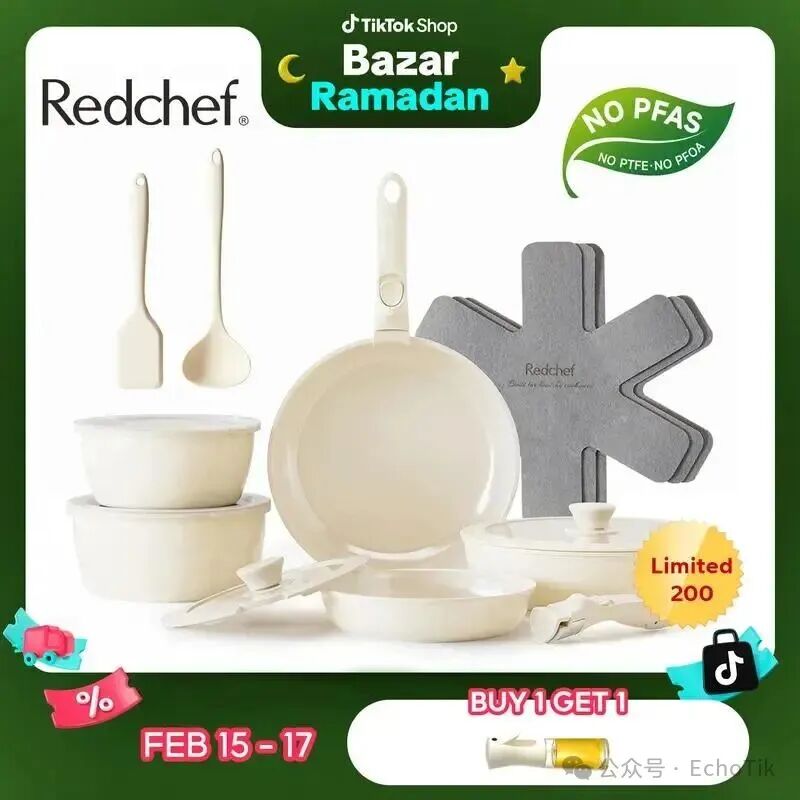
Redchef didn’t do the kind of livestream where a headquarters script is translated into local languages. It set up separate local livestream studios in Indonesia, Malaysia, Vietnam, and the Philippines, with language, ingredients, and cooking habits all fully localized.
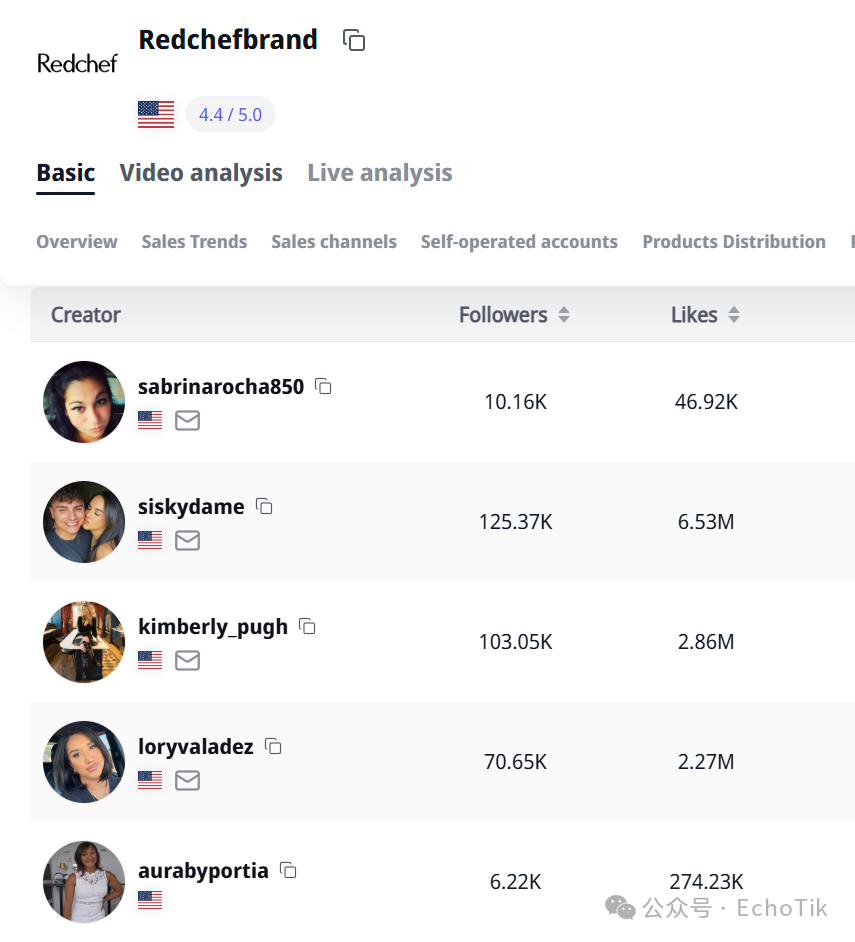
Step three: Leverage mid-tier influencers for volume, skipping top-tier celebrities. Top influencers bring huge traffic but cost more and are picky. Redchef bypassed them, building a mid-tier influencer network with higher loyalty, more authentic content, negotiable prices, and precise niche alignment. Final thoughts The most overlooked point in Redchef’s story: it didn’t create a “completely different pot.” Materials, coatings, and craftsmanship aren’t that different from many peers in Zhejiang. What truly set it apart were three things: hitting the policy window, capturing the category gap, and matching the platform’s rhythm. None of these require factory changes; you just need a perspective shift in the decision chain — from “what can I make” to “what does this market lack now, who’s promoting it, and how can I catch it.” And when you don’t know where to go next, looking at that market-validated influencer list is the shortest path.