 Yamasen Cross-border
In accordance with the EU Ecodesign for Sustainable Products Regulation (ESPR), certain goods sold in the EU market may be subject to restrictions on the destruction of unsold consumer products and related information disclosure requirements. This “EU Ecodesign for Sustainable Products Regulation (ESPR) Compliance Guide for Disposal of Unsold Consumer Products” (hereinafter “Guide”) is hereby formulated to provide compliance reference for merchants, helping them understand relevant requirements and prepare for compliance.
ESPR stands for Ecodesign for Sustainable Products Regulation, an important EU regulatory framework for sustainable product management.
ESPR aims to improve product sustainability, promote resource circularity, and reduce environmental impact throughout the product life cycle. As part of the ESPR framework, the EU has also established destruction restrictions and related information disclosure requirements for certain unsold consumer products to reduce waste and promote resource circularity.
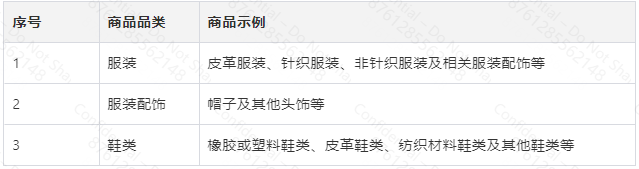
1) Destruction Restriction on Unsold Consumer Products According to ESPR, from July 19, 2026, large enterprises shall in principle not destroy unsold apparel, clothing accessories, and footwear products. Medium-sized enterprises will be subject to the requirements from July 19, 2030. Micro and small enterprises are currently not subject to the destruction restriction. ESPR also provides certain exceptions where unsold apparel, clothing accessories, and footwear may still be destroyed if conditions are met, e.g.: 1. For health, hygiene, and safety reasons; 2. Damage caused by handling or discovered after return, which cannot be repaired cost-effectively; 3. The product is not suitable for its intended use, considering applicable EU and national laws and technical standards; 4. The product has been offered for donation but not accepted by relevant institutions or organizations; 5. The product is not suitable for reuse or remanufacturing; 6. The product cannot be sold due to infringement of intellectual property rights (including counterfeit products); 7. Destruction is the option with the least environmental impact. 2) Scope of Goods Covered by the Destruction Restriction Currently, the destruction restriction on unsold consumer products under ESPR mainly applies to certain apparel, clothing accessories, and footwear products. Examples include: The above examples are for reference only. Whether a product falls within the scope of ESPR shall be determined according to applicable regulations and relevant implementing documents. 3) Information Disclosure Requirements According to ESPR, large enterprises must disclose information on the disposal of unsold consumer products. Medium-sized enterprises will be subject from July 19, 2030. Micro and small enterprises are currently not subject to these disclosure requirements. Eligibility depends on enterprise size and other regulatory conditions. Qualifying enterprises must publish on a freely accessible page of their website, in a prominent and clear manner, the information on discarded unsold consumer products for the previous financial year. Core disclosed information, disaggregated by product type or category, shall include: the quantity and weight of products discarded annually, reasons for discarding, the proportion of discarded products delivered to various disposal channels such as reuse (refurbishment/remanufacturing), recycling, etc., and measures taken and planned to prevent destruction of products. Moreover, upon request from the Commission or competent national authorities, all necessary supporting documentation must be provided within 30 days in paper or electronic form to demonstrate the accuracy of disclosed disposal routes and exceptions. Sellers should actively monitor and fulfill applicable ESPR obligations, including but not limited to unsold consumer product disposal requirements and related information disclosure obligations. Sellers should assess, based on their business model, enterprise size, and product categories, whether they are subject to ESPR provisions and take corresponding compliance measures in accordance with applicable laws and regulations. Failure to fulfill ESPR obligations may result in fines, and the platform may also remove relevant products based on legal provisions, regulatory requirements, or agreements with you. The above content is sourced from Temu Seller Classroom.