
 Cross-border information
Amazon has just launched one of the most frustrating product review mechanisms. It pushes a product rating prompt directly into the return process.
The flow works like this: the buyer selects "not as expected" and explains the problem; Amazon's AI return bot asks whether the listing description was inaccurate; then asks if there is any other feedback about the product or delivery; finally, a line pops up in the chat window—thank you for your feedback, to help other buyers, how many stars would you give this item? Five blank stars appear below.
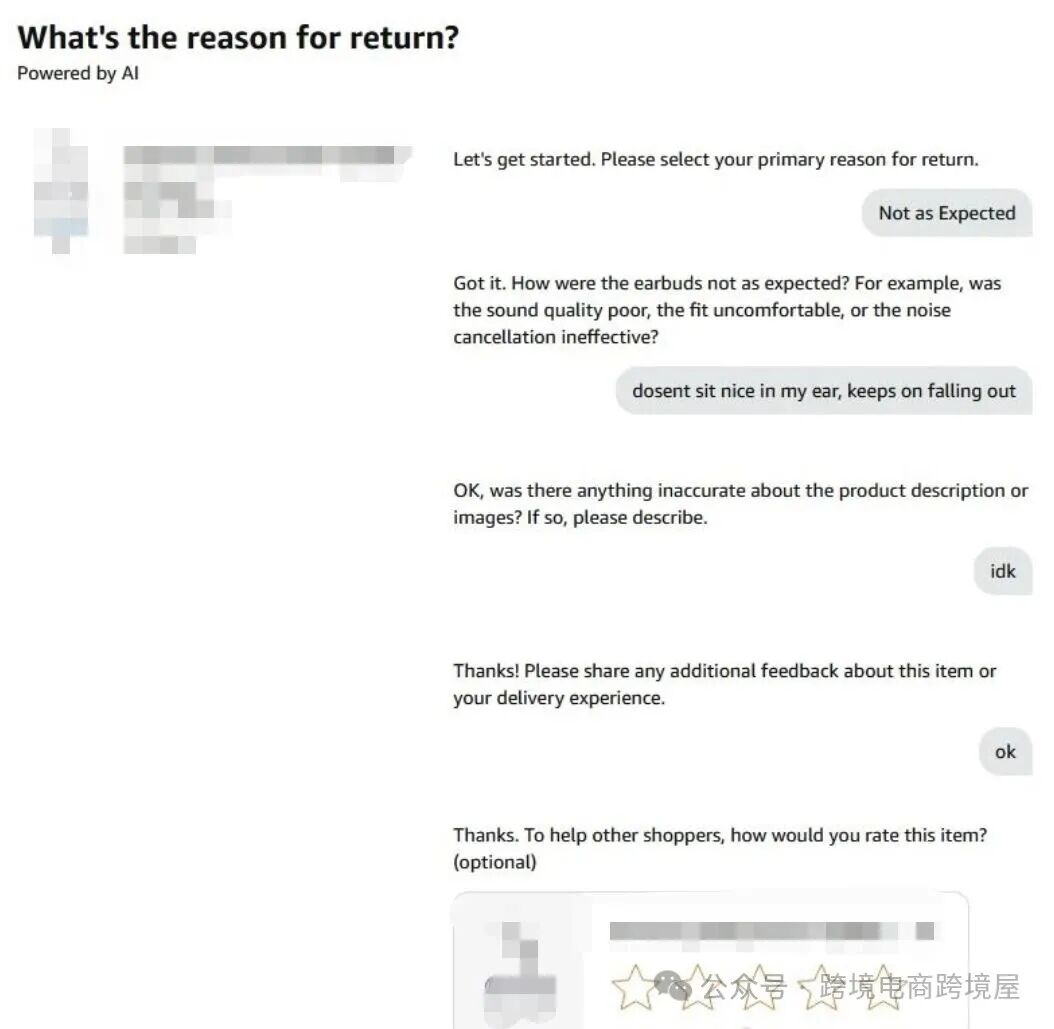
The buyer does not need to click "continue", jump to the order page, or wait three weeks for a polite review invitation email. A swipe to the right and one star is sent.
There is no issue with dissatisfied buyers reviewing products. Negative reviews are part of the system. The real problem is timing and sample: Amazon actively asks a group of unsatisfied buyers already filtered by return behavior for a rating, while the return flow is not finished and emotions are at their peak.
This is not a review mechanism. It is filtered emotional sampling.
Normal review invitations target all buyers. People buy, use the product, and after a few weeks both satisfied and dissatisfied buyers can speak. Only then does the score have statistical meaning.
In this return-flow entry, the sample is 100% negative. Buyers who reach this point have passed three filters: they are unhappy with the product, they are willing to spend time applying for a return, and they have just written out their complaint. A basic psychological fact is that after retelling a negative experience, emotional intensity is amplified rather than relieved. Amazon places five stars at exactly that moment.
Even more notable is the bot's second question: whether the listing description is inaccurate. It seems neutral, but it is attribution guidance. Before the buyer rates, it points the blame at the listing—and therefore at the seller.
What truly makes people angry is often not the product. That is the most dangerous part.
Take health products and food as an example. A buyer opens a bottle, later changes their mind, and only when applying for a return discovers the category does not support returns. Where does the real anger come from? The return policy, customer service, the frustration of the whole process, or all of them combined.
But the only button in front of them is the product star rating.
Buyers have no obligation to distinguish between platform experience and product quality. Most cannot. They only know the shopping experience was bad, and the system just handed them a place to vent. Platform-side problems end up billed to the seller's listing.
Where does this cut?
A drop from 4.5 to 4.3 stars changes conversion, and every mature seller knows the cost; once conversion falls, ad click cost and ACOS immediately shift against you; then Buy Box weight, category ranking, and return rate all come under pressure.
The hardest hit are two types of sellers. One is new products with a small review base: with fewer than fifty reviews, one one-star can drag overall rating by more than 0.1. The other is categories with naturally high return rates—apparel sizing, 3C accessory compatibility, supplement taste and feel, home product color difference. These categories used to absorb expectation gaps through returns; now returns and negative reviews are systematically bound together.
What sellers should do
First, move the battlefield to before returns happen. Most "not as expected" cases are essentially listing expectation-management failures: no size reference, no material detail images, instructions hidden in the seventh image, vague compatibility models. Fixing these lowers return requests, which lowers how often this rating entry is triggered.
Second, put no-return and no-unseal rules in the main image and A+ content, rather than letting buyers discover them only on the return page. Anger from after-the-fact disclosure will land somewhere.
Third, use return reasons as data. Return reports and Voice of the Customer are already free product iteration samples. Now they also predict your rating trend. Track which size is returned most and which batch has concentrated complaints.
Fourth, improve first-response speed. The earlier a buyer is met by a person in the return flow, the lower the chance they reach the AI bot holding out stars.
Some people's first reaction is to compensate—since negative reviews come more easily, they will "arrange" positive reviews.
This is the worst response. Amazon has intensified crackdowns on review manipulation year after year, from linked accounts to review groups to gift card rebates. Detection models are far beyond manual sampling. Using rule-breaking to hedge a rule change means trading your account's life for star points. A rating decline costs some profit; an account ban costs the whole store.
When rules change, recalculate within the rules. Every mechanism adjustment in this industry does not eliminate the less clever; it eliminates those who react too slowly and only use old methods to solve new problems.
Platform rules keep iterating. What sellers can do is intercept risks before they happen.Listing expectation management, after-sales processes, and return data review—none of these can be neglected.
Source: Cross-Border E-Commerce Cross-Border House