 Yijia Overseas
Starting from July 8, 2026, all imported consumer products regulated by the U.S. Consumer Product Safety Commission (CPSC) and requiring a CPC (Children's Product Certificate) or GCC (General Conformity Certificate) must submit electronic certificate information (eFiling) through the CBP ACE system when entering the United States.
1. Policy Background
For a long time, U.S. Customs and the CPSC have required importers to hold product compliance certificates (CPC/GCC), but most of the time they are only provided during spot checks. With the surge in cross-border e-commerce and small parcel imports, the CPSC believes that traditional regulatory methods are difficult to identify high-risk products in a timely manner, so they have introduced an eFiling system that requires the submission of product compliance data in advance of customs declaration to achieve risk pre-screening. After the implementation of the new regulations, the CPSC said it will: 1. Improve the efficiency of identifying high-risk products 2. Strengthen the supervision of children's products 3. Shorten the inspection time for compliant enterprises 4. Improve the transparency of the import supply chain. At the same time, this policy applies to most imported consumer goods, including low-value (De Minimis) parcels.
2. What is eFiling?
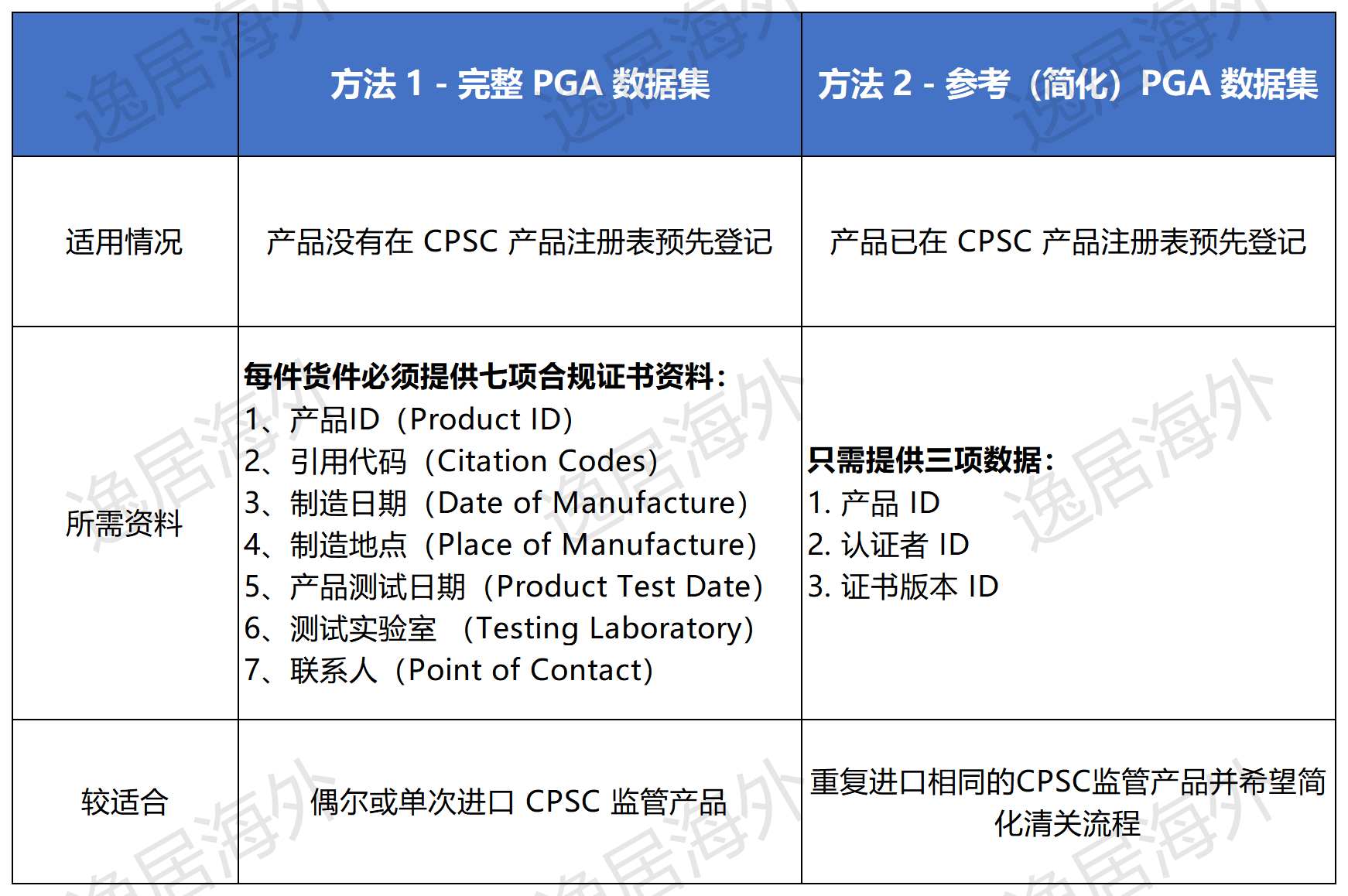
eFiling (Electronic Filing) is an electronic certificate declaration system. To put it simply: Before: The product needs a CPC or GCC certificate → keep it for future reference → provide it when it is spot checked. Now: The product needs a CPC or GCC certificate → submit the core data of the certificate directly to the ACE system during customs declaration. Uploaded through the CBP ACE system of the U.S. Customs in the form of a PGA (Partner Government Agency) data set.
3. Implementation Time
Phase One (officially effective) July 8, 2026, applicable to the vast majority of imported consumer goods. Phase Two (FTZ Bonded Zone) January 8, 2027, applicable to goods that are resold or stored after entering the U.S. Free Trade Zone (FTZ).
4. Scope of Applicable Products
Not all goods require eFiling. The core judgment criteria are only: products regulated by the CPSC and that themselves require a CPC or GCC certificate need to be declared electronically. Commonly involved categories: Children's Products (CPC): children's toys, baby products, children's furniture, children's clothing, children's learning supplies. General Consumer Goods (GCC): furniture, lamps, household items, some electronic products, sports equipment, kitchen supplies. HTS Code List Inquiry: The CPSC has issued approximately 600 HTS codes as a reference range for key supervision. For details, see: www.cpsc.gov/s3fs-public/CPSC-Guidance-and-HTS-List-for-Filing-of-Electronic-Certificates-6B-Cleared.pdf. It should be noted that the HTS list is only a guide list and does not represent all applicable categories; even if the tax number is not on the list, as long as the product is regulated by CPSC mandatory standards, it may still need to submit an electronic certificate.
Regulatory Robot Inquiry: It is definitely within the jurisdiction of eFiling. If you need advice on self-inspection, you can enter the CPSC official website, tool entrance; business.cpsc.gov/robot/, you can query: (1) Whether the product is regulated by the CPSC (2) Whether a GCC/CPC certificate is required (3) Whether it involves children's product regulations (4) Whether laboratory testing is required (5) Which regulatory standards are involved
5. eFiling Operation Process
Step One: Confirm whether the product is regulated by the CPSC
Confirm whether the product requires CPC and GCC, as well as the corresponding safety standards.
Step Two: Prepare test reports and certificates
Children's products: Requires CPC issued by a CPSC recognized laboratory test. General consumer goods: Issue GCC based on test results or reasonable test procedures.
Step Three: Establish product information files
eFiling needs to submit the following core data: (1) Product identification information (SKU, UPC, GTIN, etc.) (2) Certification entity information (3) Applicable safety regulations (4) Product production date (5) Production plant information (6) Recent test date (7) Test laboratory information (8) Certificate maintenance contact information
Step Four: Enter CPSC Product Registry
Companies can register in advance: CPSC Product Registry, establish a product database and generate corresponding product records.
Step Five: Submit ACE at customs declaration
When goods are imported into the United States: importers or customs brokers submit product information, CPC/GCC data, eFiling data sets through the ACE system to achieve automatic associated review.
6. Impacts and Preparation Matters
Impact One: The threshold for U.S. customs clearance has been further increased
In the future, having only a test report is not enough. Sellers need to have compliant certificates, compliant data, and compliant system declarations, all of which are indispensable.
Impact Two: The risk of products without certificates has increased significantly
If the product requires CPC/GCC but has not completed eFiling: It may face customs detention, inspection delays, customs clearance failure, return shipping, administrative penalties
Impact Three: Amazon FBA sellers need to pay attention
Involves: US FBA delivery, overseas warehouse replenishment, domestic warehouse transshipment in the United States may be affected. Especially toys, children's products, home products, furniture, lamps, some electronic consumer goods. It is recommended to complete product compliance sorting in advance.
Impact Four: The preparation period for customs declaration materials has become longer
In the future, sellers will need to prepare test reports, CPC/GCC certificates, product code information, factory information, laboratory information in advance. E-Filing data set to avoid being unable to submit after the goods arrive at the port.
Finally:
It is recommended that sellers involved in the US market should investigate as soon as possible whether their products fall within the scope of CPSC regulation, complete testing, certificates and eFiling preparation work in advance, and avoid customs clearance obstruction due to compliance issues during peak season replenishment.
The above is the content sharing brought to you by Yiju Overseas. Feel free to leave a message and discuss in the comments section!