
 AMZ123 Cross-border e-commerce
Author | Shuangmu@AMZ123
Statement | This article is copyrighted by AMZ123 and may not be reproduced without permission
If cross-border entrepreneurs were to list the "endless disruptions" they face on their journey overseas by 2025, tax declaration policies would undoubtedly be one of the most unspeakable pains: the intensity of policy adjustments, the vagueness of enforcement standards, and the lag of supporting services intertwine into a vast net of uncertainty, keeping most cross-border sellers tossing and turning between compliance and cost.
Now entering 2026, the newly effective "Value-Added Tax Law" has dealt another "blow" to cross-border sellers.

AMZ123 has learned that according to policy documents issued by the State Taxation Administration, starting from January 1, 2026, the "Value-Added Tax Law of the People's Republic of China" will be officially implemented, and the "Administrative Measures for the Registration of General VAT Taxpayers" that have been in use for many years will be abolished at the same time, directly targeting the most sensitive aspects of tax declaration: sales revenue recognition and taxpayer identity conversion, which has sparked heated discussion in the industry.

Specifically, there are two key points worth noting in the new regulations:
First, sales revenue exceeding 5 million will be immediately upgraded to general taxpayers.
According to Announcement No. 2 of the State Taxation Administration in 2026, taxpayers whose annual VAT sales revenue exceeds 5 million (accumulated over 12 consecutive months or four quarters), the effective date of general taxpayers will be the first day of the exceeding period, eliminating the previous buffer period of "effective next month".
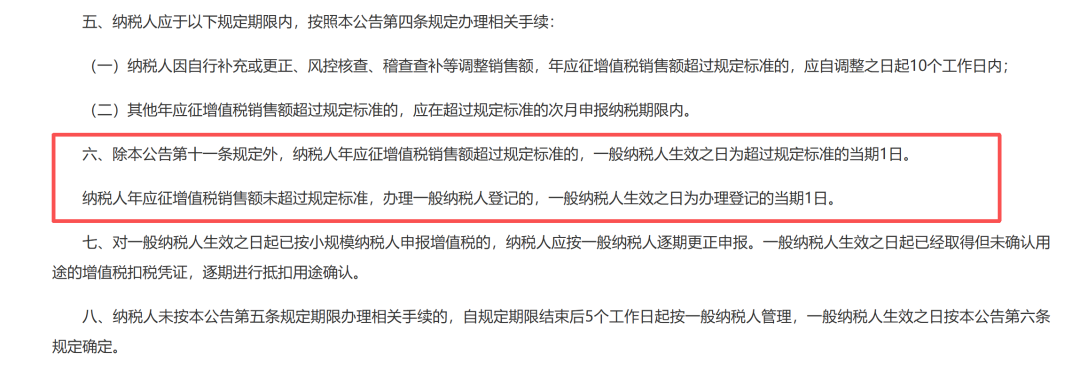
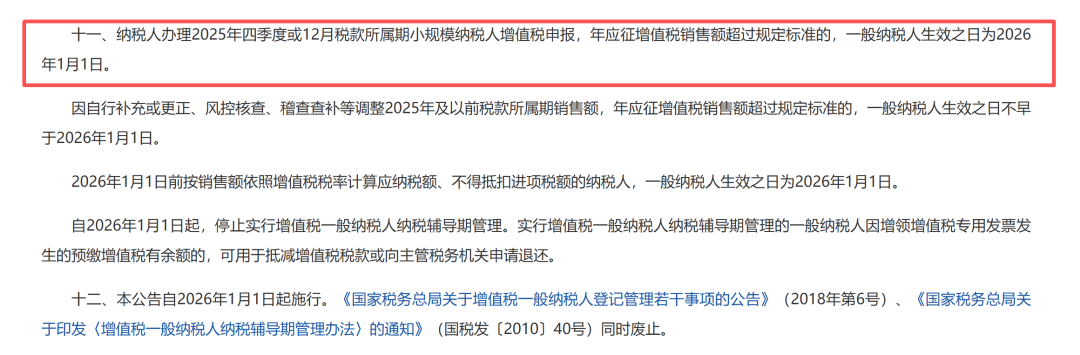
It is worth mentioning that the new policy also left a certain window period at the beginning: If the sales revenue exceeds the standard during the tax declaration period of the fourth quarter of 2025 or December, the effective date can be postponed to January 1, 2026. For example, if a taxpayer's sales revenue exceeds 5 million in the fourth quarter of 2025, they will still pay VAT at 1%/3%, and after tax declaration, they can apply for general taxpayers and declare tax at 13% from January 2026.
Second is the "retrospective accountability" for sales revenue recognition.
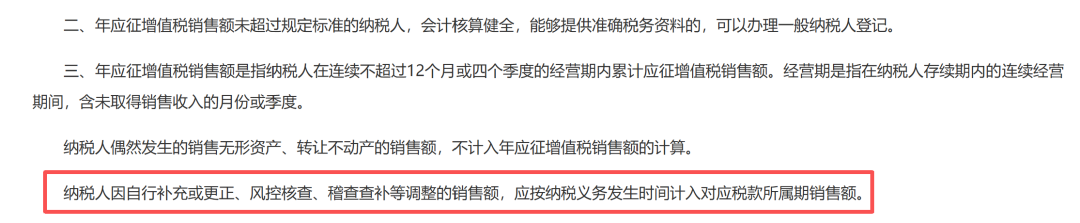
The new regulations clearly state that sales revenue from inspections and self-corrections must be included in the corresponding period according to the "time when the tax liability arises", not the previous "adjustment period". For example, if a taxpayer is found to have underreported sales revenue for September 2025 in April 2026, this income must be retrospectively included in September 2025, and if a compliant invoice was not issued at that time, VAT, surtax, and late fees need to be paid, causing costs to soar.
For cross-border sellers who often hover between "small scale" and "general taxpayers", the chain reaction brought about by the implementation of this new regulation goes far beyond the jump in tax rates: Once upgraded to general taxpayers, the ability to obtain input invoices will directly determine the profit level.
In the past, many sellers faced the choice of "low price without invoice" or "invoice with tax" when purchasing goods from 1688 or small factories. Under the previous small-scale status, this was still tolerable, but after upgrading, if there is a lack of compliant input invoices, the 13% output tax will directly erode profits. Some sellers have calculated that the corporate tax rate may soar from 1%/3% to 13% (without input tax credit), and the tax burden difference exceeds 12 times.
In other words, for cross-border sellers, supply chain compliance is imminent. In addition, the implementation of this new regulation coincides with the tax declaration node in the fourth quarter of 2025. Under the dual pressure, many cross-border sellers cannot help but fall into anxiety.

For cross-border sellers, January is not only the final stage of sales for the past year but also a critical period for setting the tone for the new year. And January 2026 is another "identity" - the major tax declaration period for the fourth quarter of 2025 (October to December).
It is understood that January 1 to January 20, 2026 is the tax collection period, and according to the regulations of the State Taxation Administration, taxpayers need to complete the declaration and payment of various taxes including VAT, consumption tax, and corporate income tax within this specified time.
AMZ123 has observed that recently, some cross-border sellers have started tax declaration-related work, but more sellers are still full of anxiety and unease: on the one hand, there is a huge deviation between Amazon's reported data and their own calculations, and on the other hand, the path to reduce tax burden is unclear. Policies such as tax exemption without invoices and Hainan's closed-door policy seem beneficial but are difficult to implement due to unclear details.
1. Large deviation in Amazon tax declaration data calculation
Since December 2025, Amazon has gradually pushed the tax-related information data tables previously submitted to Chinese sellers, but many sellers pointed out that there are large differences in the calculation caliber - Amazon uses the 1099-K report caliber to submit data, reporting the total gross income of transactions completed through the platform, without deducting cost items such as refunds, sales tax, and VAT; while China's tax declaration follows the "net income" caliber, which requires the actual income after deducting various costs as the basis for taxation, resulting in widespread data differences.
At the same time, the "shortcomings" of Amazon's data service have also become a major problem - the tax declaration data link is only valid for 7 days, and many busy sellers fail to save it in time due to negligence, making it difficult to retrieve the data; some multi-site sellers also reported that they did not receive the corresponding emails, and the timeliness and comprehensiveness of information synchronization are worrying.
Until January 2026, many Amazon sellers still could not figure out the tax declaration data calculation for the third quarter, so it was difficult to start new tax declaration work in time. "If you declare according to the platform data, you will have to pay more than a hundred thousand in taxes; if you declare according to your own data, you are afraid of triggering an audit due to discrepancies."
2. The path to optimize tax burden is "visible but intangible"
Besides the headache of data verification, how to legally reduce tax burden has become the most concerning topic for sellers during the fourth-quarter tax declaration season. Although policies such as tax exemption without invoices and Hainan's closed-door policy are highly anticipated, the current implementation status still fails to meet the needs of most sellers.
Although the policy of tax exemption without invoices has been piloted in Shenzhen, Hangzhou, and other places, allowing sellers to enjoy VAT exemption on exports when they cannot obtain valid purchase vouchers, the pilot scope is limited and has not yet been extended nationwide. More importantly, the pilot policy has certain requirements for filing procedures and transaction authenticity verification. Many sellers who rely on "invoice buying for export" find it