
 Echotik data
With the memory of "breaking 100 million in a single event", Xiao Yang Ge has turned to foreign countries.
After experiencing domestic turmoil, San Yang did not choose to wait passively for a comeback, but bet on overseas markets. From Southeast Asia to Latin America, they first secured a foothold in Mexico and then aimed for Brazil. Behind this decision is not just "escaping from the trend", but also seeing a rapidly rising blue ocean of social commerce.
Why can Latin America attract Chinese MCNs?
The market in Latin Americais large and growing rapidly.Latin America's overall e-commerce growth ranks among the top globally, and social commerce maintains high double-digit growth in 2024-2025, making this region a frontier for competing for incremental users and payment power.
The population structure and social media penetration in Latin America provide natural soil for "social selling".Brazil, Mexico and other countries have a huge user base for social media, and users have a very high acceptance of short videos and live streaming, making their consumption behavior more easily driven by "content + influencers". The expansion of TikTok's user scale and e-commerce functions in Latin America makes the platform itself a natural traffic entrance.
The competitive landscape in Latin America is in the stage of "incomplete localization", leaving a window period for overseas players.E-commerce platforms are accelerating the construction of commercial capabilities, but players who have fully localized and formed stable MCN + supply chains have not yet fully settled, leaving opportunities for Chinese institutions with external supply chains and content production capabilities to replicate and break through.
Therefore, compared to the North American market, Latin America is a "growing big plate", not a "small cake that has been divided up".

Brazil is the largest market in Latin American e-commerce,followed by Mexico,and these two markets account for about 60% of the Latin American e-commerce market.
Brazil is in a "rapid growth period + penetration rise period", with a large user base and a complete platform ecosystem, but there is still room for improvement in the efficiency from "content traffic" to "e-commerce monetization".
Live shopping penetration in first-tier cities in Brazil is fast, and São Paulo and Rio have strong consumption power. McKinsey made a clear judgment in 2023 that Brazil is one of the most suitable countries in the world for live e-commerce, with interactivity, stay duration and immediate purchase tendency all at the forefront of the world.It is expected that the annual compound growth rate of live e-commerce in Brazil will reach 21.9% from 2025 to 2030!

The scale of live shopping in Brazil may exceed traditional e-commerce in the future!
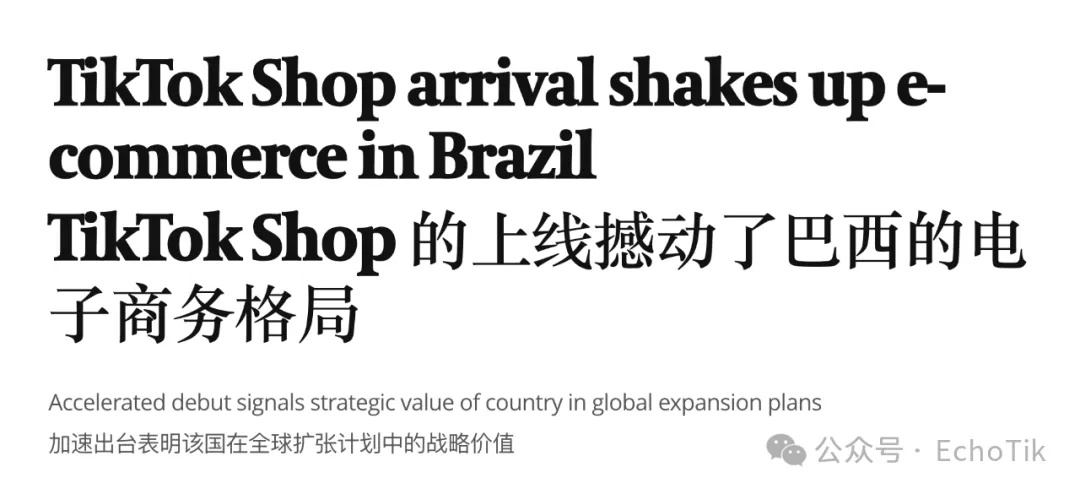
In May this year, TikTok Shop officially landed in Brazil. In just 60 days, the growth rate of the live e-commerce section was outrageous,the average monthly sales of top seller stores increased from 1.8 million reais in May to 2.4 million reais in July,an increase of 33%, which is rare in a completely new market!
The proportion of stores with monthly sales exceeding 2 million reais jumped from single digits to 31%.That is to say, for every three high-performance stores, one has achieved sales of more than 2 million reais (about 2.6 million RMB).
The monthly sales of 50% of live shopping influencers have stabilized in the range of 50,000 to 100,000 reais.This means that TikTok has quickly made the "influencer marketing + local consumption" model work locally, rather than relying on large subsidies to forcibly increase GMV.
These data occurred in a country wherelive e-commerce has just started,not like China where consumers have been educated, nor like Southeast Asia that has gone through several years of trial and error. Brazilian consumers' acceptance of "buying while watching" is higher than all institutions expected.

Bianca Andrade, the Brazilian TikTok live shopping queen we shared before,is a very representative case of TikTok in Brazil.
Bianca Andrade's live shopping on TikTok in Brazil,with a single GMV breaking one million reais (2 million RMB level),and her makeup tutorials on TikTok have accumulated over 1 billion views!

In 2024, TikTok announced the construction of a data center in Brazil, with an investment of up to 9.11 billion US dollars.This investment scale can be said to be a record-breaking major infrastructure in the history of Brazilian technological construction,exceeding the combined warehouse construction investment of Google, AWS and Meta in Latin America in the past five years.
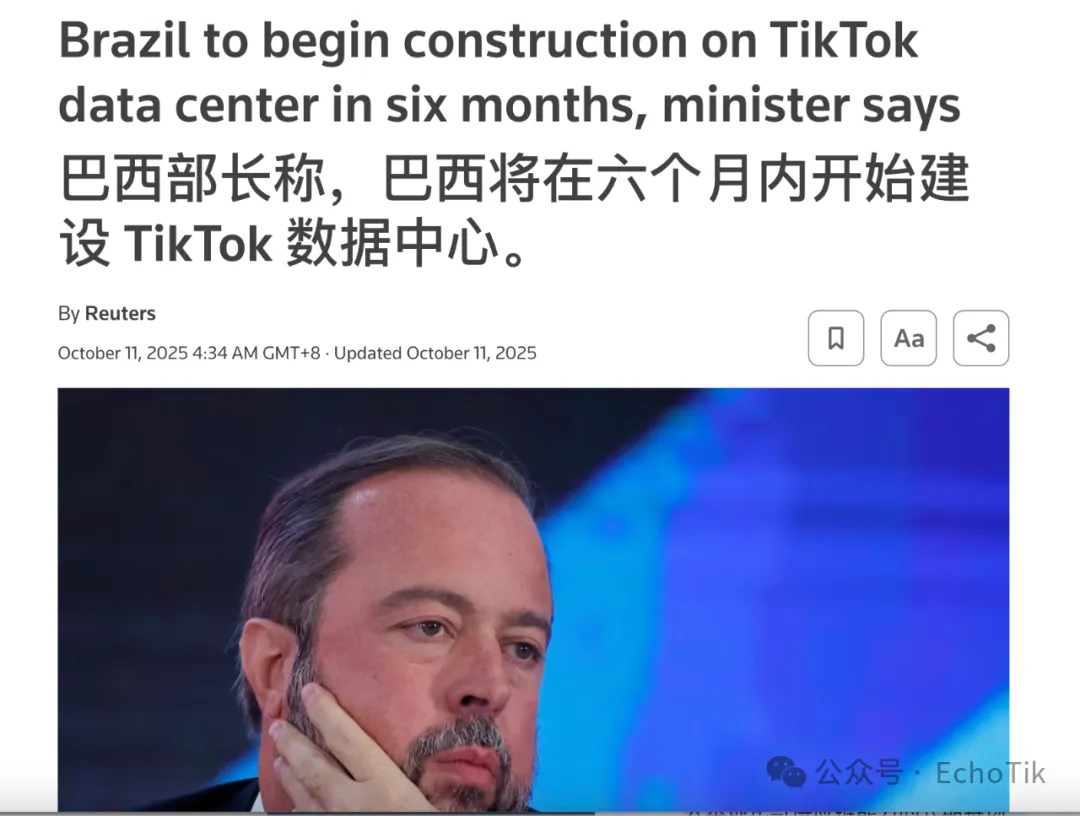
Recently, the Brazilian government confirmed that the TikTok data center will officially start construction within 6 months, with a total investment of about 50 billion reais (9.11 billion US dollars). TikTok's data center is not an ordinary computer room, but a 300 megawatt-levelsuper-large computer room, whose power consumption is equivalent to that of a small city.
What does this mean for live e-commerce? Video, e-commerce, live streaming, recommendation algorithms, all rely on computing power. The cheaper the computing power, the more willing the platform is to "release water" and expand the live shopping ecosystem, which is the underlying infrastructure of the entire video e-commerce in Latin America.
When San Yang went overseas, they didn't directly bring the domestic "spending money + high investment + large anchor matrix", but learned to "slow down to do fine work".
Localization is not just a slogan!San Yang set up localized teams in Mexico/Southeast Asia to conduct language training, localize gameplay and adjust content rhythm, instead of using domestic anchors to sell goods in Chinese; this is the first step of trust.
Influencer training and the establishment of mid-tier and lower-tier ecosystems.They don't rely entirely on "top influencers remote selling". Instead, they sign and train local mid-tier and lower-tier influencers, gradually establish user reputation through large-scale small live streams and community operations.
Considering cross-border logistics and local taxes, San Yang uses a hybrid strategy of "self-operated inventory + local warehouse + local procurement" to reduce single costs and return rates, and improve delivery experience.

After stopping live streaming, they could no longer continue with the domestic traffic method, but were forced to return to the basics, from refined product selection, gradually cultivating trust, to treating each live stream as market education. It seems to sacrifice explosiveness in the short term, but it achieves sustainability.
To succeed in Latin America and Brazil, it's not as simple as translating Chinese copy into Spanish or Portuguese.
San Yang's going overseas can be said to be a combination of four keywords: localization, influencer training, layered inventory, stable compliance.
The potential of Brazil's e-commerce markethas already beenverified.According to data from the Echotik platform, in 2025, various popular products on Brazil's TikTok Shop will perform well, from health products, beauty products to home textiles, kitchen supplies, etc., covering almost all daily needs of consumers.
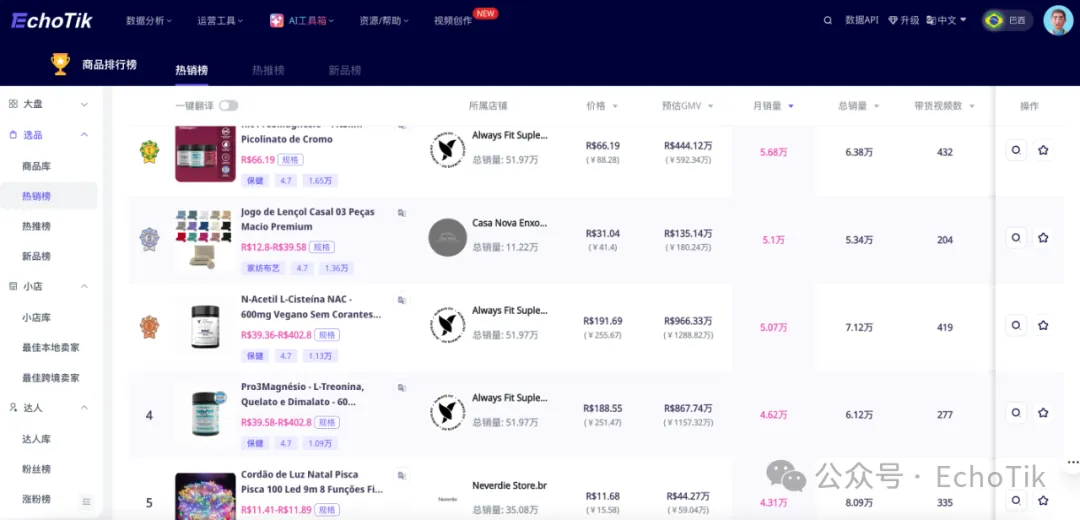
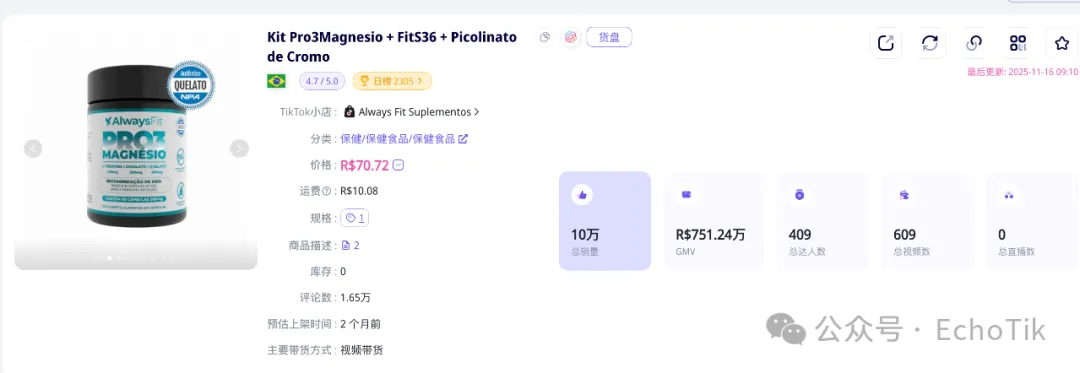
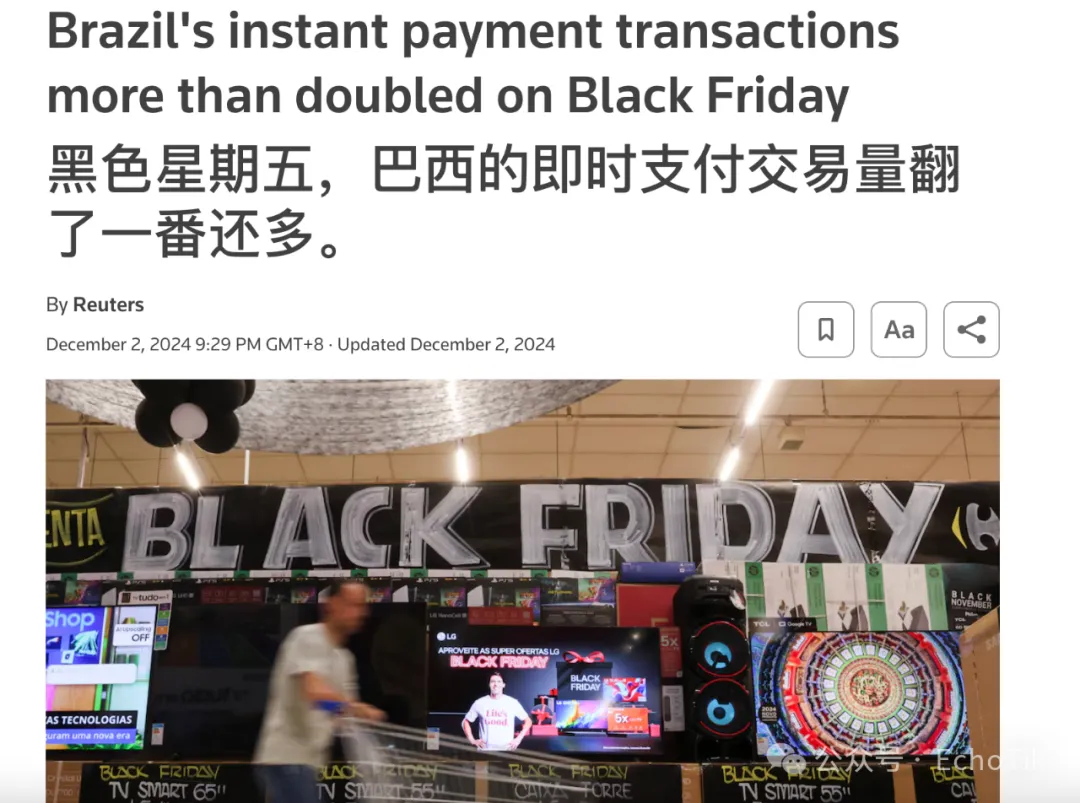
According to predictions from the Brazilian Artificial Intelligence and E-commerce Association, Brazil's Black Friday e-commerce turnover in 2025 is expected to be about R$ 1.334 billion (about 13.34 billion reais),an increase of about 14.7%compared to 2024 (about R$ 1.163 billion).
A Brazilian survey shows that 40% of respondents plan to spend more on Black Friday in 2025 than last year.
Xiao Yang Ge's entry into Brazil is not a desperate move to avoid problems, but a strategic adjustment: when domestic dividends narrow, truly smart players choose to break down their methods, redo processes, and start from scratch on new battlefields.
Latin America is not a "cheap substitute" for traffic, but a long-term arena that requires patience, heavy investment in localization and supply chain capabilities.
If San Yang can turn the "domestic fast gun battle" into a "slow sniper overseas", they have the opportunity to turn one-time traffic in Brazil into sustainable commercial evergreen.