 Amazon Global Store opening
Cross-border business involves three challenges: differentiating from homogeneous competition, precise customer acquisition amid rising traffic costs, and scaled global expansion across multiple sites.
The idea seems simple, but practicalities like product selection, advertising, overseas promotion, and multi-region operations bring many problems. Three brands—in party decor, digital tech, and water purification—hit growth bottlenecks and devised inspiring solutions.

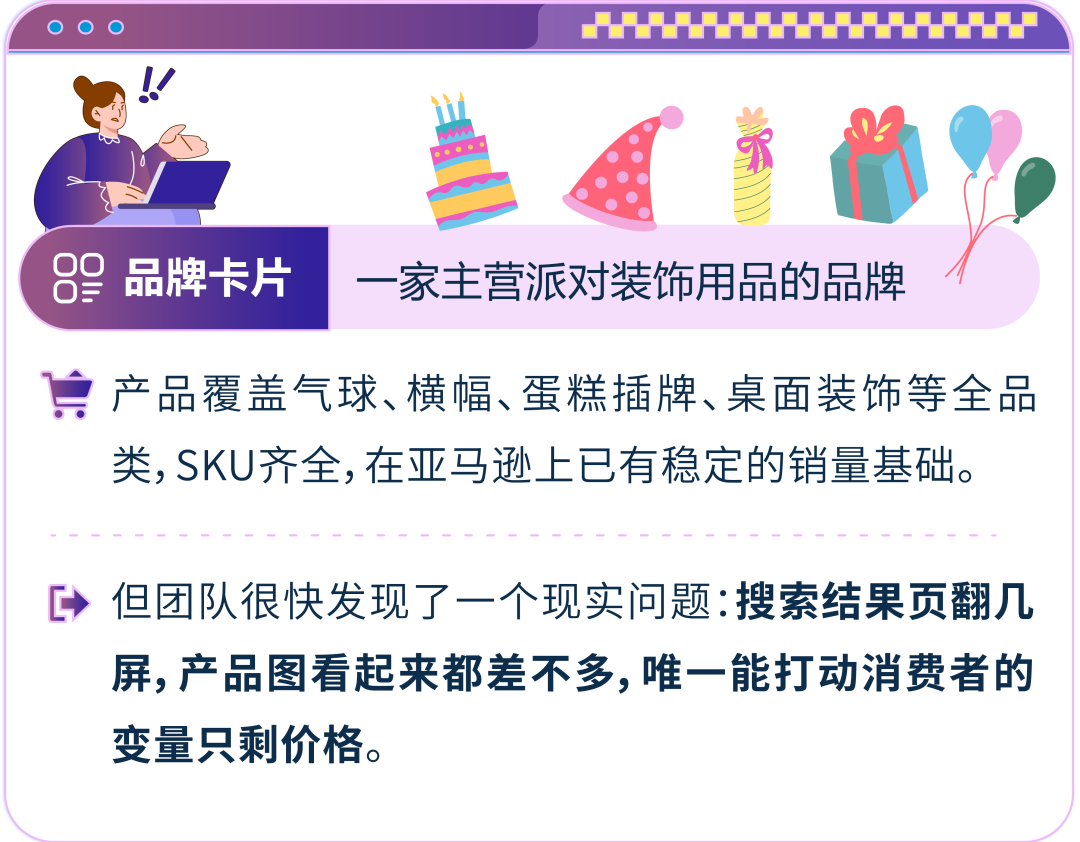
In the same category, many sellers had highly similar specs and visuals. The brand saw that minor feature tweaks couldn’t differentiate them—consumers couldn’t tell the difference.
A data insight: many unauthorized party products with a famous parent-child IP appeared on Amazon—cake toppers, tableware sets, banners. Clear demand existed, but unauthorized product quality and compliance were uneven, a market gap.
The brand chose differentiation — obtaining official IP authorization for licensed co-branded lines, an IP scenario-based strategy. Using Amazon data to analyze preferences, they developed full theme sets, completed compliance, optimized Listings and A+ Content, built a brand store, integrated trackable off-site social promotion, and planned long-term IP derivatives.
Entire co-branded project: planning to launch in 45 days end-to-end:
In 45 days, co-branded sales hit $75K, with a $50K monthly run rate.
Official licensed product sales were ~15x unauthorized.
Bundles contributed ~65% of sales, proving demand for one-stop scenario solutions.
Shift to scenario bundles — a full kids’ birthday party solution around the IP, covering backdrops, cake toppers, gift bags, spiral decor, etc.

In homogeneous categories, differentiation isn’t about minor spec tweaks, but offering value rivals can’t replicate. When products are hard to differentiate, competing on a different dimension often beats stubbornly competing the same way.

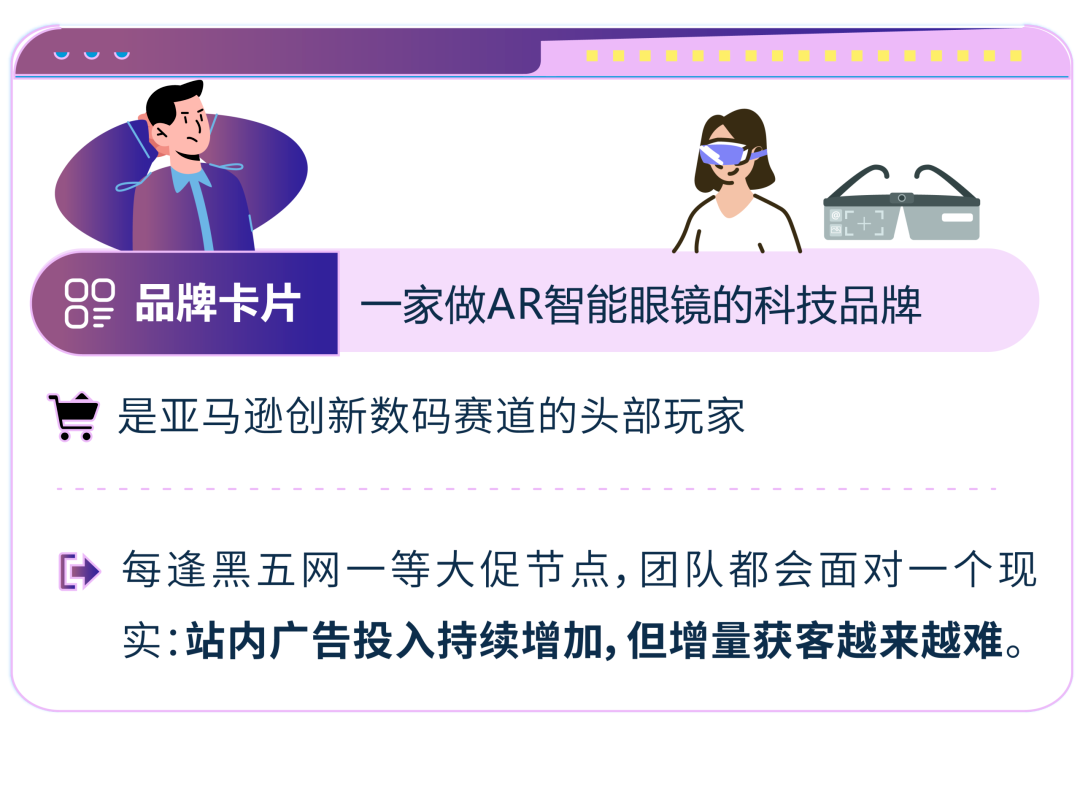
Off-site traffic idea was there, but execution had two flaws — Too many redirects: social media ad clicks had multiple hops to Amazon, high drop-off. Data disconnection: no tracking of clicks, add-to-carts, purchases; optimization was guessing.
The brand found an off-site traffic expert via Amazon SPN, building a full-funnel solution:
Step 1: Connect attribution: Self-developed tools linked off-site to on-site Amazon data — clicks, add-to-carts, purchases all traceable. Team stopped blind spending.
Step 2: Shorten path: Deeplink tech let mobile users click ad and land directly on Amazon app product page, cutting from 4-5 steps to 1, boosting off-site conversion.
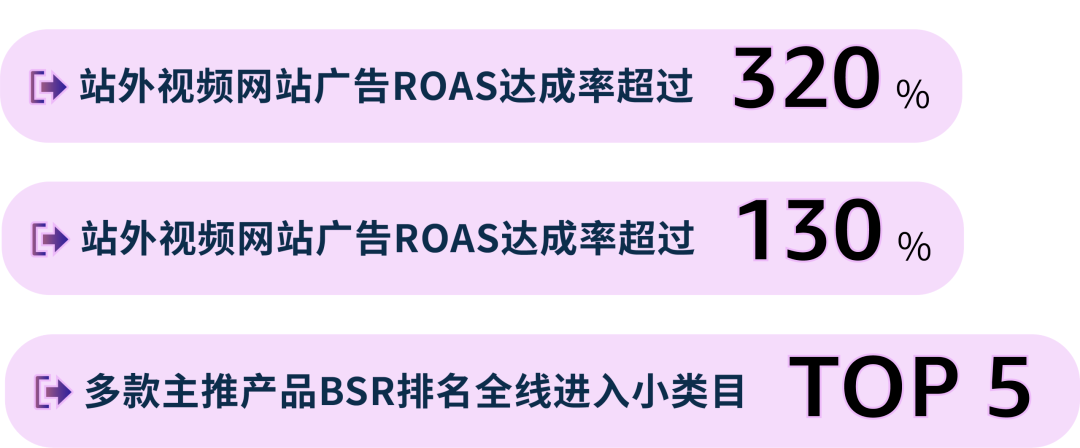
Step 3: Reuse assets: Instead of reshoots, data-driven mashups of existing social content found best elements. Off-site video CTR up 3x, ‘Buy on Amazon’ button CPC down 98%.
Campaign results:

Off-site traffic isn’t about spend, but connected links and data-backed steps.

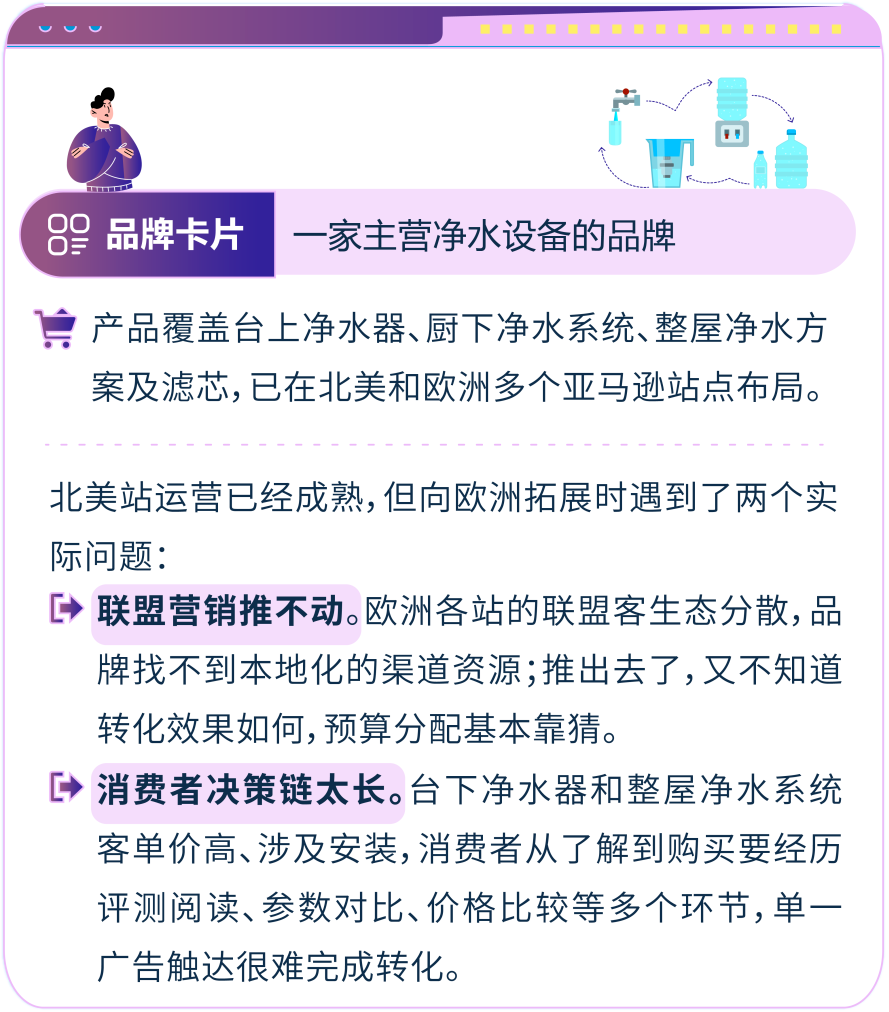
The brand found an affiliate marketing firm via Amazon SPN, building a global off-site system with five modules: data tracking, channel resources, cost control, traffic pathways, global management.
Foundation: Quantifiable full-link tracking. All links connected to Amazon Attribution, every affiliate conversion traceable. Brand could see ‘which spend worth it, which to cut.’
Cost: Leverage Amazon’s Brand Referral Bonus for commission rebates on affiliate orders, reducing net costs. Tiered commissions boosted ROI.
Channel: Global affiliate network. Over 100K quality affiliates in Europe and Americas, three-tier matrix: reviews for trust, blogs for education, KOLs for spread, covering the decision chain.
Conversion: Full-link traffic reception. To tackle long decision cycles, off-site traffic directed to Amazon brand store, with coupons via affiliates, covering education, comparison, purchase—reducing drop-off.
Management: Unified SaaS platform for multi-site automation. Based on the mature North American model, the brand expanded to 6 European sites, using a unified SaaS platform for automated affiliate management, eliminating the need for separate teams.
Key results: Affiliate channel generated over 10,000 orders annually, with stable conversion above 3%. European 6 sites completed cold start in 12 months, some sites saw over 6x monthly growth. Prime Day site sales up >40% MoM, Black Friday-Cyber Monday sales up >140%.

Global expansion efficiency depends on two things: localized channel resources and a quantifiable tracking system.

Three brands, three stages, three challenges. The party brand: differentiation is survival, not just added value. AR tech: event success relies on precision traffic, not just spending. Water purification: global expansion demands data support at every step. Their common move: finding the right service provider via Amazon SPN. Amazon SPN connects sellers with vetted providers across 9 modules and 40+ services, over 1000 service providers.

Every brand hits roadblocks alone; finding the right partner beats going it alone.
*Amazon only provides service provider information and does not endorse any service provider or its services. If you choose a service provider, you will contract directly with them, and they will provide services to you. Amazon is not involved in any transactions between you and the service provider, and assumes no responsibility for any disputes.
For any questions about Amazon, use the link (https://wsurl.cc/wg4chn) or scan the code to contact an official customer development manager: