
 Blue Ocean Yiguan
Recently, TikTok launched a standalone TikTok Shop app for Southeast Asian consumers. The app focuses on product display and purchases. Its homepage includes a shopping search bar, category navigation, and a product feed. Short-video and live-shopping features are now secondary, used to supplement product information and show usage scenarios. The app offers personalized recommendations, exclusive deals, secure payments, order tracking, and 24/7 customer service. It is available in Singapore, Malaysia, Thailand, and the Philippines on iOS and Android.
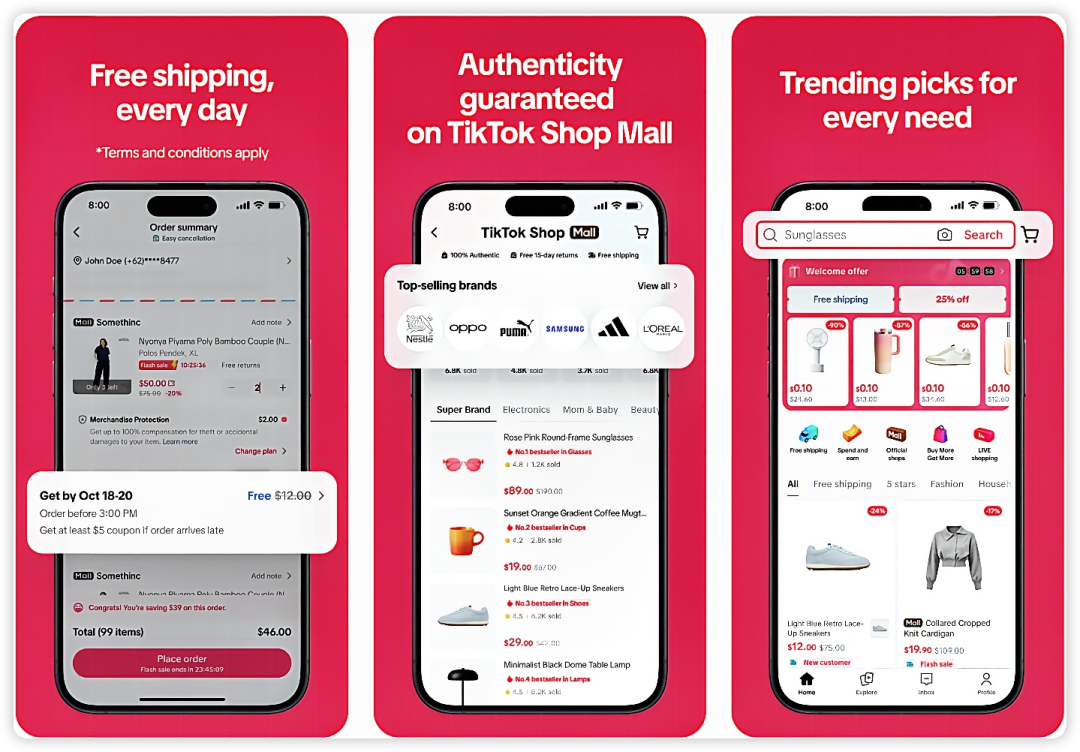
The launch marks a shift from “content e-commerce” to a “content + shelf” model. Previously, TikTok relied on short videos and live streaming to drive passive discovery and impulse purchases, a “goods finding people” model. The new app supports more “people finding goods” transactions and frees TikTok Shop from the main app's constraints to compete with Shopee, Lazada, and Temu.
In Southeast Asia, TikTok and its Indonesian unit Tokopedia have surpassed Lazada to become the second-largest e-commerce platform after Shopee, with a combined 34.64% market share in 2025. Shopee has long been wary of TikTok's growth; in Q1 2026, parent SEA Group said it had factored TikTok Shop's adverse impact into its financial considerations.
It is time for a standalone mall app
For TikTok Shop, the timing is right. Its transaction structure has changed rapidly: short-video GMV share has declined while Shop mall GMV share has risen.
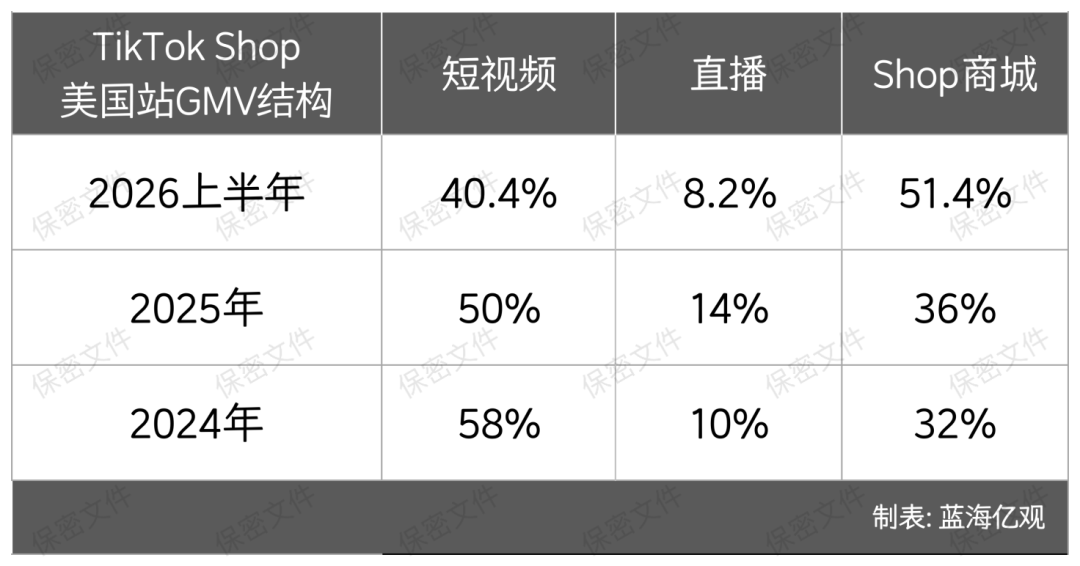
In the US, TikTok Shop's GMV share from short videos and live streaming fell 8 percentage points year over year in 2025, while the Shop mall share rose 4 percentage points. In H1 2026, the US Shop mall share reached 51.4%, exceeding short video's 40.4% and becoming the largest GMV source.
More consumers are actively entering shelf e-commerce. Meanwhile, TikTok's content ecosystem is a double-edged sword: it drives traffic but also limits further development. Many users open TikTok mainly for entertainment and have no clear shopping intent, so product exposure depends heavily on content recommendations, and many swipe away within seconds.
Shelf e-commerce, by contrast, emphasizes product display, search, and comparison, allowing consumers to search, compare prices, and check reviews before buying. The standalone app separates the shelf from the main app's short-video feed, offering an interface closer to traditional e-commerce while keeping short videos and live streaming as traffic entry points.
TikTok began shelf e-commerce in 2023 with a Shop mall entrance in the US main app, but it remained embedded in TikTok App and tied to the main app's product planning and traffic allocation, limiting TikTok Shop's room to grow.
TikTok and TikTok Shop are separate ByteDance units with independent P&L, ROI requirements, and goals. TikTok focuses on entertainment and ads, while TikTok Shop aims to drive transactions and repeat purchases. They are complementary but also competitive: more shelf traffic can push more shopping content into the main app and weaken entertainment. TikTok Shop must also pay TikTok for traffic, raising acquisition costs, and shopping experience changes often require TikTok headquarters approval.
For TikTok, higher TikTok Shop GMV does not necessarily improve main-app ROI, so the main app will not increase product recommendations indefinitely. The standalone app gives TikTok Shop an independent entrance, letting it focus on selling while TikTok focuses on entertainment.
However, converting temporary purchases into active, repeat shopping habits will take time and face challenges.
TikTok Shop's battle with Shopee and Lazada
Southeast Asian consumers already have many shopping apps. Shopee leads through product supply, search, payment, and logistics; Lazada has strengths in brand merchants and authentic goods.
In 2025, Southeast Asia e-commerce GMV reached $157.6 billion. Shopee ranked first with $83.2 billion, followed by TikTok Shop at about $45.6 billion and Lazada at about $18 billion. Combined with Tokopedia, TikTok Shop's GMV was $54.6 billion, equal to 65.7% of Shopee's.
Shopee also leads in traffic. From January to October 2026, Shopee's main site had 31.51 million visits, far exceeding Lazada's 8.559 million and TikTok Shop's 7.285 million. But the gap is narrowing: in September 2026, TikTok Shop's combined visits in six Southeast Asian countries reached about 462 million, 97.5% of Shopee's.
Shopee's real advantage lies in years of accumulated product supply and transaction systems. TikTok Shop can trigger immediate interest through influencers and short videos, but still needs to invest in search, reviews, repeat purchases, and fulfillment. Lazada continues to attract brand merchants through LazMall, especially in electronics and home appliances.
At the same time, Shopee is increasing investment in content e-commerce. Momentum Works data shows Southeast Asia content e-commerce GMV reached $49.7 billion in 2025, 32% of platform e-commerce GMV, up from 20% in 2024. In Q3 2026, orders from Shopee live and short-video businesses grew over 45% year over year, accounting for more than 25% of its physical product orders in Southeast Asia.
So content e-commerce is not unique to TikTok Shop. As Shopee expands, TikTok Shop must fight for shelf e-commerce while facing catch-up in content e-commerce.
TikTok is also strengthening its local e-commerce base. In December 2023, TikTok partnered with Indonesia's GoTo Group to integrate TikTok Shop Indonesia with Tokopedia. In January 2024, TikTok acquired 75.01% control of the merged PT Tokopedia, letting it use Tokopedia's merchant resources and local operations.
Overall, whether TikTok Shop can close the gap with Shopee depends on whether the standalone app makes consumers actively open TikTok Shop when they want to buy, and on product supply, search experience, price competitiveness, and logistics. These remain to be tested. (Blue Ocean E-View)
Note: Some data are based on sample surveys and research; traffic and sales data may fluctuate in different periods and are for reference only.
Seller Home Review
TikTok's standalone e-commerce app has landed in Southeast Asia, accelerating content and shelf e-commerce integration. Sellers should quickly build out product cards and search traffic while using short videos and live streaming to amplify conversions and seize the second-platform bonus window.
Source: Blue Ocean E-View
Original link: https://www.egainnews.com/article/74765