 Cross-border information
Yesterday, there are three important messages to share with everyone.
These three messages may affect your subsequent store operation and planning.
1. Amazon Prime Day may be held one month earlier
According to the latest reports from foreign media, Amazon plans to hold this year's Prime Day promotion from July to June, which is the first time change since the launch of this promotion.
Amazon said that the reason for holding Prime Day in advance is based on three considerations:
First, it is to avoid the promotion time of competing platforms and prevent the diversion of their own promotional activities by competing platforms;
Second, it is to optimize its own financial structure, which can include tens of billions of Primeday sales in the second quarter financial report to avoid the financial situation being too ugly;
Third, in order to connect with the back-to-school shopping craze in the United States in advance, smoothly undertake this part of the traffic, and seize the consumption budget of this part of the sellers in advance.
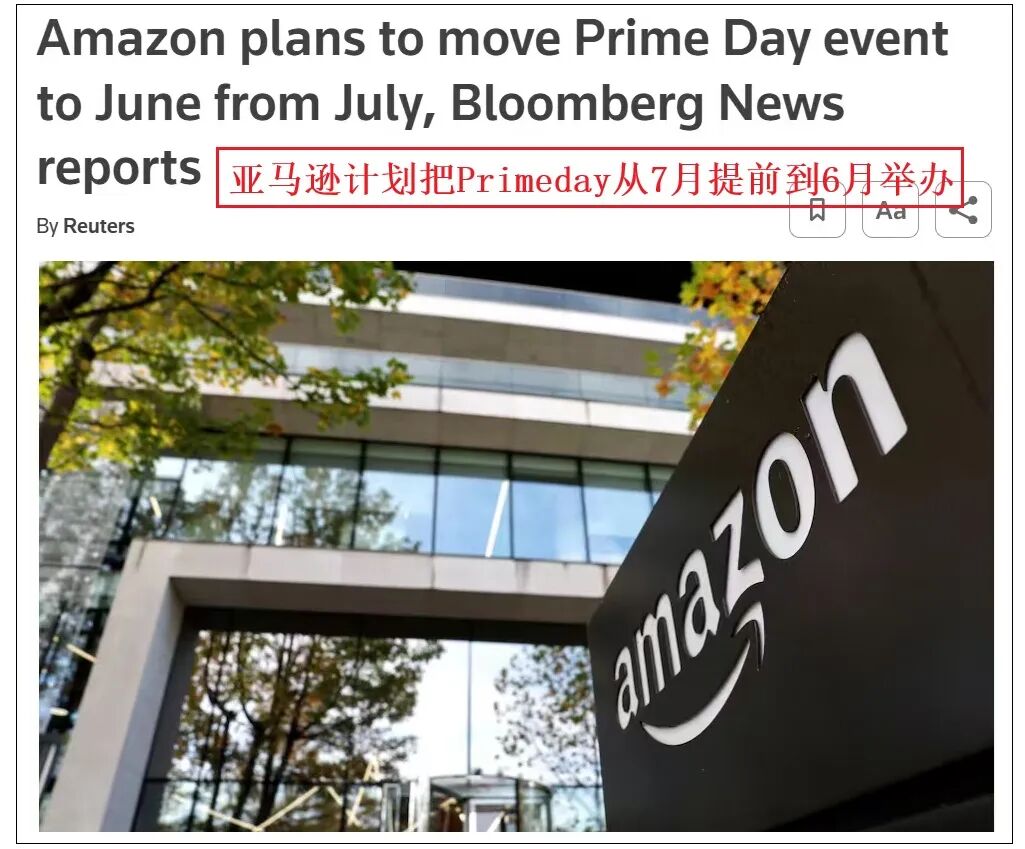
However, for sellers, the advancement of the promotion may cause certain operational pressure, because the stocking time and logistics costs may need to be re-planned, and the promotional plan for June needs to be re-formulated.
Sellers should make advance plans in advance to avoid being caught off guard at that time.
2. Amazon Rufus advertising officially starts charging
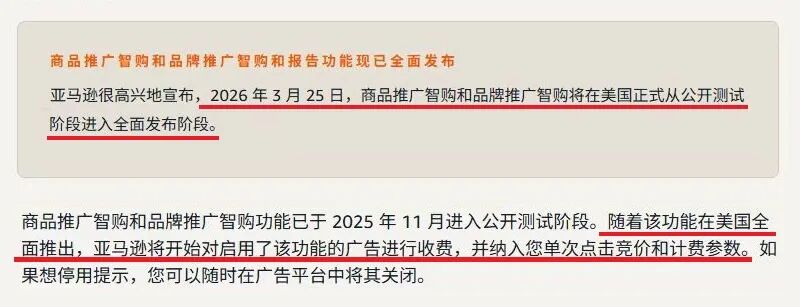
Amazonads recently issued a notice confirming that SPP (Product Promotion Smart Purchase) and SBP (Brand Promotion Smart Purchase) advertising will end public testing in the United States on March 25 and officially start charging.
Many sellers may not know what this advertising model is. This advertisement is actually a recommended word advertisement embedded under Amazon Rufus AI assistant. When buyers consult products with voice to Amazon, Amazon will capture your listing and other information to automatically generate a recommendation and display the click entry of the product.
However, with the arrival of this notice from Amazon, this AI advertising channel, which was once regarded as a "free dividend", will officially be included in Amazon's CPC billing system and charge by click.
Because this feature has always been enabled by default, everyone can enter the specific advertising activity interface in the advertising backend before March 25 to find the newly added prompt word page for inspection to avoid a sharp increase in advertising fees after charging.
3. Amazon launches a new feature of "automatic purchase"
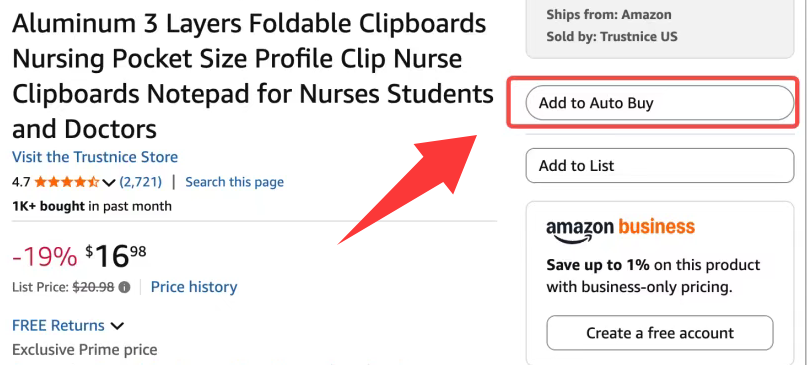
Amazon recently quietly launched the "Auto Buy" button on the front-end shopping interface.
Under this feature, Amazon buyers can set an expected price. When the "public display price" of the product touches the "expected price" set by the customer, the system will automatically place an order for the buyer.
This setting has never appeared on Amazon before, and if the customer sets the "Auto Purchase" mode, then this order does not need to be confirmed by the buyer again. As long as the price touches, it will be directly deducted and generate this order.
This button has a certain impact on the operation of sellers. In the future, when sellers reduce prices, they may touch a batch of "pre-generated orders" that have set expected prices, thus generating a large amount of sales in a short time and increasing the probability of product out of stock.
In addition, this feature may also cause data distortion of advertising reports, failure of "first rise and then fall" price strategies, more intense shopping cart competition and other issues, which also requires sellers to pay special attention.
Above are the recent news that may affect the seller's operation rhythm.
The article ends!
Source: Cross-border Sellers Concentration Camp