
 Cross-border E-commerce Excellent Craftsman School
When a new product is just gaining traction and its ranking is climbing, a few one-star ratings can suddenly appear on the listing. Recently, many sellers have encountered this, especially in categories such as apparel, jewelry, and electronics.
Sellers know that new products have few ratings early on. A few low-star ratings can significantly drag down the overall score, hurting buyer trust, conversion, and the rising ranking.
More notably, some Amazon sellers have found that these sudden low-star ratings may be linked to a new change in Amazon's return process.
During a return request, buyers may be guided by the system to rate the product.
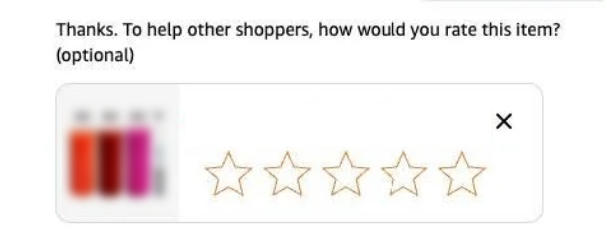
Image source: Amazon
This is not about whether buyers should be allowed to leave low ratings.
It is because Amazon is placing product rating actions into an already negative shopping context.
A buyer who has just decided to return an item and expressed dissatisfaction may next be asked: "How many stars would you give this product?"
Will this further amplify low-star risk for new products? That is a question all sellers may need to watch.
1. Is the return process becoming a new rating entry point?
According to recent seller feedback and screenshots, the flow is roughly: buyer initiates return — selects return reason — AI customer service asks follow-up questions — buyer expresses dissatisfaction — system shows a product rating entry.
For example, if the buyer selects "Not as Expected," the system may continue asking:
- Does the product match the description?
- What made you dissatisfied?
- What problems did you encounter during use?
After the buyer further explains dissatisfaction, the page may show: "To help other buyers, how would you rate this item?" followed by a 1–5 star rating entry.
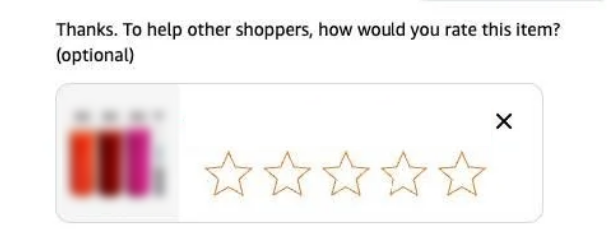
Image source: Amazon
For now, feedback mainly comes from seller communities and real cases; no clear sitewide policy announcement from Amazon has been seen.
But it already deserves attention.
One seller said bluntly: "This new return-rating mechanism is one of the most seller-unfriendly and logically questionable changes I have seen in years."
The issue is not that return buyers should not have the right to rate products.
The real concern is why Amazon actively guides ratings in a scenario with serious sample bias. Buyers requesting returns are already the group most likely to be dissatisfied.
After they finish expressing negative experiences, a 1–5 star rating entry appears immediately.
The flow becomes smooth: return — express dissatisfaction — AI follow-up — low-star rating. This is very unfriendly to sellers, especially those launching new products.
2. Why is this mechanism especially unfriendly to new-product sellers?
New products lack rating volume. A mature listing may have hundreds, thousands, or more ratings.
In that case, an occasional one-star rating may not change the overall score much. But a new product that is just gaining traction may only have a few ratings.
Each rating carries high weight. For example, a new product with 10 ratings and a 4.8 average could quickly drop if several one-star ratings appear.
The real trouble is that lower ratings may further affect first impressions.
This can trigger a chain reaction: low-star ratings lower the listing score, conversion falls, ads perform worse, organic orders decline, and new products become harder to push.
Even more worrying, sellers may not know why a one-star rating appeared. With a detailed negative review, sellers can fix the issue.
For example: "Color differs too much from the photos" — the seller can optimize images. "Functions do not match the description" — then review the listing.
At least sellers know the problem. But under this mechanism, it is hard to tell what the one-star rating is about: product quality, size, function, or simply frustration during the return process?
Sellers see the result, not the cause. That is especially painful for new-product sellers.
3. What should sellers do about this mechanism?
If ratings increasingly appear in return scenarios, sellers need to adjust: solve issues before returns happen rather than react after low ratings appear.
1. Move information that may trigger returns to the front
Recheck main images, A+ Content, bullet points, and videos:
- Where are buyers most likely to misunderstand?
- For size issues, place size references where buyers can see them easily.
- For color issues, show realistic color effects.
- For compatibility issues, clearly list supported and unsupported models.
- For usage restrictions, do not hide them deep in the text.
Simple principle: do not let buyers learn information that may affect purchase decisions only after receiving the product. If they know before buying, they can choose not to buy. If they find out after receiving it, it may become a return.
2. Monitor rating changes closely during the new-product ramp-up phase
Previously, new-product operations focused on orders, ads, CTR, CVR, ACOS, and keyword ranking. Now, ratings should also be monitored early.
Watch especially for:
- Do low-star ratings suddenly increase?
- Do star-only ratings increase significantly?
- Do rating anomalies appear together with return peaks?
If the return rate rises and low-star ratings increase at the same time, sellers should pay attention.
What do you think of this new rating mechanism?