
 Cross-border E-commerce Excellent Craftsman School
Have you recently noticed your Amazon ads getting plenty of impressions but a steadily declining click‑through rate?
Many sellers immediately assume the main image is at fault—perhaps it isn’t compelling enough, or maybe it is time to reshoot and redesign the primary photo. So they swap pictures, revise listings, even redo product photography. Yet the CTR barely changes.
In reality, low CTR is not just about images. Especially over the past two years, as Amazon upgrades its COSMO algorithm and Alexa for Shopping takes on a bigger role in product recommendations, the issue also involves traffic matching and how AI interprets your product.
If the first thing you do is change the pictures, you may already be heading in the wrong direction.
Why Click‑Through Rates Decline
Traditionally, when a listing’s CTR dropped, sellers tended to blame the images. That makes sense—buyers see the main photo right after searching. While the main image does influence clicks, it is only one factor. CTR is also shaped by whether the title is compelling, the price is competitive, ratings and review counts are strong, and what competitors are showing nearby.
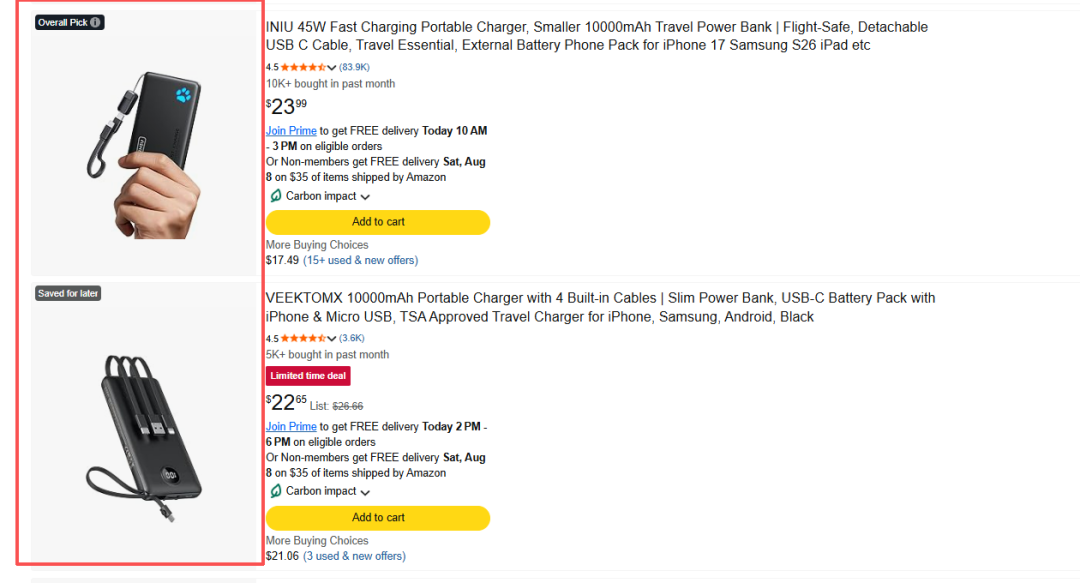
Image source: Amazon
A key reason many sellers are seeing CTR drops this year is that ads are being shown to more people who have no clear purchase intent. Impressions keep rising, but genuinely interested shoppers are fewer; the denominator grows while the numerator stays the same, so CTR inevitably falls. In this situation, optimizing the main image does little to improve clicks.
So when CTR declines, step one is not changing the picture—you need to analyze your ad traffic. Open your search term report and check exactly which keywords are generating impressions. Are these your target keywords? Are there too many broad, loosely related terms?
If a large share of impressions comes from low‑relevance, vague long‑tail or generic keywords, the problem lies in your campaign structure. Then refine your targeting: increase spend on high‑converting keywords, allocate more budget to exact match, and add negative keywords to filter out junk traffic so your ad dollars work harder.
If ad traffic is not the issue and CTR remains low, the second culprit is that Amazon’s AI hasn’t properly understood your listing. Many sellers haven’t yet grasped this shift.
With COSMO algorithm updates and Alexa’s deeper role in shopping searches, Amazon is moving from keyword matching toward “intent and need” understanding.
Now Alexa works more like a real assistant, trying to grasp the shopper’s actual needs—use case, pain points, target user—and then finding the most suitable product.
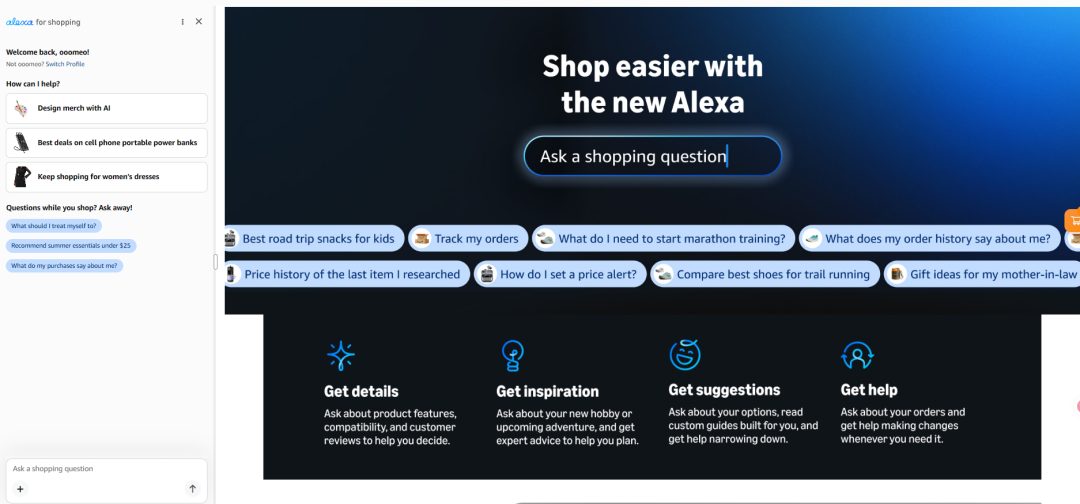
Image source: Amazon
It no longer looks only at keywords; it analyzes product attributes, usage scenarios, audience, purpose, what problem it solves, and how it differs from alternatives.
If your listing provides too little information, AI cannot connect the product to user needs. Even a great product may be deemed irrelevant to the shopper’s context, so Alexa won’t recommend it to the right audience—and your CTR suffers.
Here is a point many sellers overlook—images are also information sources.
Many assume AI relies mostly on text. In fact, Amazon’s AI can now analyze image content. Even details absent from your written description can be recognized and extracted from product pictures.
Rich visuals showing usage scenarios, detailed spec charts, on‑package copy—AI can capture all of that and use it for indexing. Conversely, if your images carry very little information, AI simply has fewer dimensions to work with.
Since AI can interpret images, here is a practical tip:
Upload your product images to AI models such as Alexa, ChatGPT, or Gemini, without telling them what the product is. Then ask them a few questions:
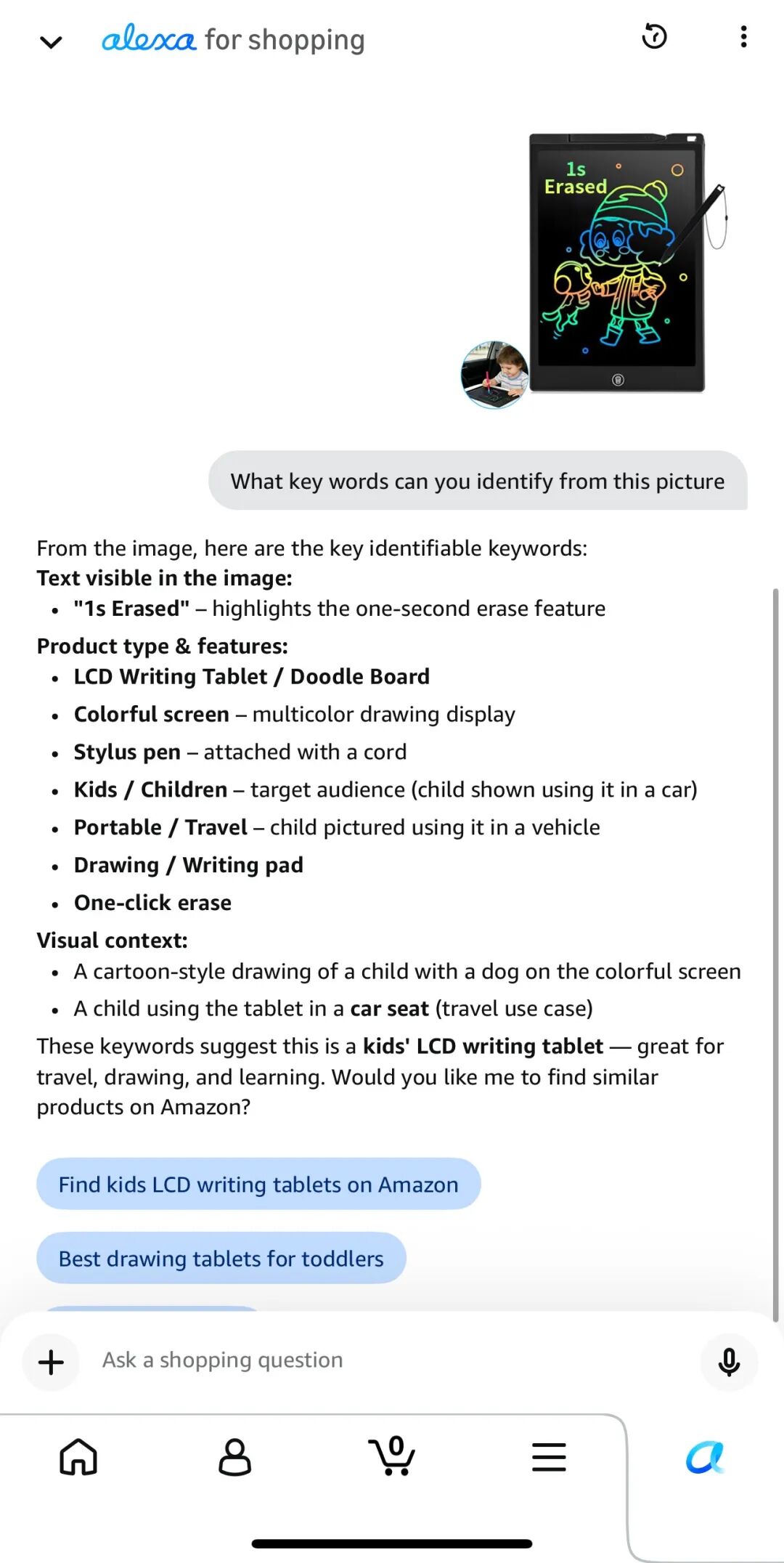
Image source: Amazon
Describe this image. What product do you think this is? Which users would it suit? What scenarios does it fit? If you were to recommend this, which keywords or shopping needs would you trigger?
If different AI models give answers far removed from what you intend to communicate, then probably not only shoppers—but also Alexa—may have misunderstood your product.
So your image strategy can also evolve.
In the past, most sellers designed every image solely to boost CTR.
For instance: the first 2–3 images focus on grabbing attention, maximizing visual impact and conversion, while the later images add more information—product functions, usage scenarios, user personas, size details, competitive advantages, how‑to guides, and cautions.
These images not only help shoppers decide, they also feed Alexa more understandable signals, helping the AI build a more accurate product profile. Images now serve both people and algorithms.
So to raise CTR, sellers must move beyond the old mindset of “low CTR → change main image and rewrite listing.”
What you truly need is to sharpen ad traffic accuracy on one hand, and feed more information to AI through your listing—especially through images—on the other.
On one side, restructure campaigns, tighten match types, and add negative keywords so your budget reaches shoppers with real purchase intent.
On the other, enrich your listing content so AI fully grasps what your product is—who it is for, which scenarios it fits, what problems it solves—along with the product details and usage context carried by your images. This lets Alexa create a more complete and precise product portrait.
As Amazon shifts from keyword competition to intent‑based matching, the rules of operations are changing. Whoever makes it easier for Alexa to understand their product will be the first to enter AI‑powered recommendation traffic and unlock new growth opportunities.