 Seller's Home
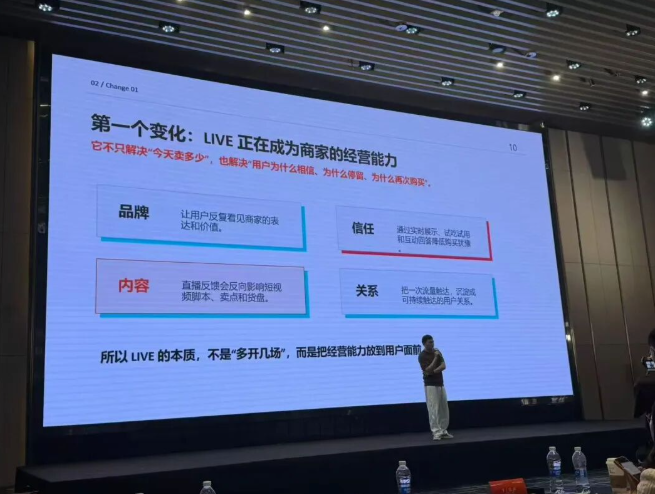
On July 23, I attended a Mexico market themed event in Shenzhen.
The crowd was larger than I expected.
It was a thousand-person event. The venue was packed, and you could clearly feel the rising interest in Mexico.

Event scene
Because I had to catch a train in the afternoon, I didn't stay for the entire event.
I only heard three or four speakers share.
So this article isn't a full recap.
Nor will I draw a complete conclusion about the Mexico market from just a few hours of presentations.
But the slices of information from these speakers, put together, are quite interesting:
Platforms talk about market ecosystem, service providers talk about content and livestreaming, and sellers get more specific.
How to select products? How to test models? How to handle logistics and compliance? And how to understand local consumers?
After listening, I had a very direct feeling:
Mexico has a dividend. But the "low-barrier dividend" is gone.
1 Mexico's opportunity is indeed worth watching
My overall view of the Mexico market is positive — this is still a growing market. The local e-commerce ecosystem is still developing, and new platforms and content-driven commerce models are entering. TikTok Shop officially entered Mexico in February 2025. Mexico is also the first Latin American country where TikTok Shop landed. This means a new consumer entry point is forming. From the sharing of on-site sellers, some categories do have supply gaps. Consumers have demand, but the products on the market are not yet abundant enough. In some niche markets, sellers still have room to differentiate. So I don't think it's too late to discuss Mexico now. On the contrary, it remains a market worth serious study for Chinese sellers. Especially for sellers who already have cross-border experience, certain financial strength, and a willingness to invest time in localization, now is a good time to be more proactive. But being proactive does not mean being blind. Market growth doesn't guarantee easy results. The dividend just provides a better starting point. It won't automatically turn into orders, let alone profits.
2 A case of black roses
What impressed me most on site was a toy seller's sharing. Her team had long been deeply engaged in the European and American markets. After entering Mexico, they didn't simply move their original products over. Instead, they re-studied local festivals, family scenarios, color preferences, and gift-giving culture. She displayed two completely different product sets on stage. For the US market, the bouquet building blocks lean toward bright and fresh colors. For Mexico, the colors are noticeably darker. The team also developed black roses, dark bouquets, and floral products incorporating skull elements. This case went beyond my previous understanding. In our traditional understanding, skull elements are somewhat scary.Black bouquets are also hard to become mainstream gifts. But in the specific cultural and festive context of Mexico, these elements carry different meanings. Local consumers' acceptance of bold colors and related cultural symbols may also be higher. Of course, this is just one seller's observation based on her own business experience. It cannot represent all Mexican consumers. But it at least illustrates one thing: Doing business in Mexico, localization is never just translating Chinese into Spanish. It first means re-understanding consumers, and then re-deciding what to sell. 3 Your original product portfolio may not be directly replicable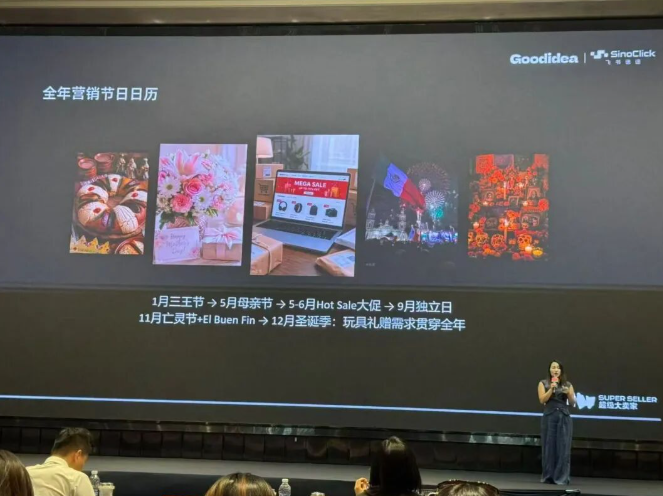
When many Chinese sellers enter a new market, they habitually look at what products they already have. A product that sells well in the US gets moved to Mexico. A listing that already works gets re-listed in another language. This approach is very efficient. But it also easily makes sellers overlook one problem: Geographic proximity does not mean consumer culture is the same. Mexico is close to the US and deeply influenced by the US market. Yet it still has its own family structure, holiday traditions, aesthetic habits, and consumption scenarios. Colors American consumers like may not be favored by Mexican consumers. Main images and content that work in the US may not suit Mexico. True localization is not just repackaging existing products. It means re-organizing your supply chain capabilities after understanding the local culture. The same supply chain can produce items for the US market. It can also produce items for the Mexico market. The difference doesn't necessarily lie in production capability. It's more about whether the seller truly understands local demand. This is the biggest inspiration I took from the black rose case. 4 Why there's no "low-barrier dividend" The barrier here isn't just about capital. First, it's the barrier of product selection. Sellers need to judge whether their products truly fit the local market. You can't only look at historical sales in Europe and America.Nor can you ship a large inventory just based on the words "Mexico is short of goods." It is also the barrier of logistics. Cross-border direct shipping can reduce initial stocking risk, but delivery time and consumer experience need assessment. Overseas warehouses can improve fulfillment efficiency, but will add pressure on stocking and inventory. The seller sharing on site did not stock up heavily at the start. They first tested with small batches and multiple SKUs. Some items were verified via direct shipping. After potential models emerged, they scaled up into local warehouses. This method seems a bit slower. But in an unfamiliar market, verifying before investing is often more important than blindly chasing speed. Compliance is also an unavoidable hurdle. Accounts, taxes, product qualifications, and import requirements all need to be understood beforehand. Different categories face different problems. If sellers lack basic awareness of these links, any one of them could increase costs later. Individually, these barriers may not be higher than in other markets. But for many Chinese sellers, Mexico is still a relatively unfamiliar market. Mature experience is scarce. Directly replicable supporting resources are not as abundant as in Europe and America. When product selection, logistics, and compliance issues overlap, the cost of trial and error won't be low. So "no low-barrier dividend" doesn't mean the market is unworkable. It means you can't oversimplify it.
5 Content is not just for selling
Another change on site worth noting. Before, sellers did content mainly for exposure and transactions. Find influencers, send samples, make videos, then wait for a hit. Now, this logic is changing: Many influencers don't guarantee sales. Sending many samples doesn't mean market validation is complete. Sellers need to know which type of influencer suits their products better. Which selling point consumers are more interested in. What kind of video can bring effective feedback. Comments in the livestream room can also help teams adjust products and content. In this logic, content is not only responsible for selling. It also begins to take on the role of market research. Some products, even before formal mass production, the team will first create content to observe consumer reactions. Those with good responses move to sampling and production. Mediocre ones get timely adjustments. This can reduce ineffective development, and also lower the risk of large-scale stocking. For a new market, this capability is very important. Because what sellers fear most is not failing to create a hit on the first try. It's putting too much capital on an unverified judgment without understanding the market. 6 Which sellers can be more proactive
I think the Mexico market still has great opportunity. But different sellers should enter at different paces. If you already have e-commerce experience in other countries, basic understanding of cross-border logistics, inventory, and compliance, and certain financial strength, you can study and test more actively. Such sellers have already experienced the friction of overseas markets. Even if some unexpected issues arise in Mexico, they have room to adjust. More importantly, they need a mindset for trial and error. Entering Mexico doesn't necessarily require a huge investment at the start. You can start with a few products: first test pricing, content, and fulfillment. Then decide on scaling up based on real feedback. If you temporarily lack overseas business experience, and don't understand Mexico's logistics, compliance, and consumer habits, there's no need to rush in. You can observe more first: first understand the market clearly, figure out the key links. When you're better prepared, then decide when to enter. This isn't missing the opportunity. It's precisely being responsible for your capital and business. For small sellers with limited funds and weaker risk resistance, rhythm control is even more important. Small sellers aren't without chances. They just need to make each trial smaller, faster, and more controllable. 7 The dividend belongs to prepared sellers
After leaving the venue, I kept pondering one question. When we used to talk about emerging markets, it was easy to talk about "blue oceans." It was also easy to say whoever enters first gets the dividend. But today's cross-border e-commerce can hardly sustain long-term victory through simply moving goods. The value of the Mexico market is not just adding a new station for Chinese sellers. It also reminds us: Every time you enter a new market, you need to re-understand the local consumers. Re-understand the relationship between products, content, and fulfillment. I still hold a positive view of Mexico, and the opportunities across Latin America overall. For sellers with experience, preparation, certain capital, and trial-and-error capability, now is a time to be more proactive. But for those under-prepared, observing first and then acting may be more prudent. Mexico has a dividend. But this dividend doesn't belong to unprepared entrants. It belongs to sellers willing to understand the market and prepare for trial and error.
Extended reading The white paper "TikTok Shop Mexico Self-Operated Market Opportunities and Strategy Insights (2026 Revised Edition)" was released at the event. To further understand Mexico's e-commerce environment, operational strategies, and practical tips, follow "TK Going Global Log" and reply with the keyword "white paper" in the official account backend to get it.