 Seller's Home
On the afternoon of July 21 in Shenzhen, I attended a closed-door discussion for TikTok Shop Europe.
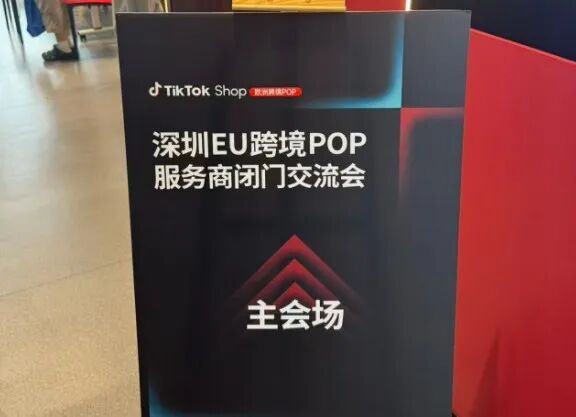
The venue was packed with service providers from payments, compliance, logistics, and training—basically all the well-known names in the European chain.
Here are my takeaways for small and medium sellers. These are personal observations, not investment advice. Opportunities exist, but so do risks.
1
What's happening in Europe?
Europe suffered a record heatwave. Air conditioners sold out everywhere. One Dutch seller’s first livestream of Chinese cosmetics generated hundreds of orders without any promotion. The pattern: too many creators, not enough products. Creators on platforms like Instagram are eager to monetize, but local supply lags behind. The European e-commerce market is ~$700B with ~15% penetration. TikTok Shop’s expansion into 8 new countries covers ~87% of the market—big scale, low penetration, high average order value, all opened at once. Yet Europe is not a single market: languages, habits, and compliance differ by country.
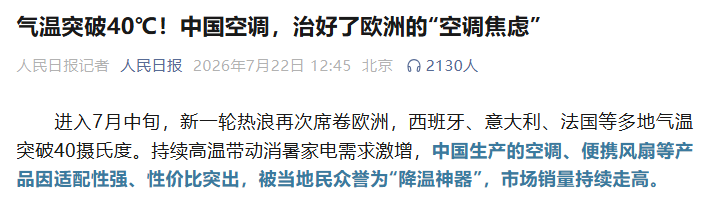
Screenshot from People's Daily report
2
A service provider's real test
A friend who trains sellers shared his data. Initially hesitant, his summer product hit €10k/day on day 16 in Europe, versus $1.5k/day elsewhere. Some categories are still in a phase where simply listing products brings organic orders. Many European creators are responsive; sample sending often kickstarts collaboration. His team also tested AI-generated content: a realistic clip costs ~¥20; with 30 clips and small ad spend, product validation takes 2–3 days instead of 15–20. But he warned: the US boom-and-correction cycle will replay in Europe. Once supply catches up, only compliant, content-capable, and cost-savvy sellers will survive. His words: “If you do everything properly now, growth is organic.” In other words, the window won’t stay open long.
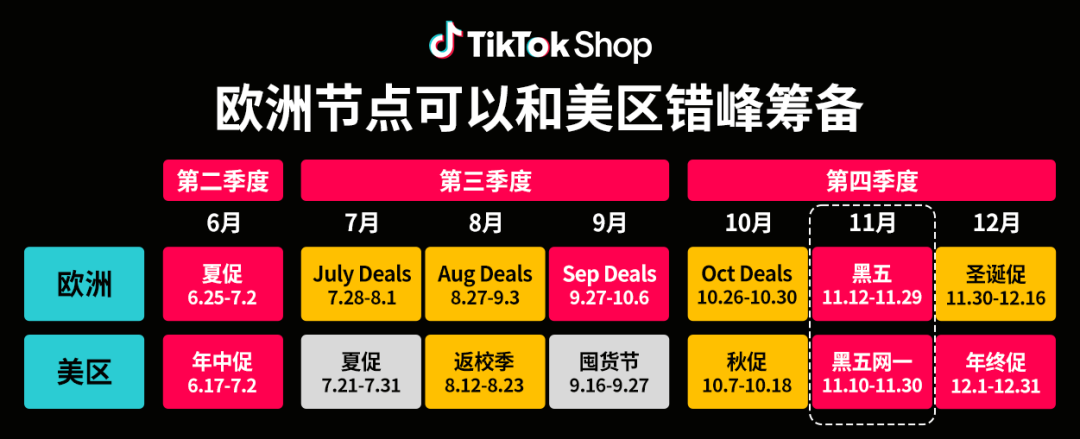
Source: TikTok Shop Cross-border E-commerce Official Account
3
How far has the infrastructure come?
Fulfillment includes FBT (Fulfillment by TikTok), TikTok Shipping, and merchant shipping. FBT offers same-day dispatch, ~2-day delivery, dedicated rates, free shipping schemes, and protections against negative reviews, refunds, and damage. The operating framework is summarized as ACE: Assortment (compliant, well-priced, suitable for local fulfillment), Content (local language and creator endorsements), and Empowerment (platform resources, campaigns, search, and repeat purchases). Cold start follows four steps: pick the right product, create content, build channels, and stabilize operations. For major promotions: prepare stock 45 days out, test and scale 30 days out, and split budgets 30/20/50%. Creator strategy emphasizes deep partnerships, origin-visit transparency, locked livestreams, and AIGC to scale content supply.
4
SMBs: start with one hero SKU
The concept of Hero SKU is a focused main product. Test it against ACE: compliance, price competitiveness, local fulfillment fit; clear selling points in a short video and creator willingness; profit after content, commission, and ad costs. For small and medium sellers with limited teams, pick one country and one product first. Avoid spreading across multiple countries and SKUs immediately—languages, logistics, and compliance multiply. Test small batches, then expand to similar products or the next country step by step.
5
Compliance before product selection
Listing a product in Europe requires around eight steps: tax ID, logistics, contact details, and certifications like VAT, EPR, and GPSR. Compliance determines whether you can sell at all—it is not a post-launch patch. Regulations differ by country and category; a single document set rarely covers all markets. Before starting, ask “which country and which product” first. When working with service providers, clarify exact coverage, deliverables, costs, and responsibility for audits and updates.
6
Incentives reduce costs but don't guarantee profit
Platforms are in expansion mode, offering lower commissions (from 9%–15% down to 2%–8% in cold start, and some UK rates from 9% to 3%) plus FBT protections. This can lower initial trial costs. However, policies are temporary and conditional. An incentive can make a product look profitable temporarily; it won’t fix bad products, poor content, high returns, or incomplete compliance. Treat this phase as a favorable test run, not a profit guarantee. Don’t rush in just out of FOMO.
7
Questions to ask before you begin
1. Which specific country are you targeting? “Europe” is too broad. 2. Have you confirmed all compliance requirements for that product in that country—documents, labels, responsible entity, timeline, and cost? 3. Can the product be sold through short video content? Is the selling point clear and visual? 4. Have you calculated the full cost: sourcing, international logistics, local delivery, returns, samples, content, ads, tax, and compliance? Incentive fee reductions are just one line item. 5. Can you afford a small-scale test that doesn’t succeed? If a failed batch threatens cash flow, the initial investment is likely too large.
8
What about other markets?
The US has a mature ecosystem but fierce competition; it suits sellers with strong content teams and capital. Southeast Asia is relatively easy to start, but order values and logistics vary greatly—ideal for supply chain experts. Latin America remains a growth market, yet logistics and payments pose challenges; the Mexico-US FBT mode now helps sellers with US warehousing. Europe offers high baseline demand paired with high compliance barriers and an early-stage content-commerce mismatch. There’s no best market, only the best fit: the cards you hold decide which table you sit at.
What you obtain matters more than what you hear. This summer, Europeans are scrambling for air conditioners. For small and medium sellers, the race is against time—not to rush in, but to use the window to clearly calculate one country, one product, and a complete set of compliance and profitability math.
The information in this article is for reference only and does not constitute investment advice.