
 Jite Intellectual Property
Recently, TikTok Shop issued an urgent notice reminding sellers to ensure that the products they sell comply with the EU Battery Law requirements and submit the battery EPR registration number to the seller center before August 18, 2025, otherwise they may face consequences such as removal or store closure.
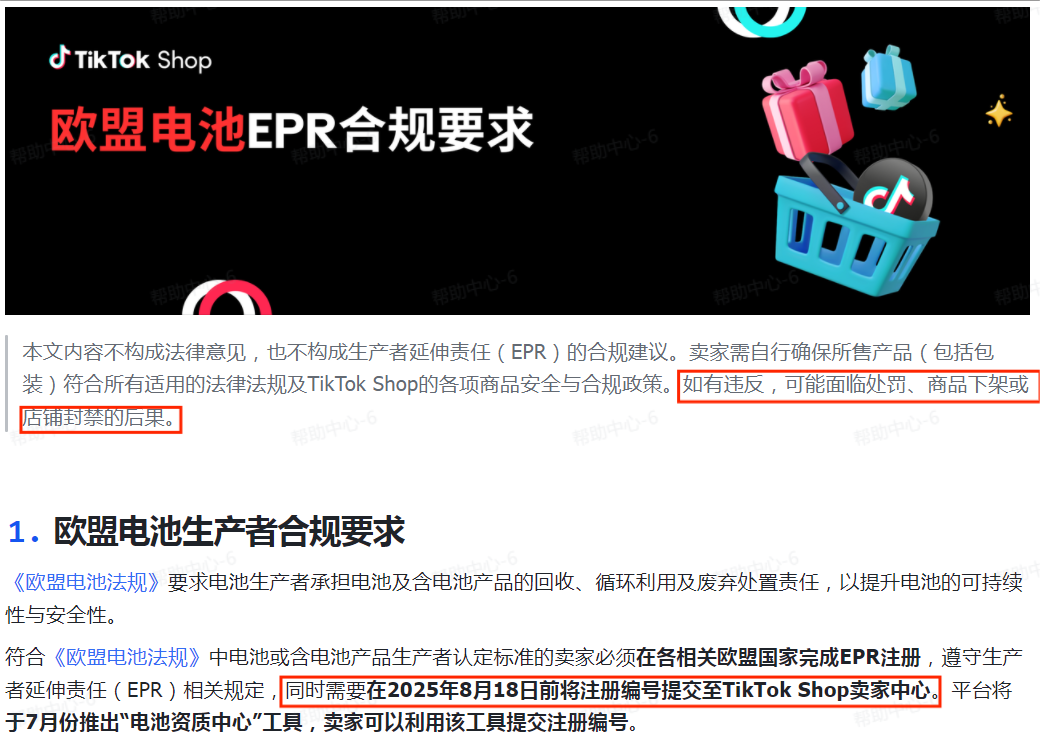
TikTok Shop's notice officially announces that the EU Battery Law has entered the countdown to effectiveness. Even before this, Amazon had repeatedly reminded sellers to pay attention to compliance, showing that major platforms attach great importance to this, and European sellers must be fully prepared in advance.
What is the EU Battery Law?
The EU Battery Law aims to improve the sustainability and safety of batteries by making battery producers responsible for recycling, reuse, and final disposal, which is part of Extended Producer Responsibility (EPR).
Effective Date: August 18, 2025
Applicable Countries: Germany, Sweden, Poland, Netherlands, France, Spain, Belgium, Italy, Ireland
Coverage: Includes common portable batteries, light vehicle batteries, SLI batteries, industrial batteries, and electric vehicle batteries, whether rechargeable or not.
Most of the products sold by cross-border sellers belong to the portable battery category. The portable batteries referred to in the European Battery Directive 2006/66/EC are sealed batteries with a mass of less than 5kg, such as single cells (AA, AAA batteries, etc.), and batteries that power devices such as mobile phones, laptops, cordless power tools, toys, and household appliances.
How can sellers comply with the Battery Law?
Step 1: Confirm whether your product needs to provide a Battery Law EPR registration number;
*Jite has organized the types of batteries within the scope of the EU Battery Law, sellers can judge whether the product meets the compliance requirements based on this
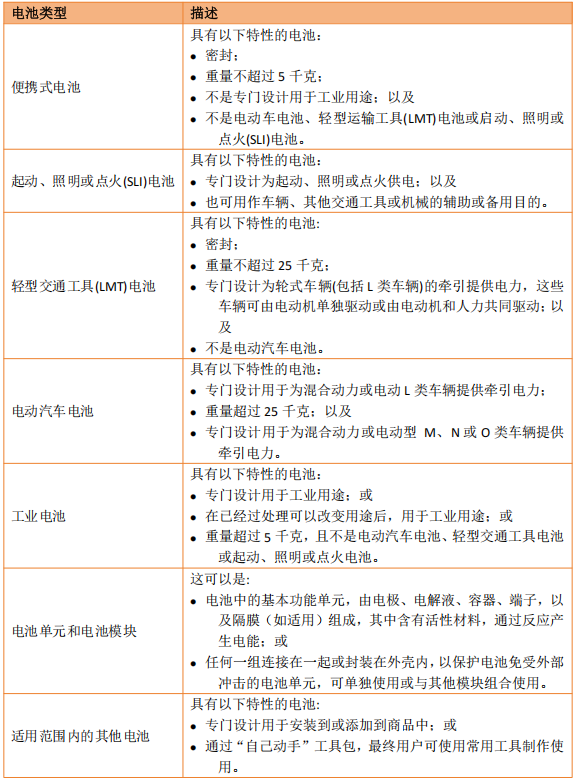
Step 2: Register the Battery Law EPR registration number in each sales country/region;
Step 3: Timely upload the registration number to major e-commerce platforms;
Major platforms have launched tools for submitting registration numbers one after another, and sellers can upload them according to the instructions in the notice. Take Amazon as an example:
Germany, Sweden, Poland, Netherlands: Submit through [Account Status > Policy Compliance > Regulatory Compliance]
Italy, Spain: Can only be submitted through [Account Status > Manage Your Compliance > Submit Compliance Information]
Belgium: Submit through [Account Status > Manage Your Compliance > Submit Compliance Information], or use Amazon's withholding service
France: Submit through [Data Report > Manage Your EPR > Submit number], or use Amazon's withholding service
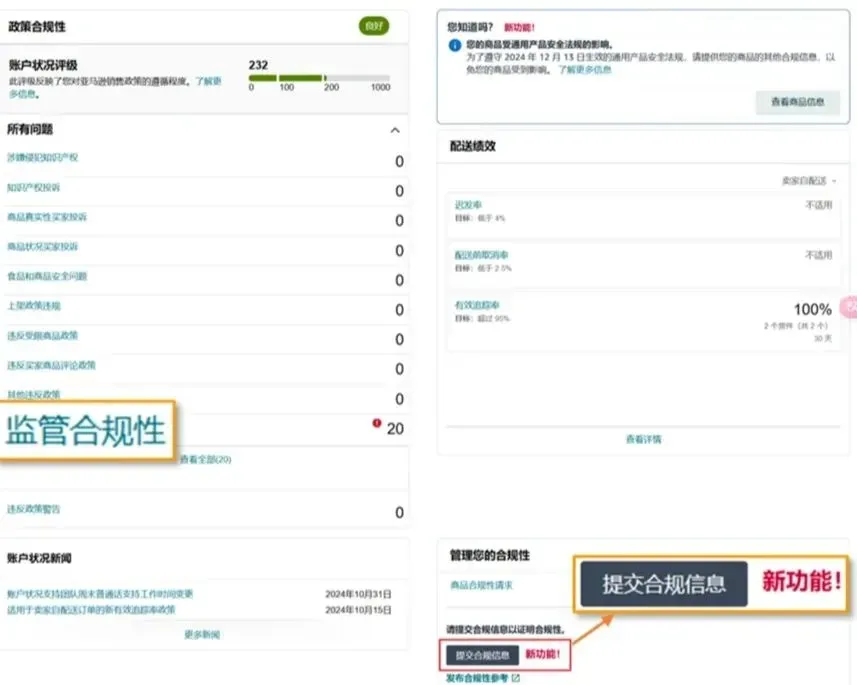
Step 4: Regularly declare and pay fees.
Each country needs to make regular declarations and pay recycling fees according to the requirements of the official or recycling company. The declaration cycle may vary from country to country, with annual and quarterly reports being common.
FAQs about the EU Battery Law
1. Can sellers register the Battery Law number themselves?
No, according to the EU Battery Law, if a company is not registered in the sales country, an authorized representative in the sales country must be designated and registered through it.
2. Is a separate Battery Law number required for each country?
Yes, according to regulatory requirements, sellers must register in each country/region considered a "producer" and submit a separate Battery Law registration number for each EU market.
3. The product sold does not contain batteries, but there are gift batteries in the packaging, do I need to register?
Yes, as long as the product sold contains batteries, whether it is a gift or not, it must comply with the EU Battery Law regulations and complete the registration.
4. Do I still need to register for the Battery Law if I am already registered for WEEE?
Depending on the specific type and function of the products sold:
Selling products with non-removable batteries only: If the product only has functions other than "power source", such as multi-functional power banks, mobile phones, etc., only WEEE registration is required.
Selling single-function power banks: If the product is a single-function, can only charge, has interfaces and battery display, only Battery Law registration is required.
Selling electronic and electrical products with removable batteries: such as mice, remote controls, etc., need to register both German WEEE and Battery Law at the same time.
There is only about one month left before the EU Battery Law officially takes effect. It is recommended that eligible sellers arrange in advance to avoid affecting store sales if they fail to complete compliance before August 18.
EU August New Regulations +1!
In addition to the EU Battery Law, the EU will also enforce the new network security certification standard EN18031 in August. The European Commission included the EN18031 standard in the "Radio Equipment Directive" coordination standard list in the Official Journal of the European Union in January this year and will enforce it mandatory from August 1, 2025.

EN 18031 is a mandatory certification standard for network security requirements for radio equipment in the EU and is one of the CE certification standards. After the implementation of this standard, if compliant products are not compliant, they will not be able to obtain CE-RED certification to enter the EU market.
Which products need to be compliant?
Mobile phones, tablets and laptops, wireless toys and children's safety devices, such as baby monitors, wearable devices, smart watches, fitness trackers, smart cameras, televisions, smart speakers, smart displays, smart home appliances, smoke detectors, smart door locks, window sensors, etc.
Written at the end
There are many compliance requirements in the European market, and entering rashly is likely to face consequences such as product removal, sales ban, and high fines. Jite has organized a complete list of compliance in the European market, and sellers who want to settle in can click to view~
The market environment is changeable, and the requirements for service providers are becoming stricter. Previously, the Italian Tax Authority required tax representatives to pay a security deposit of 300,000 to 2 million euros, and then Amazon listed a blacklist. It is recommended that sellers ensure compliance while also being cautious in choosing partners.