
 Cross-border E-commerce Excellent Craftsman School
After the original Rufus on Amazon's frontend "disappeared," many sellers were asking: What exactly is the relationship between Alexa and Rufus? Is Alexa just a name change, and is there any difference?
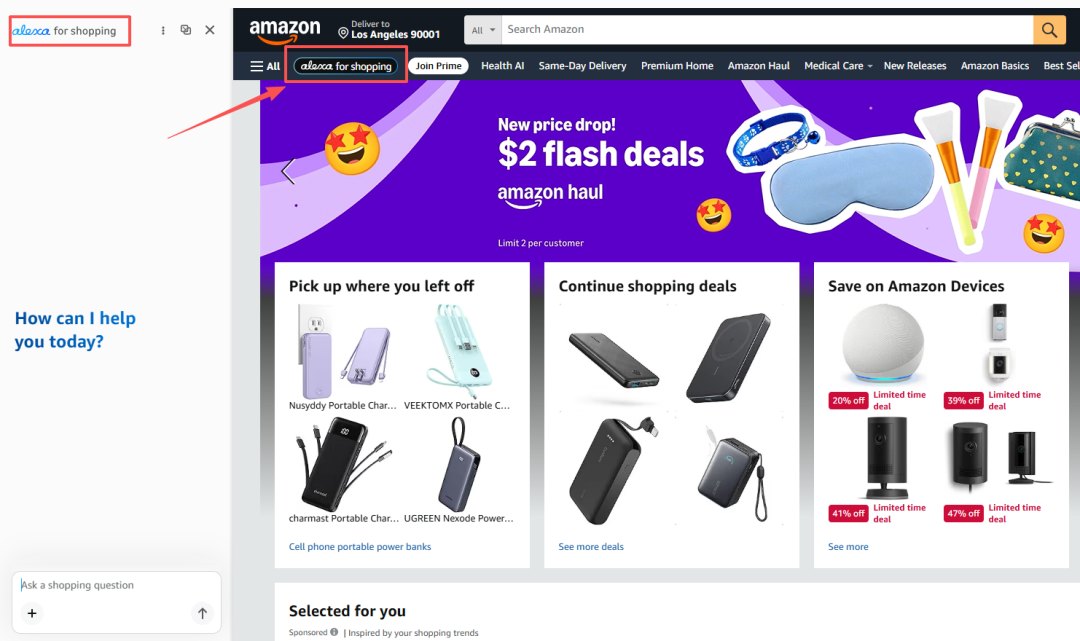
Image source: Amazon
The answer is clear: this is not just a feature update, but a signal of Amazon's transition from "traditional search e-commerce" to "AI intelligent voice e-commerce."
If the Rufus era was essentially "AI-assisted search," then the current Alexa era has begun to enter: "AI directly participating in shopping decisions." Behind this is actually a huge upgrade of Amazon's entire traffic logic, recommendation logic, and user decision-making logic.
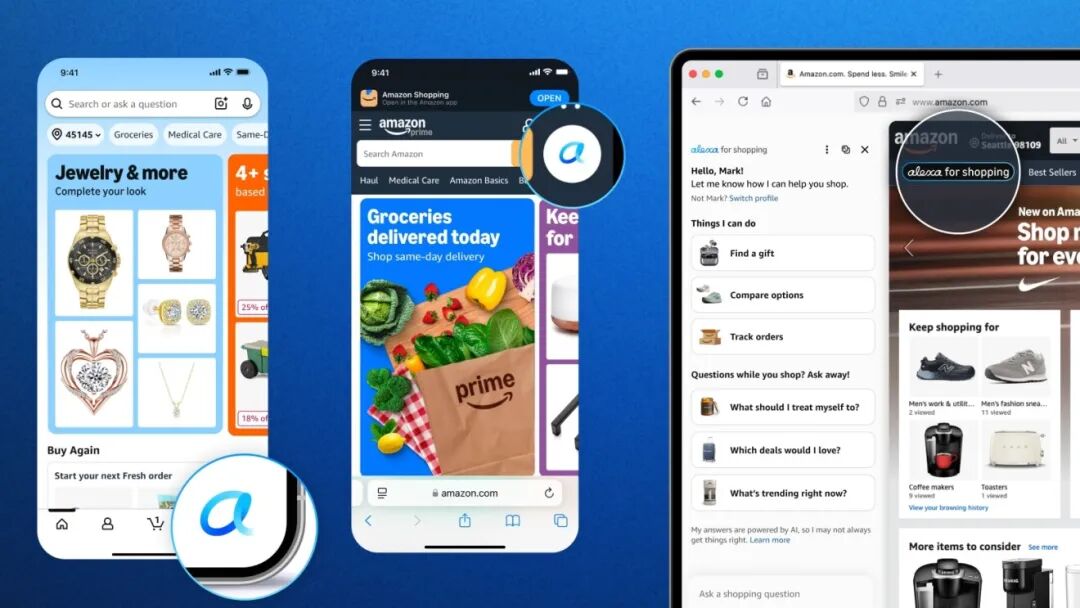
Image source: Amazon
In this article today, we will thoroughly understand the essential differences between Alexa and Rufus and their functional changes from two parts.
1. Understand the Seven Essential Differences Between Alexa and Rufus
1. Technical Positioning
The previous Rufus was more like a chatbot that understood products. If you asked it, "Is this product good?" it would summarize for you.
But Alexa is different. The current Alexa is more like a "shopping assistant that helps you get things done." Driven by Alexa + large language models, it not only answers questions but even begins to help users analyze products, track prices, automatically remind repurchases, and even potentially place orders directly for users in the future.
Alexa is a comprehensive upgrade and replacement of Rufus, with deeper integration, stronger capabilities, and a wider coverage.
2. Entry and Interaction Design
The previous position of Rufus was actually very marginal, and many users had never even clicked on it because it was just an additional feature. But now Alexa is embedded in the search bar at the top of the website and App. Users input queries and automatically connect, it's waiting for you in the search box, turning the search box itself into a conversational interface.
3. Underlying Architecture and Reasoning Ability
Rufus was a single shopping-specific model, mainly learning listing copy, reviews, QA, product information, and processing product recommendations through retrieval-enhanced generation technology.
But Alexa now doesn't just look within the site. It combines Amazon data, user historical behavior, and information from the entire network, using different AI models for reasoning.
Simply put, Rufus is "database search," while Alexa is like real AI reasoning.
4. Functional Capability
Rufus did basic tasks: summarizing reviews, answering questions like "What material is this?"
Alexa shopping assistant does advanced tasks: in addition to undertaking all the functions of Rufus, it has added annual price history tracking, price reminders, conditional automatic ordering, multi-round dialogue shopping guides, and even cross-site purchasing (Buy for Me). Rufus is just an auxiliary decision-maker, while Alexa is an executive agent.
5. Personalization Level
Rufus could only react based on the user's current shopping session and basic browsing behavior, with training data coming from listing copy, reviews, and previous QA, lacking deep memory of users' long-term preferences.
But Alexa now has begun to have long-term user memory. It will know what users have bought before, what styles they like, spending habits, price preferences, repurchase behavior, and even synchronization between different devices.
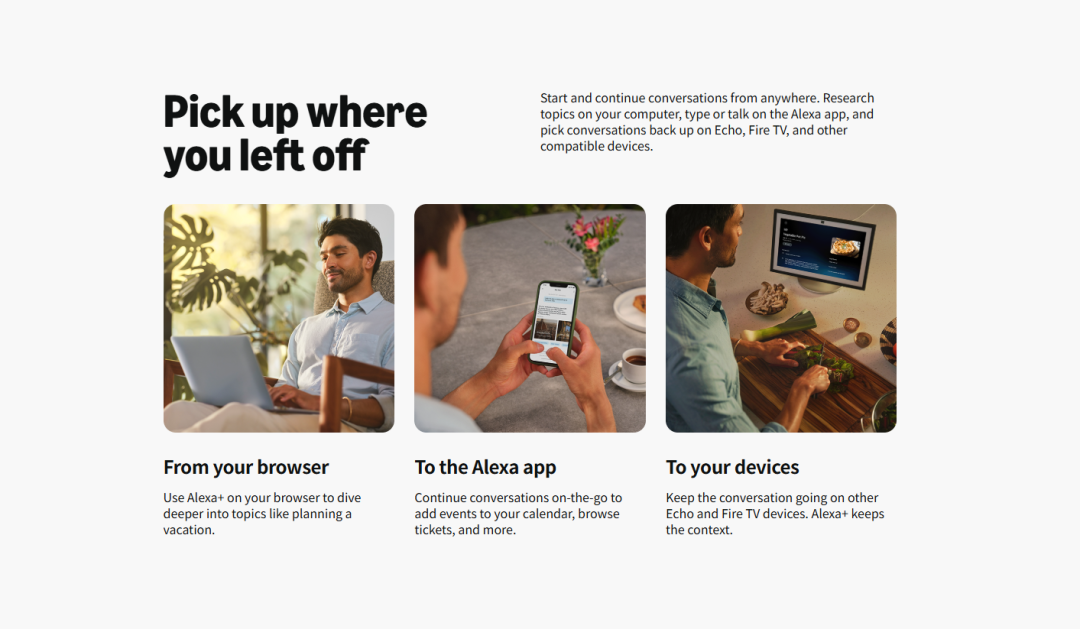
Image source: Amazon
This means that Amazon's future recommendation logic will become more and more "personalized." The same keyword may show completely different results to different users.
6. Usage Threshold
Previously, Rufus required logging into an Amazon account to use. But Alexa shopping assistant is completely free for all American users, regardless of whether you are a Prime member, there is no need for separate subscription.
Users can almost use it without learning costs, directly search, chat, and buy. This means that Alexa's future coverage speed will far exceed Rufus. Amazon will promote user habit changes faster.
7. Advertising and Commercialization Layout
In the past Rufus stage, advertising placement was not obvious.
But Alexa is completely different, Alexa has clearly included advertising in system planning, Amazon CEO Andy Jassy explicitly stated in the earnings call that they plan to introduce AI advertising in conversational interactions, such as "prompt word advertising" and more AI-native advertising forms.
Through these seven differences, sellers will find that in the Rufus era, AI was more of an aid for user search. In the Alexa era, AI has begun to "make decisions for users."
In the past, users searched, viewed, and compared by themselves. In the future, users will rely more and more on AI: to help them filter, summarize, recommend, and even place orders.
This means that what really determines traffic in the future is no longer just keyword ranking. But whether AI is willing to understand your link, recommend your link. So the most important operational capabilities of sellers will also change.
II. Five Functional Changes, Understand Amazon's Rule Iteration
Many Amazon sellers have not yet realized that the really scary thing about Alexa is not just an AI assistant, but functional changes that are enough to change the entire Amazon traffic distribution logic.
1. The search bar begins to "understand needs," not just recognize keywords
Now users in Amazon's search bar are not just searching for keywords, but can directly express needs. Alexa will directly understand the user's scenario and intent needs, and then pick the most suitable answer from a massive number of products.
The importance of listing copy has been further increased because AI needs to "understand" your product. If your copy lacks user scenarios, demographic tags, usage descriptions, demand expressions, and solutions, AI may not even know who your product is suitable for.
2. Alexa begins to directly "compare" for users
Previously, users needed to research themselves: prices, parameters, reviews, pictures, features. Now Alexa will directly compare competing products.
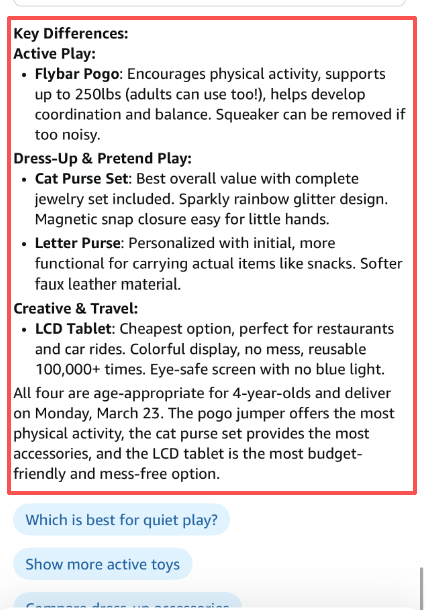
Image source: Amazon
What change will this bring? Product diversification will become extremely important because AI will directly translate the advantages and disadvantages of the product to users.
3. AI begins to "summarize" your product
Amazon has begun to add AI summaries to the top of the search page and the detail page.
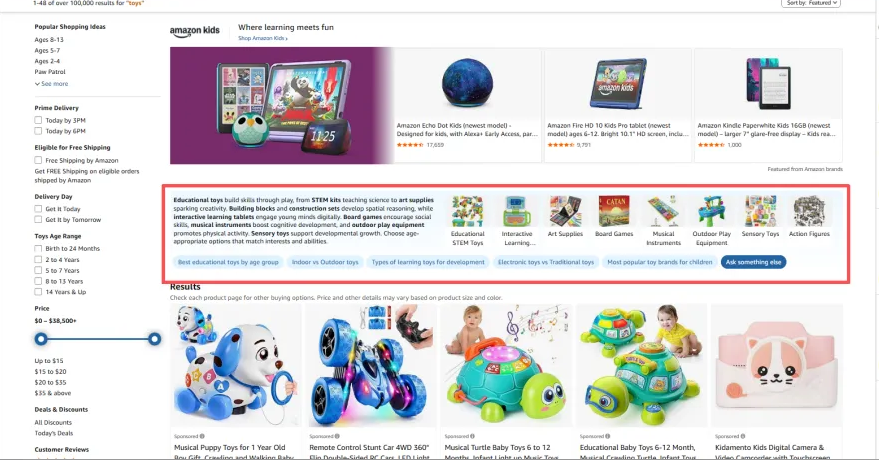
Image source: Amazon
AI will directly tell users how to choose this category, what are the differences between products, and which product is suitable for whom. The importance of listing copy has reached an unprecedented level.
Sellers must pay attention. In the future, AI will filter information in advance. If your listing AI doesn't understand, then your link may not even have the qualifications to be recommended.
So the listing copy must clearly express who the product is suitable for, what scenarios it is used in, what problems it solves, and what is different from competing products, otherwise, AI will not recommend you proactively.
4. Price System Completely Transparent
Previously, Rufus could only see 90-day prices. Now Alexa can track one year of price history.
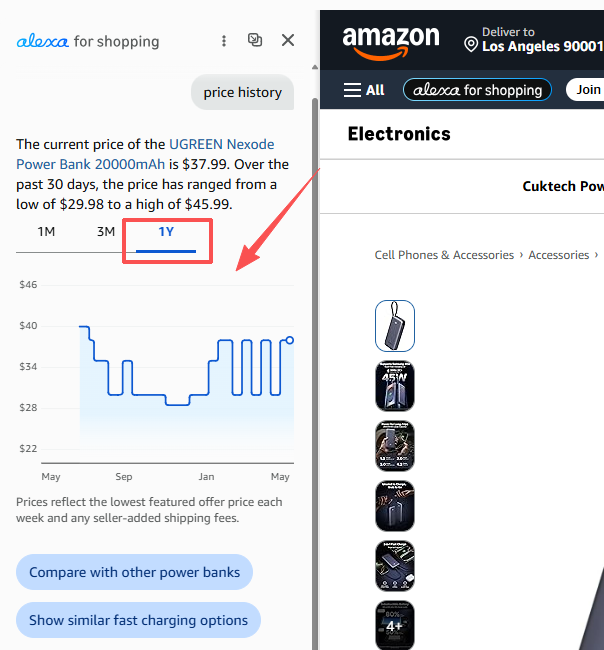
Image source: Amazon
The previous behavior of raising prices before discounting, or lowering prices before raising prices, will become increasingly difficult.
Because AI will record your price behavior for a long time. Users can also more easily find out whether you are really offering discounts or fake discounts. Price wars will become increasingly difficult to fight, and transparency eliminates the space for speculation.
5. Alexa begins to take over "reordering"
Alexa has begun to read historical orders, proactively remind restocking, automatically recommend repurchases, create shopping lists, and even directly add to the shopping cart.
This means that many orders in the future may not even go through search but will be actively recommended by AI.
What is most important at this time? Brand. Because AI's priority recommendation may refer to user satisfaction, long-term repurchase rate, brand trust, historical behavior data.
So sellers who can truly sustain AI algorithm dividends in the future must be those who best understand user needs.
In summary: Rufus, AI is just a tool to assist users in searching, Alexa era, AI is taking over shopping decisions.
This is not a simple feature upgrade, but Amazon officially announces the entry into the AI intelligent voice e-commerce era.
In this round of shuffling, those who are eliminated are those who only stack keywords and compete on prices. Those who can survive and eat AI algorithm dividends must be those who best understand users' true intentions, are best at contextual expression, and can handle AI semantic operations. Whoever understands the logic behind Alexa first will have more opportunities to eat this round of AI traffic dividends ahead of time.
Sellers should upgrade your AI operation thinking.