
 Yijia Overseas
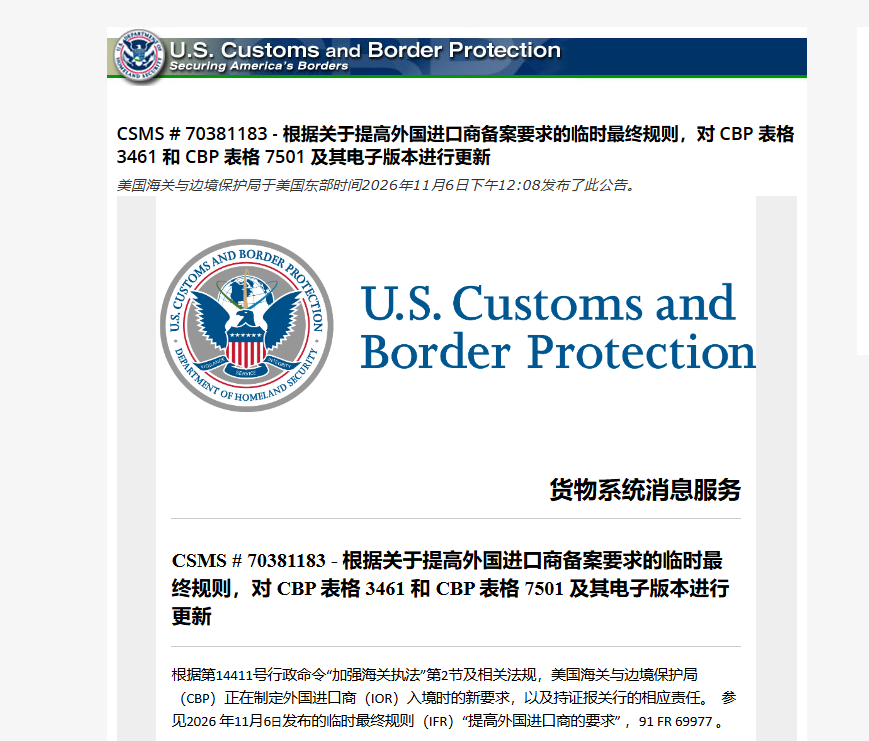
On November 6, 2026, U.S. Customs and Border Protection (CBP) issued the interim final rule “Heightened Requirements for Foreign Importers of Record,” effective January 5, 2027.
Sellers who assumed that registering a U.S. company automatically makes it a U.S. importer of record (IOR) will now face stricter review.
The rule clarifies U.S. IOR and foreign IOR standards and sets new requirements for foreign IOR clearance, CTPAT certification, and customs broker qualifications.
1. What has changed?
CBP now expressly distinguishes U.S. IOR from foreign IOR. Previously, many sellers believed that registering a U.S. LLC or corporation, obtaining an EIN, and having a U.S. address was enough to import as a domestic IOR. The new rule raises that threshold.
U.S. company registration is no longer the only criterion
Under new 19 CFR §110.2, an enterprise must satisfy two basic conditions to be a U.S. IOR: it must be actually established and operating in the United States; and it must be organized under U.S. law. It must also satisfy one of two additional paths.
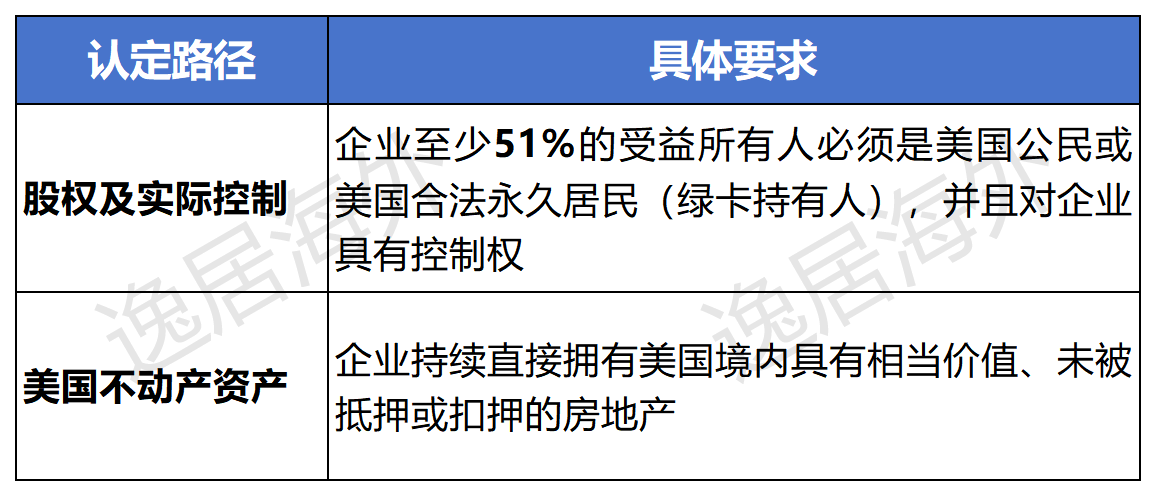
Therefore, a U.S. company certificate alone does not prove U.S. IOR status. A U.S. LLC 100% owned by Chinese individuals cannot be classified as a U.S. IOR based only on registration, EIN, and a U.S. address unless it meets the U.S. real property asset path.
CBP will verify actual U.S. business operations
CBP may examine whether the company has a principal U.S. place of business, actual U.S. activities, U.S. employees or revenue, sufficient U.S. physical assets, independent profitability, and adequate capital. A registered address, virtual address, EIN, or bank account alone is not enough.
2. What if a company does not qualify as a U.S. IOR?
It will be classified as a foreign IOR. It may still import, but must meet new clearance requirements.
Path 1: Obtain CTPAT certification and file directly or through a broker.
Path 2: Use a U.S. licensed customs broker with CTPAT validation. If the foreign entity is not the owner or purchaser, the CTPAT-validated broker must act as the IOR.
Brokers previously used may need to have their qualifications reassessed.
3. Declaration changes from January 5, 2027
CBP will update CBP Form 3461, CBP Form 7501, and electronic filing systems. New fields will include U.S. Importer of Record, Acting on behalf of, and Principal on Power of Attorney. False declarations may lead to on-site filing and loss of immediate release. Brokers must verify clients’ U.S. IOR status and keep records.
4. Sellers most affected
1. U.S. LLCs 100% owned by Chinese individuals. If the company lacks a qualifying U.S. citizen or green card beneficial owner and qualifying U.S. real property assets, it cannot be classified as a U.S. IOR simply because it is registered in the U.S.
2. Sellers using U.S. companies without real operations. Companies with only registration documents and a virtual address may face stricter verification.
3. Sellers using third-party or shared IORs. Confirm whether the IOR provider can supply the IOR number and clarify the actual filing entity and responsibility.
5. Recommended preparation
Step 1: Review the U.S. company structure, including registration state, business address, ownership, beneficial owners, and U.S. assets.
Step 2: Confirm IOR qualification under 19 CFR §110.2; do not rely only on the company certificate and EIN.
Step 3: Verify whether the customs broker holds both a valid U.S. broker license and CTPAT validation if classified as a foreign IOR.
Step 4: Reassess bond and import clearance arrangements to avoid clearance problems.
Step 5: Prepare articles of organization, ownership records, beneficial owner proof, financial statements, U.S. asset proof, and operating records for broker verification.
Conclusion:
Sellers should pay closer attention to actual U.S. operations, beneficial ownership, U.S. assets, and importer compliance.
That’s all shared by Yiju Overseas. Feel free to comment.