
 Amazon Global Store opening
An Amazon review made Yang Zhaoping read it over and over again.
"At a U.S. counter, this would cost five or six hundred dollars, but I got it here for just over one hundred. Great value."
The reviewer had bought a pearl necklace. Faced with a new brand he had never heard of, he first looked at the real photos of the cultivation base and the appraisal certificate on the product page, and then placed the order.
The review traveled from the United States back to Shuibei, Shenzhen, and reached Yang Zhaoping.
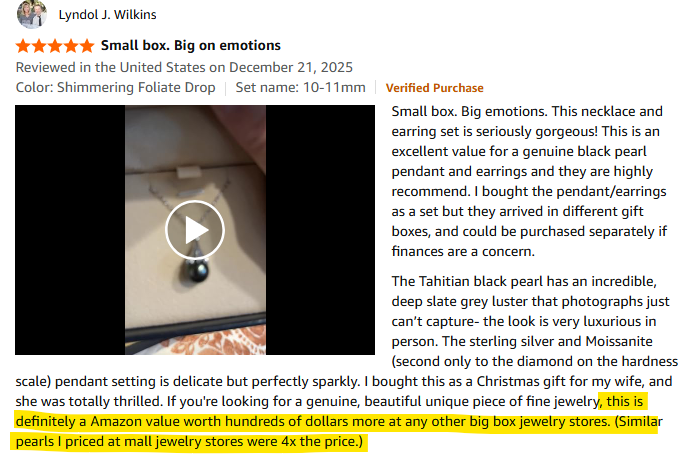
The phrase "great value" gave Yang Zhaoping—who had spent 15 years in supply chains and had never directly interacted with consumers—his first taste of how end users actually saw his products.
◉ 15 Years Without Hearing Buyers' Voices
Yang Zhaoping was born into a jewelry family, and his family has worked in the industry for more than 35 years. He started at the bottom and once studied pearl cultivation in Tahiti in the South Pacific—a black pearl takes two to three years in the sea from nucleus insertion to harvest, and only about 5% reaches jewelry-grade standards.
After returning to China, he worked in pearl wholesale and supply, providing raw materials and finished products for well-known domestic jewelry brands. The business was stable and the supply chain mature.
But one question remained unanswered: Who ultimately buys these pearls? What do they truly value?
"We have long served brands and clients, but we rarely had the chance to hear directly from end consumers."
For 15 years, products were continuously upgraded in the supply chain, but brand expression, user insight, and end-user experience were always handled downstream.
◉ Decided to Sell Directly—Not Everyone Understood
In 2025, Yang Zhaoping decided to create the brand RIKITEA and launch it on Amazon, selling directly to overseas consumers.
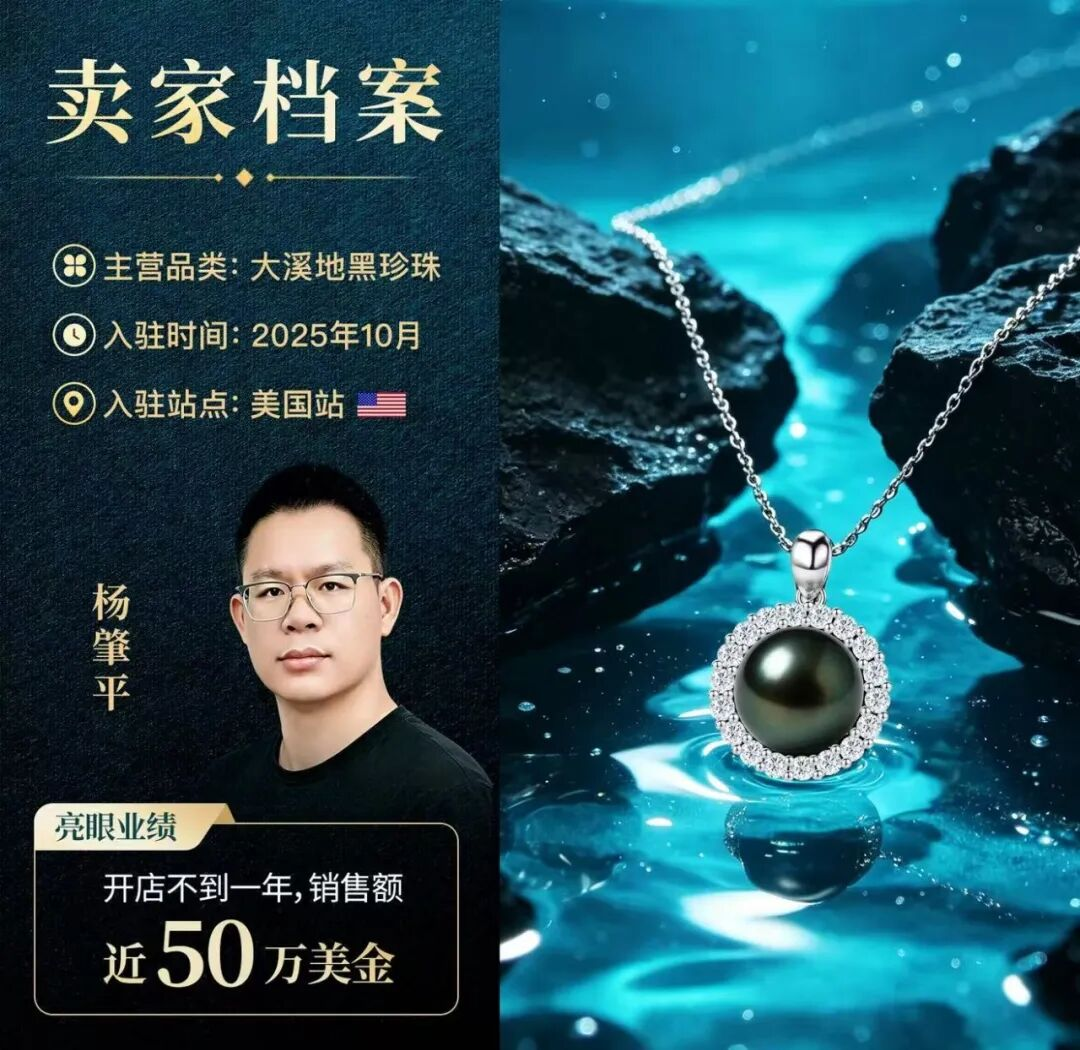
Not all family members and peers understood. Shifting from factory wholesaler to brand operation requires crossing multiple capability thresholds in product, operations, and service.
But he kept thinking: he had raw material resources, pearl farms, and 15 years of experience—if he could make good products, why not try selling directly to consumers?
In October 2025, the store officially began selling.
◉ Two Early Challenges
The product photos were weak. They failed to convey the texture and design value of the pearls. Just as the team finished optimizing them, the second problem appeared.
Listing hijacking. The main product was targeted by hijackers, hurting its ranking and sales; when the team promoted new products, similar problems occurred again.
Jewelry retail requires heavy upfront investment—inventory, design, packaging, logistics, and customer acquisition all need capital, and the payment cycle is longer than in B2B.
"This created considerable operating pressure for the team."
It was the most stressful period of the transition.
◉ Every Buyer Review Brought a Turnaround
Yang Zhaoping began systematically reviewing every piece of feedback, turning negative reviews and suggestions into improvements.
✦ Increased chain length by 5 cm. Overseas consumers tend to have larger body frames, and some buyers said necklaces were too short, so the team adjusted the chain length to fit target-market wearing needs.
✦ Upgraded packaging for gifting. Consumers said the white box was not suitable for gifting, so the team added gift bags and holiday cards; they also redesigned the logo placement and brand story insert. He and his Amazon account manager revised the brand story copy several times.
✦ Established a "one piece, one certificate" system. Every piece of jewelry now comes with a certificate issued by an authoritative U.S. institution, and customers can scan a code to view the verification result.
✦ Joined Amazon's Transparency program. The program gives each product a unique code, helping Shimei Jewelry reduce the risk of counterfeit goods entering the fulfillment chain.
✦ Adjusted design style. Shimei Jewelry's designers began studying trends on U.S. social media, launching brooches with elements such as spiders and bats, combining the natural color of black pearls with gothic design.
◉ Less Than a Year In, Nearly $500,000
Since sales began in October 2025, Shimei Jewelry has approached $500,000 in sales.
For a new jewelry brand, this result shows that jewelry with clear origin information, certification materials, and a complete product experience can win recognition from overseas consumers.
Yang Zhaoping's next goal is to raise online sales to $2 million. Longer term, he hopes to open offline stores in the United States to provide brand display, after-sales care, and customer service.
◉ More Than One Person's Story
Shenzhen's Shuibei is China's largest gold and jewelry hub, with nearly 8,000 registered companies and 2024 revenue exceeding RMB 130 billion. In the past two years, more and more Shuibei businesses have begun paying attention to taking their brands overseas*.
Some peers have already approached Yang Zhaoping to learn about selling on Amazon and taking jewelry global. Those who initially took a wait-and-see attitude are now planning for branding and overseas markets.
"If you make products seriously and serve consumers seriously, the market will eventually respond."
A year ago, this was a reminder to himself; today, he is willing to share this experience with more peers.
If you have any questions about Amazon, please use the link (https://wsurl.cc/wg4chn) or scan the code to contact an official client development manager: