
 Amazon Global Store opening
"Apparel is so crowded—is cross-border e-commerce still worth entering?"
This is a key question for many would-be entrepreneurs. The market never lacks products or sellers, so where can ordinary people find opportunities?
Chen Ziyang's experience offers one reference. After graduating from Peking University, he joined investment banking, helping companies raise funds and analyze business models. His daily job was judging whether a company was worth investing in. His partner, also from a finance background, graduated from Renmin University.
They used to judge whether a company was worth investing in; now they judge whether a pair of jeans is worth making.
Later, the two left investment banking and founded apparel brand ZendEsltenx in Guangzhou, selling jeans to U.S. consumers. In 2025, its Amazon sales exceeded $2 million.
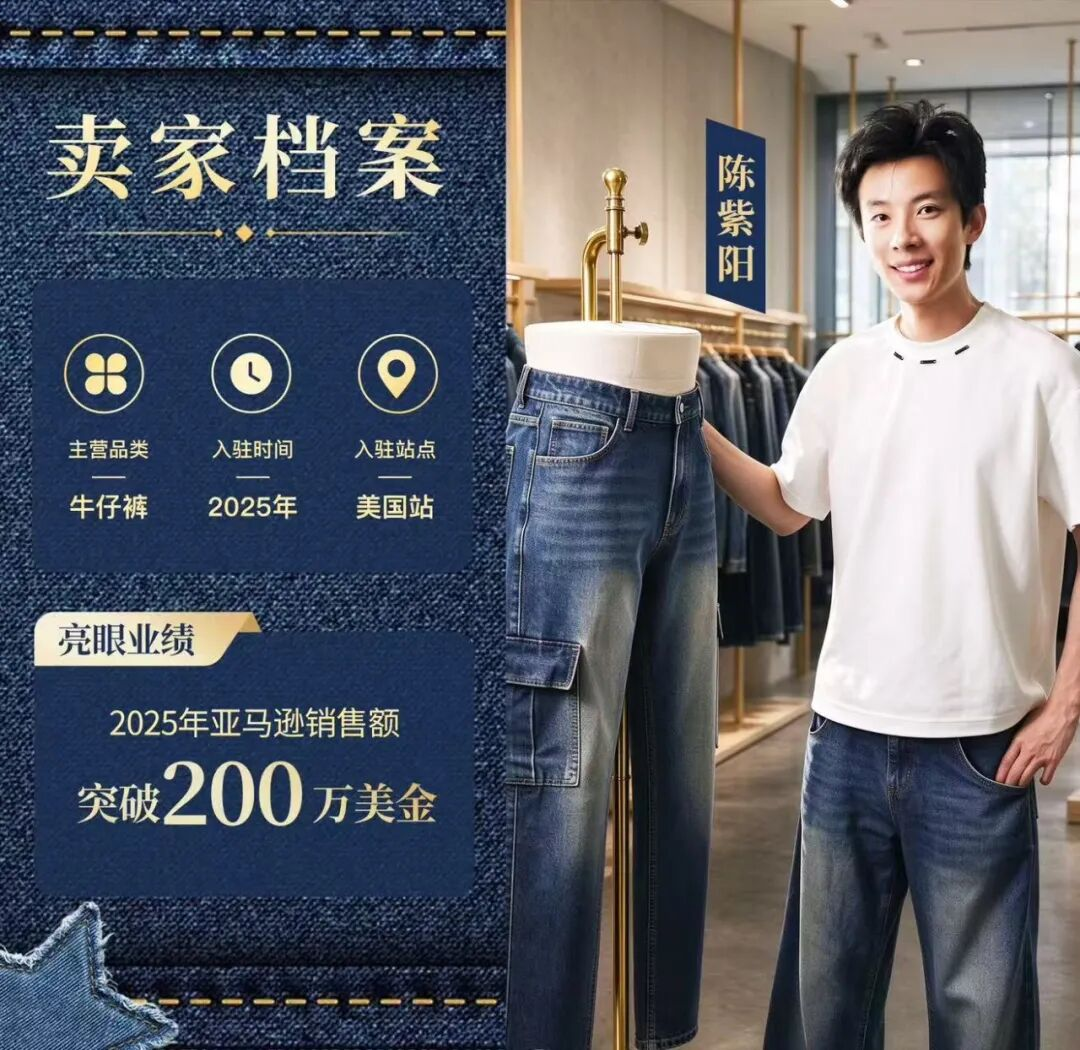
◉ Is there still opportunity in cross-border apparel? First, why jeans
From investment banking to jeans, the choice seems counterintuitive. In investment banking, Chen and his partner worked with consumer and tech startups and heard many growth stories. Yet they chose the highly competitive apparel industry.
"After seeing enough, you realize starting a business is not that far away. Rather than always studying how others build businesses, it is better to run one yourself," Chen said.
The startup was funded entirely with their own money. "Real money, so from day one, we would not go all in on a seemingly big opportunity."
Their backgrounds are a contrast, but not prerequisites for success. What matters more is how they turned a crowded industry into testable niche opportunities.
◉ Do not chase trends; first find a category you can go deep in
In 2024, the team also considered smart hardware and energy storage, but those areas require stronger R&D and technical capabilities, not fully matching their resources and experience.
They chose apparel because demand is always shifting: styles, aesthetics and use cases keep changing. For new brands, opportunity may come from making a mature category fit a specific group of consumers, not from discovering a brand-new category.
Why jeans? Chen's answer is candid: "Jeans were not destiny."
The team screened several promising apparel subcategories, and denim was one. Choosing a category was only the start; they still had to decide what styles to make, what price band to target, and how to differentiate.
"It is like choosing one of several shopping malls. Which one may be partly accidental, but what to sell, how to price, and what styles to make must be studied carefully."
◉ The value of cross-border is not just selling overseas
Chen chose Amazon as the main channel for its efficiency and direct connection with consumers.
"For a small team, if transactions, fulfillment, reviews and returns do not need to be built from scratch, we can focus limited manpower on product selection and quality."
After going cross-border, the team learns from reviews, return reasons and buyer feedback how consumers wear and choose products, and what they dislike.
Feedback is not just after-sales handling; it is a product improvement clue. For apparel entrepreneurs still on the sidelines, this is the value of cross-border: not just selling products, but hearing the market directly.
Amazon account managers help the team understand compliance, certification and platform rules, and share category trends. "We treat this as signals, then verify against front-end data and samples."
◉ What can we learn from their investment banking approach?
Chen believes professional knowledge does not directly translate to selling jeans. What really helps is the due diligence habit and sensitivity to numbers.
"We used to judge whether a company was worth investing in; now we judge whether a pair of jeans is worth making."
Judging a style follows similar logic: a rising BSR ranking does not necessarily mean opportunity; it must be cross-checked with search terms, review growth, buyer photos, price bands and competitor performance.
"Tools are not secret. The difference is whether you can tell which data is normal and which cannot be copied."
This method does not require an investment banking background. For new sellers, using data to confirm direction and then validating details with samples and real feedback matters more than chasing a "hit product formula."
◉ Why Guangzhou: industrial belt turns feedback into products
Data points the direction, but apparel ultimately depends on the product. ZendEsltenx chose Guangzhou mainly because it is close to factories, so product issues can quickly return to fabric, pattern-making, craftsmanship and assembly.

In cross-border apparel, each piece of overseas feedback eventually lands on a fabric, size point or craft detail. Being in the industrial belt lets the team inspect fabric, monitor workmanship, and talk face to face with pattern makers and workers.
Chen wears the brand's jeans for long periods. "A few minutes only shows the general fit. Whether the fabric chafes, whether they feel tight after sitting, and where they are uncomfortable when moving—sometimes it takes a whole day to find out."
A popular blue pair once received "too loose" as a return reason. The team did not guess; they tried them on, checked each size point, and narrowed the issue to leg width. They adjusted only that point, kept other proven parts unchanged, and watched the return rate.
From U.S. feedback to Guangzhou suppliers, pattern makers and factory workers, the industrial belt is not just production. The value of Guangzhou's apparel industrial belt is not only making jeans, but turning user feedback into product improvements.
When factory capability connects with a cross-border brand's understanding of consumers and platform rules, the industrial belt helps co-create products for global consumers, not just fulfill orders.
◉ For ordinary people, opportunity lies in operational discipline
ZendEsltenx does not pin growth on a short-term hit. Chen says the team's curve is steady, continuous accumulation.
"We never had a sudden breakout moment."
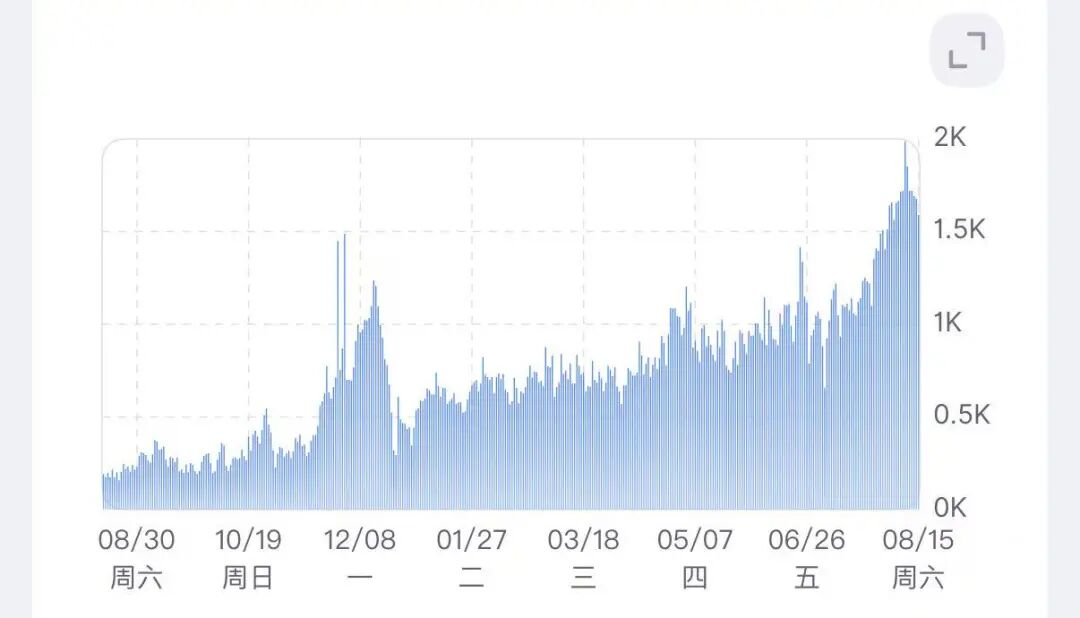
Chart data provided by the seller, for reference only
Before investing in a new style, the team first evaluates the worst-case scenario, such as discounts and clearance losses, and only starts testing after confirming the risk is acceptable.
"A new product is not a bet, but a controlled trial within budget. Apparel has many SKUs; overstocking to push short-term revenue will easily distort the team's actions."
This is the most practical lesson: you do not need a perfect resume or complete resources to start, and should not hope for a single hit. Choose a niche you understand, test in small steps, hear consumers through cross-border, and keep iterating with an industrial belt like Guangzhou. That gives you a better chance to build long-term apparel business.
Looking back, Chen says: "It was the right decision—I even feel I resigned a little too late." He hopes to deepen product selection, products and supply chain, so more American consumers will have Guangzhou-made jeans in their wardrobes.
If you have any questions about Amazon, use the link (https://wsurl.cc/wg4chn) or scan the QR code to contact the official customer development manager: