
 Amazon Global Store opening
Suggested Retail Price (i.e., Manufacturer's Suggested Retail Price) and regular prices, among other reference prices, can help buyers easily understand the value they can get when shopping on Amazon.
To maintain buyers' trust in pricing and make discount information more transparent and meaningful,Amazon will update the requirements for reference prices on its US and UK sites.
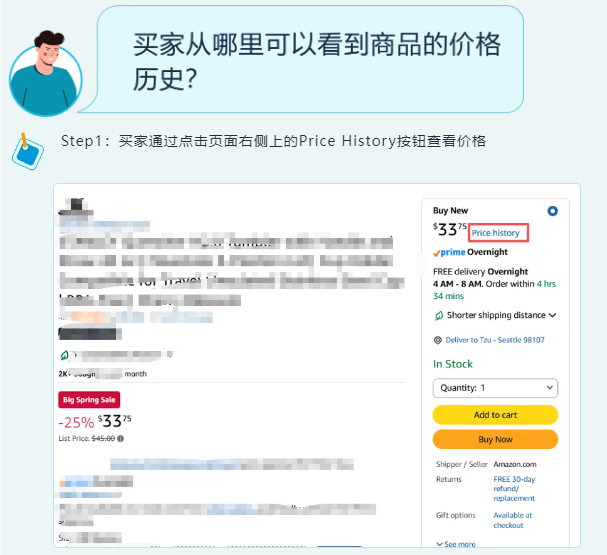
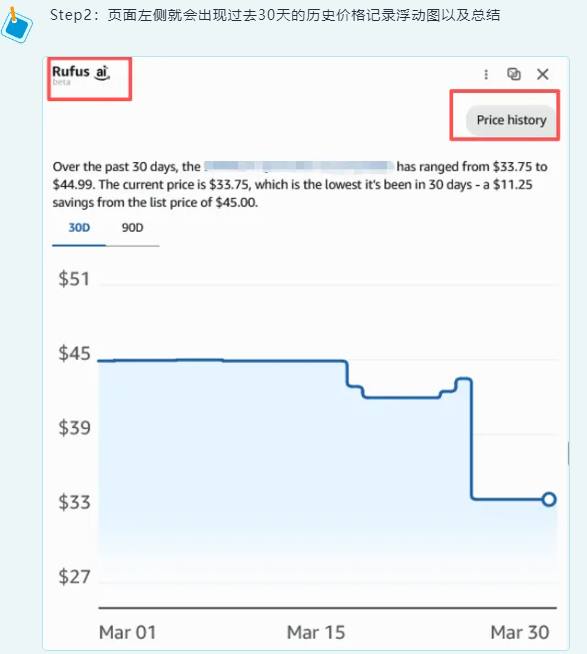
This update will also align Amazon's"Reference Pricing"with the"Price History Chart"on the product detail page. This chart displays the dailylowest featured offer price, helping buyers more clearly understand how the product price changes over time.

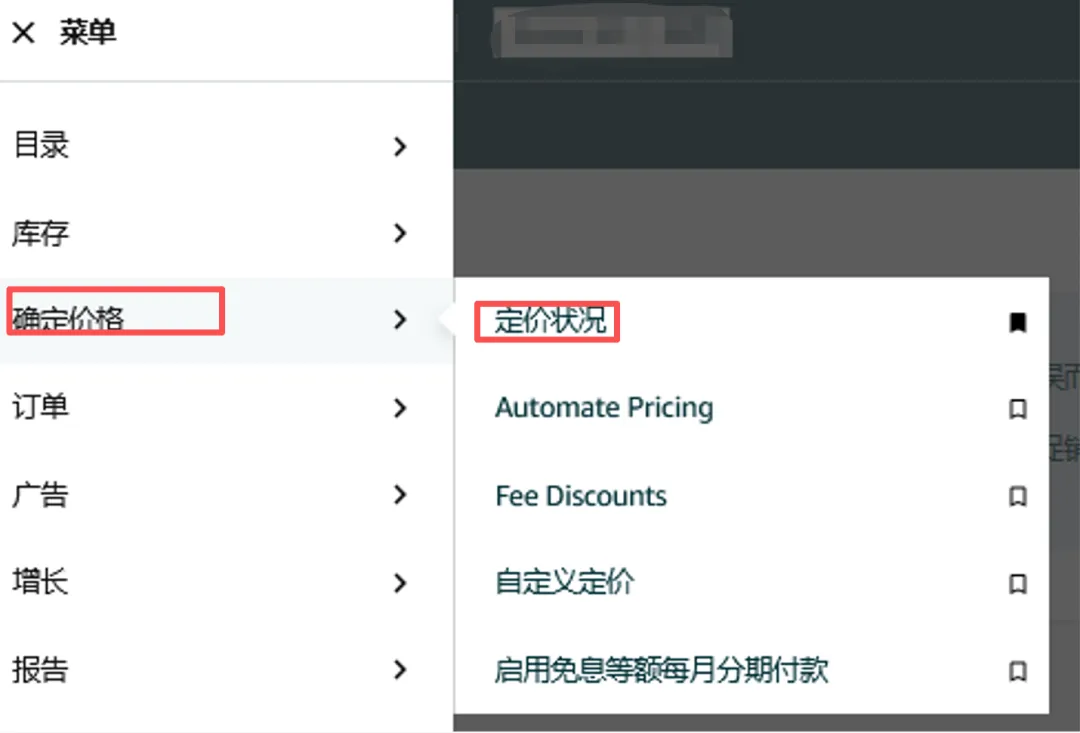
*Query path: Seller Central > Menu > Determine Prices Pricing > Pricing Health > Opportunity Type

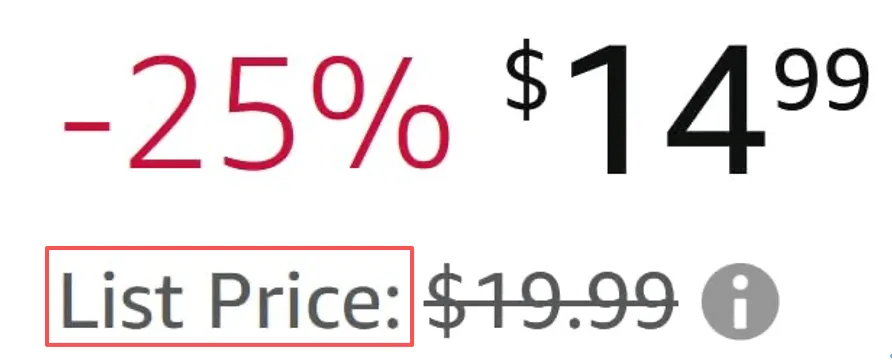
Please note that the sources of reference prices on Amazon are as follows:
1.Suggested Retail PriceList Price (MSRP)*
2.Regular Price Typical Price**
*The abbreviation for Suggested Retail Price on the UK site is RRP
**Regular price is referred to as "Historical Selling Price" on some sites, "Mid-price" on some EU sites, and "Previous Price" on Mexican and Brazilian sites.
Below, the editor will sort out the updates of these two reference price sources and answer frequently asked questions

Starting from April 23, 2026, the suggested retail price you provide must meet one of the following conditions to be verified:
♦ This product has recently been published by other retailers at this suggested retail price
♦ This product has been purchased by buyers as a recommended product on Amazon at this suggested retail price
When the suggested retail price is displayed as a strikethrough price with discount information, providing a suggested retail price can help buyers understand the value of your product. In this way, it may increase your sales on Amazon.
For example, if the suggested retail price of a product is $50, but buyers find that the product has almost never been sold at $50 in the recent 90 days after checking the product price history, then they cannot be sure that the $50 accurately reflects the amount saved.
● Verified Suggested Retail Price Example: Amazon's sales data shows that the suggested retail price of a pair of over-ear headphones is $50.00. If this $50 has been close to the recommended offer price for a considerable amount of time in the recent 90 days, it meets the conditions.
● Invalid Suggested Retail Price Example: Amazon's sales data shows that the suggested retail price of a computer speaker is $100.00. If this $100.00 suggested retail price has not been displayed as a recommended offer in the recent 90 days, it does not meet the conditions.

Q1: What does it mean for a product price to "match" the suggested retail price?
If the product price is equal to the suggested retail price or not much different from it, it is "matching" the suggested retail price.
For example, suppose the suggested retail price of an ASIN is $29.49. If the internal quote is $40.00, the suggested retail price cannot be verified - the product quote is far higher than the specified price, which means that the suggested retail price cannot reflect the current quote. However, if the price is $29.00 or $29.99, it matches the suggested retail price.
Q2: Can you explain the meaning of "recent" in the verification of suggested retail prices?
The look-back period is 90 days.
Q3: How do I check if my suggested retail price appears in the product price history?
Go to the product detail page, and then click on the product price history link displayed next to the quote. If the product has a valid suggested retail price, it will be displayed as a visible data point in the product price history of the recent 90 days.
Q4: What if my product has not been listed on Amazon for a long time?
A product needs at least 9 days of recommended offer data to be eligible for suggested retail price verification through Amazon's product sales history. Alternatively, you can also use the prices of other retailers to verify the suggested retail price.
Q5: Are there any exclusion periods for suggested retail price verification based on product price history?
Yes. For ASINs whose product price history exceeds 30 days, Amazon will temporarily exclude the two weeks before and during the peak season from the measurement period. This means that price increases before the peak season will not be included in this verification. If the suggested retail price is not verified before the start of this exclusion period, it cannot be verified by internal sales during the exclusion period. After the peak season ends, the exclusion period is lifted, and future assessments will apply the full 90-day measurement period.
Q6: Do I still need to sell at the suggested retail price? Or is it enough for the product price history to be displayed?
You need to sell at the suggested retail price and the suggested retail price has been consistent with the recommended offer for a considerable amount of time in the recent 90 days.
Q7: If the suggested retail price is verified through the prices of external retailers instead of Amazon's product sales history, can I still use the suggested retail price?
Yes. You can use the prices of other retailers to verify the suggested retail price. The visibility requirements for product price history only apply to suggested retail prices verified through Amazon's product sales history.

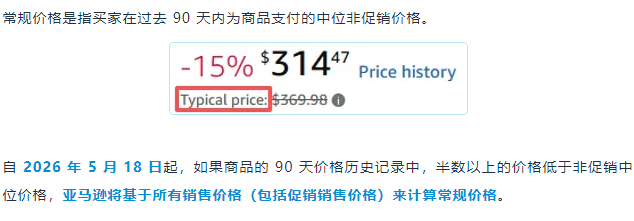

Q1: Which sales are included or excluded in the calculation of regular prices?
The regular price refers to the intermediate price paid by buyers for the product in thepast 90 days. In most cases, promotional prices are not included because promotions are usually temporary and do not represent the regular selling price of the product.
Starting fromMay 18, 2026, if the time during which the product's recommended offer price is lower than the current non-promotional price exceeds more than half of 90 days, the calculation of the regular price will include all sales (including promotional sales) to more accurately reflect the price that buyers most often pay.
Please note that sales during peak season events are not included in the regular price.
Q2: Which promotions are included or excluded in the calculation of regular prices?
"Buy X Get X" promotions, "Subscribe & Save" promotions, and customized coupons are not included in the regular price. Promotions during peak season events (including Prime Day) are also not included. Price discounts that are not promoted to buyers as promotions are considered non-promotional sales and are included in the regular price.
Q3: Can you give an example of how to calculate the regular price?
The regular price is the intermediate price paid by buyers for the product in the 90 days, calculated using only non-promotional sales or all sales (including promotions), depending on the frequency of display of non-promotional prices. The following examples illustrate these two situations.
♦ Example 1: Excluding Promotional Prices
The current non-promotional price of a pair of sneakers is $89.99. In the past 90 days, the sneakers have been offered at a recommended price of $89.99 for 60 days and at a promotional price of $74.99 for 30 days. Since the time during which the product price is lower than its current non-promotional price is less than half of 90 days, promotional sales will be excluded from the calculation.The regular price is $89.99.
♦ Example 2: Including Promotional Prices
Now, consider the same pair of sneakers with a different pricing model. The current non-promotional price of the sneakers is $89.99, while in the past 90 days, the recommended offer price has been $89.99 for only 20 days and $74.99 for 70 days.
Since the time during which the product is lower than its current non-promotional price exceeds half of 90 days, the calculation includes all sales (including promotional sales) since May 18, 2026, so that the regular price can reflect the price that buyers most often pay.The regular price is $74.99.

♦ During non-peak seasons,price discount sales will be considered as non-promotional sales prices and included in the regular price;
♦ Sales during peak season eventsare always not included in the regular price.
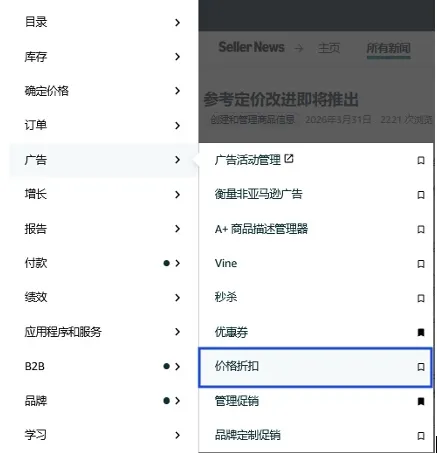

Q1: How can I ensure that my promotion is still valid if my reference price changes?
It is recommended that you check the status of your promotion in Seller Central, confirm that your offer price is lower than the maximum price, and adjust your promotional pricing as needed.
Best Practice: Check the "Needs Attention" reminders in the promotion control panel two weeks before the promotion starts and during the promotion to resolve any issues and prevent the promotion from being prohibited from displaying.
Q2: How do I determine the maximum promotional price?
The maximum promotional price displayed on the "Manage Promotions" page includes the reference price, recent promotional prices, recent sales history prices, and the lowest prices from any sales partners with offers for the product (new condition).
Amazon will determine the highest price you can set for a promotion based on this information and the minimum discount requirement, while providing buyers with the actual amount saved. Please note that promotions, coupons, and price discount caps all include the minimum