 Yijia Overseas
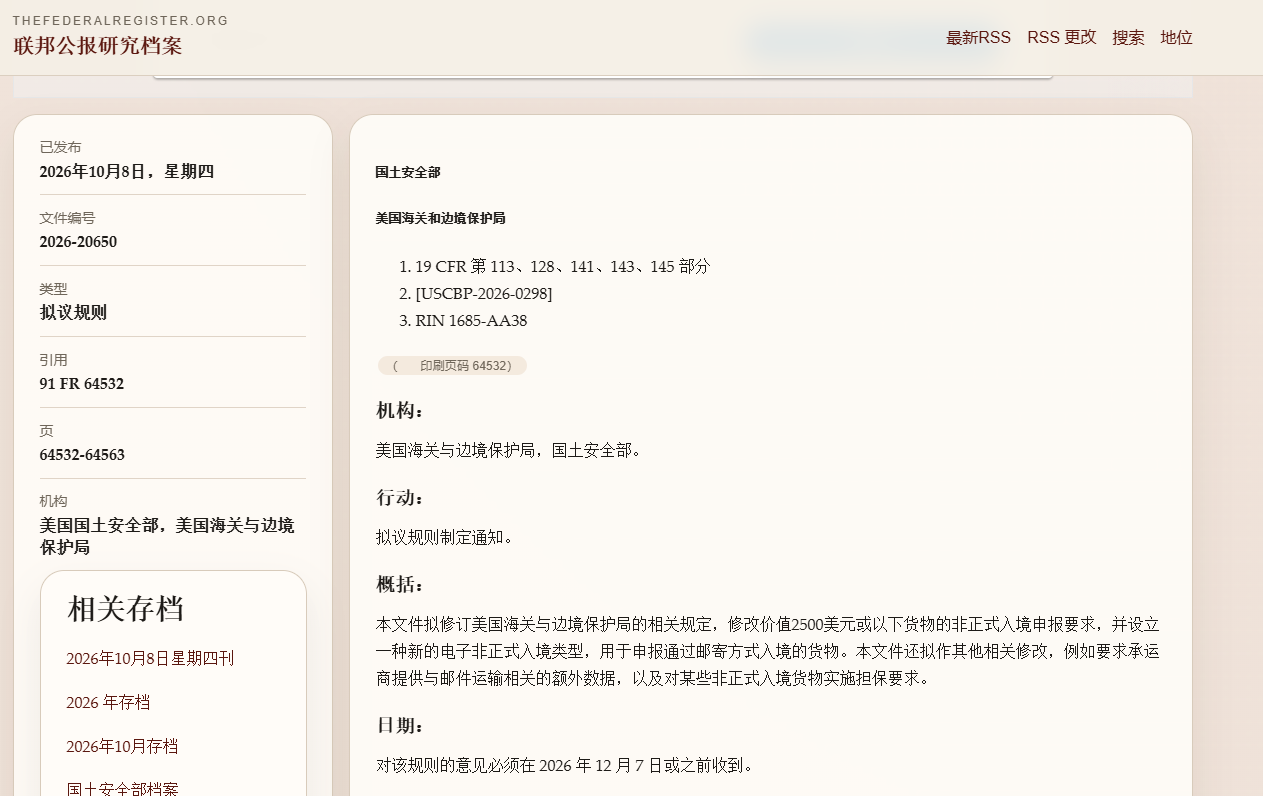
Recently, U.S. Customs and Border Protection (CBP) issued a proposed rule on low-value shipment clearance. It would further adjust informal entry requirements for goods valued at $2,500 or less, establish a new electronic entry type for certain shipments entering the U.S. through international postal networks, and add data submission and customs bond requirements.
Note that this is only a proposed rule, and not all changes have taken effect. Under the schedule, the public may submit comments until December 7, 2026.
What would the proposal change? What impact might it have on cross-border e-commerce sellers’ entry filings, logistics arrangements, and bond requirements? Below, Yiju Overseas looks at the details.
I. Core changes to U.S. low-value goods clearance rules
According to the proposed rule published by CBP in the Federal Register on October 8, 2026, the main changes include:
Adjusting low-value entry requirements: Amend informal entry rules for goods valued at $2,500 or less.
Creating a new postal clearance entry type: Establish a new electronic informal entry type for certain goods imported through international postal networks.
Adding carrier data requirements: Require carriers to submit additional data fields for postal shipments.
Strengthening bond requirements: Add customs bond requirements for certain informal entries.
II. Changes sellers should watch
The following are potential impacts based on the proposal, not confirmed new compliance obligations.
1. Filing may be required earlier
CBP proposes requiring goods valued at $2,500 or less to be electronically filed on or before the date of import, allowing earlier risk screening rather than relying on post-arrival filing.
2. Consignee and final delivery information becomes more important
If the final recipient differs from the consignee listed in the entry summary, the proposal would require the final delivery recipient and address. Sellers should check whether overseas warehouses, transit warehouses, third-party logistics providers, and actual consignees are listed consistently.
3. Clearance bond requirements may increase
CBP proposes adjusting bond requirements for some informal entries. Importers, customs brokers, and logistics providers should verify bond arrangements in advance to avoid clearance delays.
4. Postal parcels face clearer electronic filing requirements
The proposal would create an electronic entry type for postal shipments and require more carrier data. Sellers using international postal channels should pay close attention to logistics providers’ data collection and filing capabilities.
III. When would the rule take effect?
October 8, 2026: CBP issued the proposed rule.
December 7, 2026: Deadline for public comments.
Effective date: The proposal does not establish a single confirmed effective date.
For context: the U.S. has suspended most $800 duty-free treatment for low-value imports since 2025. In June 2026, CBP issued rules on international postal shipments, and on July 24 implemented a new postal informal entry process. The October proposal continues adjusting entry and bond mechanisms on that foundation.
IV. How would the proposal affect U.S. bonds?
1. Low-value goods may also need a bond
CBP would require filers using Type 11 and the new Type 13 entry types to provide basic import and entry bonds, either as single transaction bonds (STB) or continuous bonds. This expands bond coverage to some low-value goods.
2. Some sellers’ clearance costs may rise
If the current entry method does not require a separate bond, final implementation could add bond costs. Lower-volume sellers can compare STB and continuous bond quotes; frequent shippers can assess whether a continuous bond is more economical.
3. Proposed $1,000 minimum for bond violation claims
For listed bond breaches, CBP proposes a minimum liquidated damages amount of $1,000 per violation or an amount based on the goods’ value, whichever is higher. For restricted or prohibited goods, it would be the higher of three times the value or $1,000.
4. Existing bonds need suitability review
CBP states that, once the rules are finalized, bond principals may terminate and replace existing continuous basic import bonds or obtain a new continuous bond or STB. Sellers should confirm with customs brokers whether existing bonds cover the relevant filings and who bears responsibility.
Final note:
The content is still at the proposal stage. Sellers should monitor CBP announcements and final rules, communicate with logistics providers and customs brokers early, and assess whether existing clearance procedures need adjustment.
Yiju Overseas reminds cross-border sellers that as U.S. import compliance requirements keep changing, sorting out overseas entities, tax, and import clearance arrangements in advance can reduce operational risk and prepare for peak-season shipments and long-term operations.
The above is Yiju Overseas’ content sharing. Feel free to leave comments and discuss!