
 Cross-border E-commerce Excellent Craftsman School
Many Amazon sellers research competitors, keywords, titles, bullet points, and images before launch. Once a listing starts ranking and selling, they shift focus to ads and stop optimizing as long as orders continue.
But stable performance under current algorithms does not mean the listing has no problems.
This year many sellers reported older listings suddenly losing traffic and orders despite unchanged products and running ads. Why?
Besides competition, advertising, and pricing, another issue deserves attention: whether the listing still matches buyer needs and whether Amazon interprets product information differently.
1. Why does a stable listing still need continuous optimization?
Under current algorithms, a listing should not be a one-time document created at launch. It should be a product information system continuously adjusted to buyer intent.
Three reasons:
1. Amazon may edit your listing. You think you wrote it, but Amazon can adjust content; it is not fully under seller control.

2. Category and attribute data affect how Amazon understands your product. Amazon has many categories and sub-nodes with different attributes. If categories are inaccurate or key attributes incomplete or inconsistent, the system may misunderstand features and use cases. Amazon relies on this data to understand products. If category data is messy and product information incomplete, the system may mismatch buyers.
3. Amazon's AI algorithms match products to buyer intent. Buyers no longer search only by keywords; they use natural language to describe needs, ask about features, or search by scenario. AI first understands what each buyer wants to solve, then finds the best product. Your listing matches only if it clearly explains who it is for, what scenarios it fits, and what problems it solves.
These factors mean listings cannot stay fixed after launch. Older, unoptimized listings drift further from real buyer intent, showing incomplete product information, weak use-case descriptions, or poor matching. Orders may continue, but problems may not yet show in data.
Even if a listing still sells steadily, check regularly whether product information is accurate, buyer concerns are answered, and the listing communicates real value.
2. What do Alexa and COSMO understand?
Many sellers start from keywords: what terms buyers search, which have high volume, which belong in titles and bullets. This remains important, but focusing only on keywords can miss real purchase intent.
Example: a buyer wanting a vacuum cleaner may say, “I have two kids; I need a vacuum that is easy to clean, easy to store, and doesn’t take much space.” That buyer did not search a product name but gave specific needs: family use, cleaning, storage, space limits. Sellers should ask not only whether keywords are covered, but whether the listing clearly shows if the product fits this buyer, what problems it solves, and which features meet those needs.
1. COSMO: Does product information reflect the relationship between product and buyer needs? COSMO represents Amazon's exploration of product knowledge and buyer intent. It focuses not only on what a product is, but on its connection to needs, use cases, and purchase goals. For sellers, this means not just listing parameters. Example: a storage box listing showing only capacity, size, and material tells basic specs but not what space it fits, what it stores, or whether it meets needs. Beyond accurate size and capacity, use copy and images to show use scenarios.
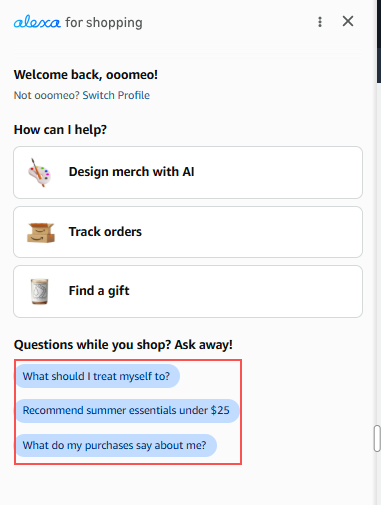
2. Alexa shopping features: Can buyers find answers in your listing?
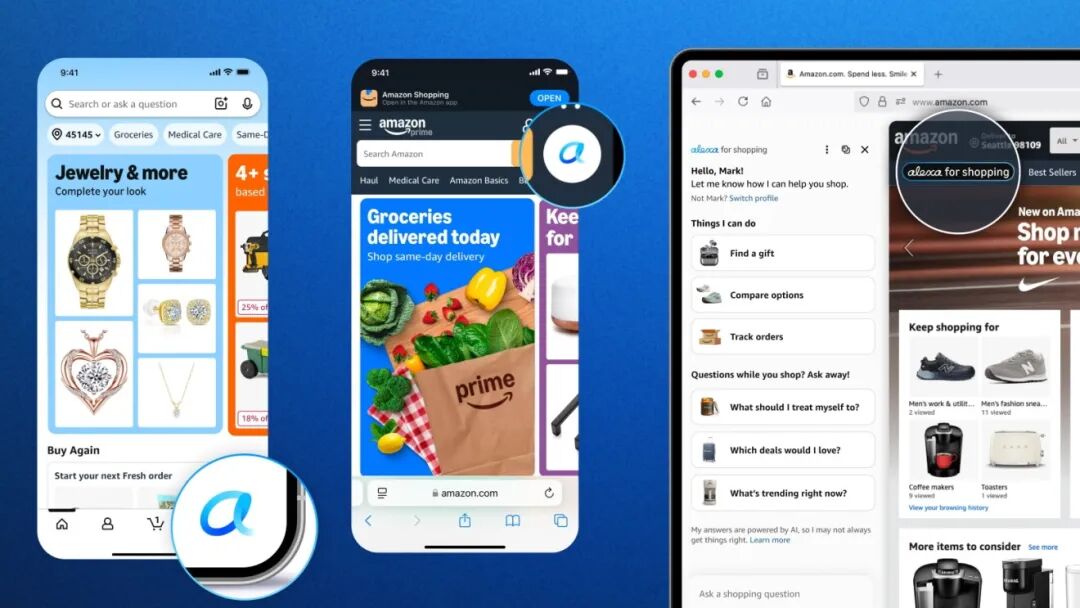
Alexa and related shopping AI let buyers express needs naturally. They may ask whether a product suits a scenario, how products differ, or if it meets specific requirements. Unlike traditional keyword search, questions may contain multiple conditions, not just a product name.
Example: a buyer wants an office chair for long hours, with lumbar support, under $300. Check whether the listing accurately presents features, scenarios, dimensions, and price. If the product qualifies but the page does not say so, buyers may not determine fit.
COSMO and Alexa may not use identical matching, but both remind sellers: beyond helping the system identify what a product is, make product information clearly answer buyer concerns.
3. Shift from keywords to buyer intent. Keywords still matter for search, listing optimization, and ads. But sellers must understand not just what buyers search, but why they search, what problems they want to solve, and when they will buy.
Optimization should cover three levels:
Keywords: which terms lead buyers to the product?
Buyer intent: why do they need it and what problem do they want to solve?
Product information: does the listing accurately and clearly present features, scenarios, and purchase information?
Together, a listing is not just a keyword collection but information that helps buyers understand the product and decide if it fits.
3. Before optimizing, ask 14 questions
To express buyer intent, do not rush to rewrite titles or add keywords to bullets. First clarify who the buyer is, why they buy, where they use the product, and what they care about most. Use these questions to review your listing:
Product-problem fit:
1. What is the core function?
2. What problem does it solve?
3. What real differences exist versus alternatives?
Target buyer:
4. Who needs this product most?
5. What specific needs or limits do they have?
6. Who or what conditions may not fit?
Usage context:
7. When do buyers use it?
8. Where or in what environment?
9. Who or what other products do they use with it?
Purchase motivation:
10. Why do they need it? What motivations?
11. What difficulties do they face before use?
12. What result do they expect after use?
Pre-purchase concerns:
13. What worries them most before ordering?
14. What accurate information can ease those concerns?
These questions help build a buyer-intent map, not a checklist to stuff into bullets. After answering, review the listing: what is clear, what is missing, and what fails to answer buyer questions.
Three suggestions:
First, review reviews regularly. Reviews are a continuously updated source of buyer intent. Analyze your own and competitor reviews monthly or quarterly, focusing on recurring purchase motivations, use cases, satisfaction, and concerns.
Second, write pain points and scenarios before parameters. Understand why buyers need the product, then support with real features, specs, and materials.
Third, adjust based on real issues, not for the sake of updating. If buyers misunderstand size, improve size charts. If a key feature is unclear, add copy. If attributes are incomplete, fix them. Every change should have a clear purpose and be measured through CTR, conversion, traffic sources, and feedback.
Finally, we have long advised sellers not to casually perform the “three major surgeries” on listings: title, main image, and category, because many worry that more changes reduce ranking weight. But as Amazon’s shopping AI evolves, listing optimization cannot focus only on keyword coverage. It must also consider whether the product accurately expresses buyer needs, use scenarios, and purchase intent.